9 Homemade Pasta Sauces You Need to Try
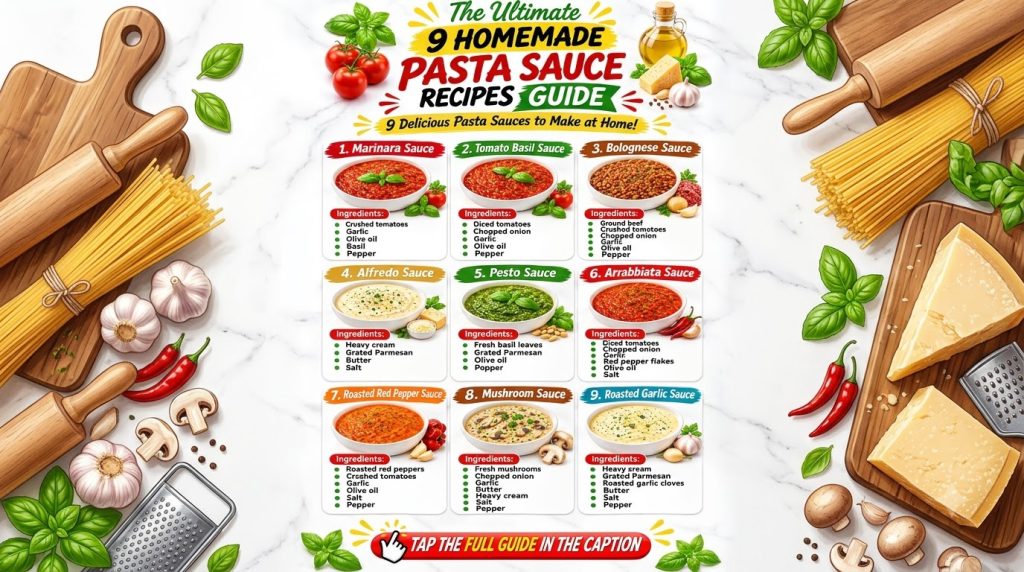
From a bright, simple marinara to a rich, slow-simmered Bolognese, homemade pasta sauce is one of the easiest ways to make weeknight pasta taste like a special meal. Most of these sauces use pantry staples like canned tomatoes, garlic, olive oil, and Parmesan, so you can switch between them without a trip to the store.
Why Make Your Own Pasta Sauce
- Most sauces come together in one pot in under an hour.
- You control the salt, sugar, and oil.
- Each sauce uses simple, familiar ingredients.
- Leftovers store well for quick meals later in the week.
9 Homemade Pasta Sauces to Try
Each sauce below includes its main ingredients and a short method. Quantities are for about 1 pound (450 g) of dried pasta, and cooking times are approximate, so watch the sauce rather than the clock.
1. Classic Marinara
Ingredients: 2 tbsp (30 ml) olive oil, 3 cloves garlic (minced), one 28 oz (800 g) can crushed tomatoes, 1 tsp salt, a pinch of black pepper, and a few torn basil leaves.
Warm the oil and cook the garlic over medium-low heat for about 1 minute, until fragrant but not browned. Add the tomatoes and salt, then simmer uncovered for 15 to 20 minutes, until slightly thickened. Stir in the basil at the end.
2. Tomato Basil
Ingredients: the same base as marinara, plus 1 tbsp (14 g) butter and a generous handful of fresh basil.
Make the marinara, then stir in the butter off the heat for a smoother, rounder flavor. Add the basil just before serving so it stays bright green.
3. Bolognese
Ingredients: 1 tbsp (15 ml) olive oil, 1 small onion, 1 carrot, and 1 celery stalk (all finely chopped), 8 oz (225 g) ground beef, 2 tbsp (30 g) tomato paste, 1/2 cup (120 ml) milk, 1/2 cup (120 ml) dry red wine or broth, and one 28 oz (800 g) can crushed tomatoes.
Cook the vegetables in oil for about 8 minutes, until soft. Add the beef and brown it fully, breaking it apart as it cooks. Stir in the tomato paste, then the milk, wine, and tomatoes. Simmer gently, partly covered, for 45 minutes to 1 hour, stirring now and then, until thick.
4. Alfredo
Ingredients: 3 tbsp (43 g) butter, 2 cloves garlic (minced), 1 cup (240 ml) heavy cream, and 1 cup (about 90 g) finely grated Parmesan.
Melt the butter and cook the garlic briefly. Add the cream and warm it gently until it just starts to bubble. Reduce the heat, then whisk in the Parmesan a handful at a time until smooth. Keep the heat low so the cheese does not clump.
5. Pesto
Ingredients: 2 cups (about 60 g) packed fresh basil leaves, 1/3 cup (45 g) pine nuts or walnuts, 2 cloves garlic, 1/2 cup (50 g) grated Parmesan, 1/2 cup (120 ml) olive oil, and a pinch of salt.
Pulse the basil, nuts, and garlic in a food processor until finely chopped. Add the Parmesan and salt, then stream in the olive oil while the machine runs until the sauce is spreadable but not watery.
6. Arrabbiata
Ingredients: 2 tbsp (30 ml) olive oil, 3 cloves garlic (sliced), 1/2 to 1 tsp red pepper flakes, one 28 oz (800 g) can crushed tomatoes, 1 tsp salt, and chopped parsley for serving.
Cook the garlic and pepper flakes in oil for about 1 minute, until the garlic is lightly golden. Add the tomatoes and salt, then simmer for 15 to 20 minutes. Finish with parsley. Start with less chili if you are unsure of your heat tolerance.
7. Roasted Red Pepper
Ingredients: 2 roasted red peppers (from a jar or roasted at home), 1 clove garlic, 2 tbsp (30 ml) olive oil, 1/4 cup (25 g) grated Parmesan, and a splash of pasta water.
Blend the peppers, garlic, oil, and Parmesan until smooth. Warm the sauce in a pan over low heat, adding pasta water a little at a time until it coats the noodles.
8. Mushroom
Ingredients: 8 oz (225 g) sliced mushrooms, 2 tbsp (28 g) butter, 2 cloves garlic (minced), 1/2 cup (120 ml) heavy cream or broth, 1 tsp fresh thyme leaves, and salt and pepper.
Cook the mushrooms in butter over medium-high heat until they release their liquid and turn golden, about 6 to 8 minutes. Add the garlic and thyme, then pour in the cream or broth and simmer until the sauce thickens slightly.
9. Roasted Garlic
Ingredients: 1 whole head garlic, 1 tbsp (15 ml) olive oil, 1 tbsp (14 g) butter, 1/2 cup (120 ml) cream or pasta water, and 1/4 cup (25 g) grated Parmesan.
Cut the top off the garlic head, drizzle with oil, wrap in foil, and roast at 400°F (200°C) for about 35 to 40 minutes, until very soft. Squeeze the cloves into a pan with butter, then add cream or pasta water and Parmesan and stir until smooth.
Pro Tips for Better Sauces
- Use good-quality canned whole tomatoes if you are not sure about crushed tomatoes, and crush them by hand for a more rustic texture.
- Save a half cup of pasta water before draining. The starch helps sauces cling to the noodles.
- Finish pasta in the sauce for about 1 minute so they absorb flavor.
- Grate Parmesan fresh from a block for the smoothest melt.
Common Mistakes to Avoid
Browning garlic too far makes tomato sauces taste bitter, so keep the heat moderate. Boiling cream-based sauces can cause them to separate, so keep them at a gentle simmer. Adding all the salt at once can make sauces taste harsh, so season in stages and taste as you go.
Storage and Reheating
Tomato, Bolognese, and roasted pepper sauces store well in the refrigerator in an airtight container for about 3 to 4 days. Cream-based sauces like Alfredo are best eaten fresh but can be refrigerated for a day or two. Reheat gently on the stove over low heat, adding a splash of water or milk if the sauce has thickened. Many tomato and Bolognese sauces can also be frozen for up to 3 months.
Frequently Asked Questions
Which sauce is the easiest to make first?
Classic marinara is the easiest starting point. It needs only a few ingredients and one pot.
Can I make these sauces ahead of time?
Yes. Tomato-based sauces and Bolognese often taste even better the next day. Pesto is best made close to serving time to keep its color bright.
Why did my cream sauce turn grainy?
The heat was probably too high, or the cheese was added too quickly. Lower the heat and add Parmesan gradually.
Save this guide for your next pasta night, and choose one sauce to start with this week.