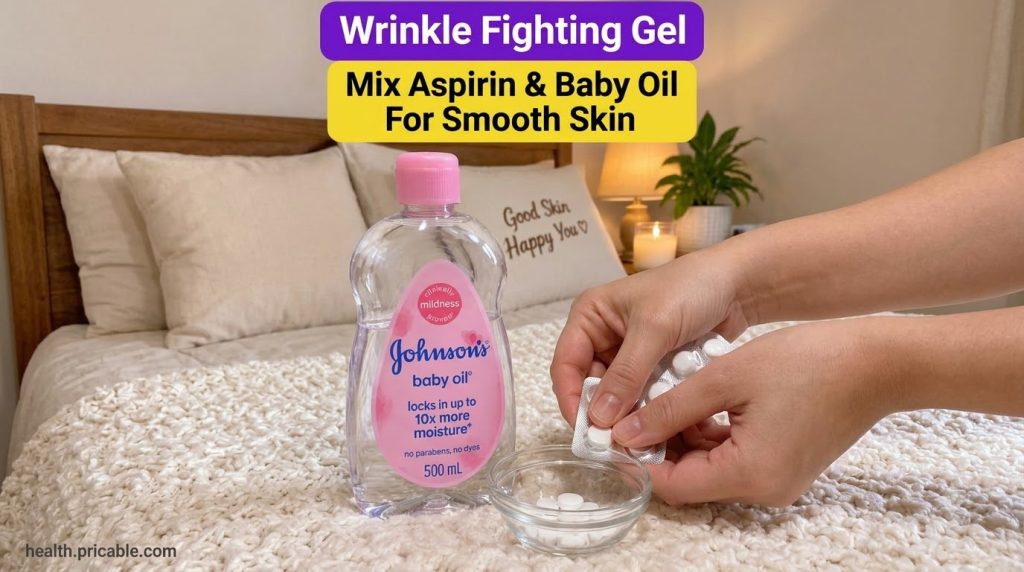
This homemade facial paste mixes a crushed uncoated aspirin tablet with a little baby oil to create a thin, easy-to-spread treatment for a smoother-looking complexion. It is a simple, short-contact routine for occasional use, not a replacement for a dermatologist-approved wrinkle treatment.
Quick Recipe
Prep time: About 5 minutes
Best for: Dry-looking skin and the appearance of fine lines on the face
Use type: Paste
Main ingredients:
- 1 uncoated aspirin tablet, crushed
- 1 teaspoon baby oil
- Optional: a few drops of your regular fragrance-free moisturizer
Ingredients
- 1 uncoated aspirin tablet (low-dose or standard strength)
- 1 teaspoon baby oil
- A small clean glass or ceramic bowl
- A clean spoon or small spatula
- A soft cotton pad or clean cloth for removal
How to Make It
- Wash your hands and the bowl thoroughly so the mixture stays clean.
- Place one uncoated aspirin tablet in the bowl. Coated tablets do not crush as easily and are not recommended for this recipe.
- Crush the tablet into a very fine powder with the back of the spoon.
- Add the baby oil and stir slowly until the powder is evenly suspended and the mixture looks like a thin, smooth paste.
- Use the paste right away. Do not store it, because aspirin can break down and the mixture can become irritating over time.
How to Use It
- Cleanse your face with a gentle, fragrance-free cleanser and pat it completely dry.
- Before using it on your face, test a small amount on the inside of your forearm and wait 24 to 48 hours. Skip the recipe if you notice redness, stinging, itching, or swelling.
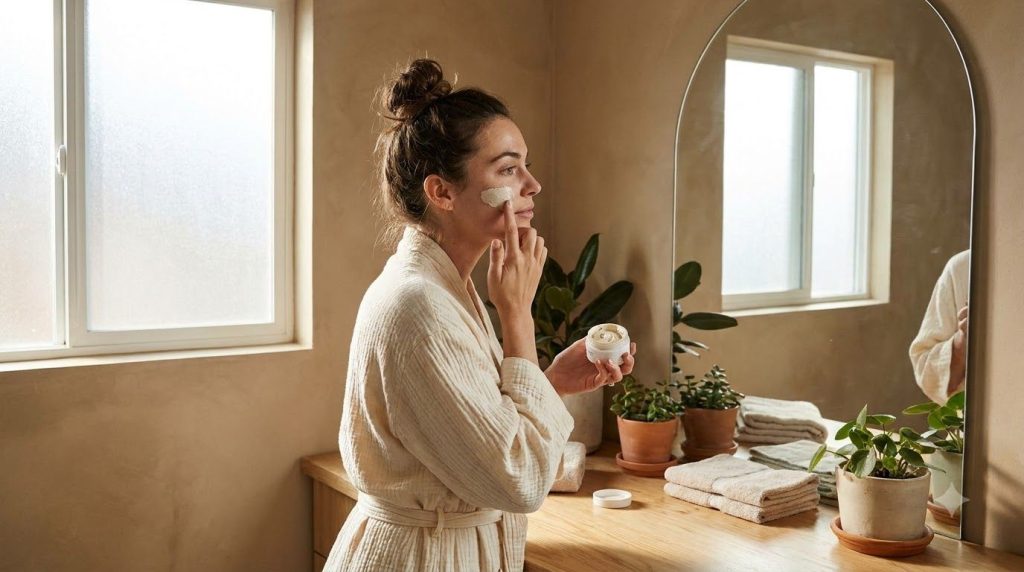
- Apply a very thin layer to clean, unbroken skin on your cheeks or forehead. Avoid the eyes, lips, nostrils, and the delicate skin right under the eyes.
- Leave it on for no more than 10 minutes, then wipe it away with a soft damp cloth and rinse with lukewarm water.
- Follow with your usual moisturizer to help the skin feel comfortable.
How Often to Use It
Start with one short application once a week. If your skin stays comfortable after several uses, you may use it up to two times a week at most. Make a fresh batch each time, and never reuse leftovers.
Why These Ingredients Are Used
Aspirin
Aspirin is a mild acid-based compound that is sometimes added to home mixtures because it is widely available. Its effect on the skin is not well studied for wrinkles, and it can irritate sensitive skin, so it should be used with real caution.
Baby Oil
Baby oil is a mineral oil that forms a light, occlusive layer on the skin. This layer can help reduce moisture loss and leave the skin feeling softer and more comfortable.
What Results to Expect
This paste may help your skin feel softer and look more comfortable for a short time after use. Some people notice a fresher-looking surface, but it is not a proven fix for wrinkles. Results from home mixtures are gentle and temporary. Consistent moisturizing, sun protection, and a balanced routine usually matter more for a smoother-looking complexion over time.
Safety Notes
- Patch test first for topical remedies, and wait at least 24 to 48 hours before using it on your face.
- Use gently and never scrub the paste into the skin.
- Avoid irritated, sunburned, acne-prone, cut, or broken skin.
- Keep the mixture away from your eyes, lips, and mucous membranes.
- Stop using it if stinging, burning, redness, or discomfort occurs, and rinse your face with cool water.
- Aspirin can cause allergic reactions in some people, including people sensitive to salicylates. Do not use this recipe if you are allergic to aspirin or similar medicines.
- If you take blood thinners, have a bleeding disorder, have asthma, or have kidney or liver problems, talk with a doctor or pharmacist before trying any aspirin-based product on your skin.
- Keep aspirin and baby oil out of reach of children, and never let anyone swallow the mixture.
FAQ
Can I leave the paste on overnight?
No. Leaving aspirin on the skin for long periods can increase the risk of irritation. Keep the contact time short and rinse it off after about 10 minutes.
Can I use coated aspirin instead?
Coated tablets are harder to crush and may contain ingredients that irritate the skin. Uncoated tablets are the better choice if you decide to try this recipe.
Is this a proven wrinkle treatment?
No. There is no strong scientific evidence that this mixture reduces wrinkles. It is a simple home idea that may leave skin feeling softer for a short time. For persistent lines, a dermatologist can recommend proven options.
Final Thoughts
This simple paste is quick to make and easy to try, but patience and caution matter most. If you enjoy simple home beauty ideas, explore more practical recipes on our site and share your experience in the comments.