Cooler weather does not have to mean the end of your vegetable harvest. As days shorten and nights turn crisp, many cool-season crops keep growing steadily, and a well-timed November planting can give you tender greens and crunchy roots while the summer garden winds down. The secret is choosing fast-maturing crops, planting them at the right time for your climate, and protecting young seedlings from hard freezes and weak winter sunlight. Let’s walk through what to plant, how to sow it, and where November planting makes the most sense.
Why Quick Cool-Season Crops Work in November
Cool-season vegetables are built for chilly weather. Many handle light frost without trouble, and some, such as spinach, actually taste sweeter after a cold snap because cold triggers the plant to convert starches into sugars. The main challenge in November is not the cold itself but the shrinking daylight. Plants grow more slowly when days are short, so a crop that matures in 30 days in April may take twice as long in late autumn.
That is why the phrase days to maturity should be read as a starting estimate. Most seed packets count from the day you sow to the first harvest under ideal conditions. Fall growing is slower, so plan for the upper end of the range or a bit beyond. Soil temperature matters as much as air temperature. Most of these crops germinate best when the soil sits roughly between 45 and 75 degrees Fahrenheit, and seeds sown into cold, waterlogged soil often rot before they sprout.
Spinach: Sweet, Cold-Tolerant Leaves
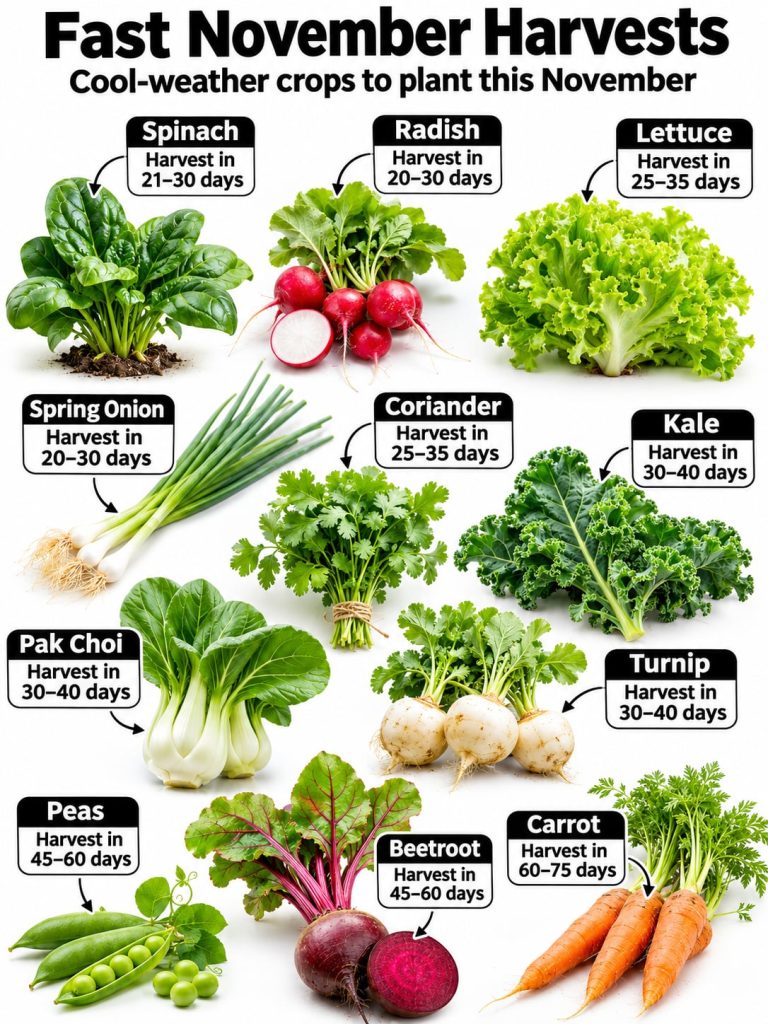
Spinach (Spinacia oleracea) is one of the most reliable fall crops. Baby leaves are usually ready in about 30 to 40 days, and full-size leaves in roughly 40 to 50 days. It is hardy in many areas down to around 20 degrees Fahrenheit, and mature plants often survive colder spells when they are protected.
Sow seeds about half an inch deep and roughly two inches apart in rows spaced 12 inches apart. Once the seedlings have four or five true leaves, thin them to about three to four inches apart so each plant has room to develop. Spinach grows best in full sun to light shade and in loose, fertile soil with good drainage. Mix in one to two inches of compost before planting if your soil is thin.
Harvest the outer leaves first and leave the center of the plant intact. This keeps the plant producing for weeks. Spinach is sensitive to lengthening spring days and will bolt, or send up a flower stalk, when the weather warms. Choosing slow-bolting varieties helps extend the harvest. A common mistake is letting the soil dry out and then soaking it, which can cause stress and bitter leaves. Aim for evenly moist soil instead.
Radishes: The Quickest Harvest in the Garden
Radishes (Raphanus sativus) are the perfect confidence builder for a new fall gardener. Many varieties are ready in 20 to 30 days, and you can often pull the first roots in under four weeks. They are among the fastest crops you can sow, and they make a wonderful companion in a row of slower greens.
Sow seeds about half an inch deep and one inch apart, then thin seedlings to two inches. Radishes need loose, stone-free soil. In heavy clay or compacted ground, roots become misshapen, split, or stubby. If your soil is dense, grow them in a raised bed or a container at least six inches deep.
Water radishes consistently. Uneven moisture causes cracking and a pithy, overly hot texture. Pull roots once the shoulders are about one inch across, and do not let them sit too long in the ground. Cool fall weather produces crisp, mild radishes, while heat in spring makes them woody and fiery.
Lettuce: Cut-and-Come-Again Greens
Lettuce (Lactuca sativa) is ideal for steady, small harvests. Loose-leaf and baby lettuce types can be cut at about 25 to 35 days, while head lettuces usually need 60 days or more. Lettuce grows well in cool weather, but it is sensitive to heat and dry soil, so fall is often its best season.
Lettuce seeds need light to germinate, so sow them very shallowly, about one-quarter inch deep, and press them lightly into the soil. Thin leaf types to about six inches apart. Give plants four to six hours of sun in the cool season. In milder southern climates, afternoon shade may help once temperatures stay mild and sunny.
To harvest, cut the outer leaves about one to two inches above the soil line. The plant will often regrow several times. Watch for slugs in damp fall conditions, especially on young seedlings. Handpicking at dusk or setting a shallow beer trap is a low-impact first step before turning to any other control.
Other Fast Cool-Season Options to Round Out Your Bed
To fill out a fall plan, consider a few more quick crops that handle cool weather well. Arugula is often ready in 20 to 30 days and offers a peppery flavor. Mustard greens mature in about 30 to 40 days and can be harvested as baby leaves sooner. Bok choy produces tender baby heads in 30 to 45 days. Green onions and turnip greens also grow quickly and can be picked gradually. Sow these using the same principles: cool soil, consistent moisture, and thinning for airflow.
Step-by-Step Setup for a November Planting
- Check your average first frost date and count backward using the days to maturity listed on the seed packet. Add a week or two for slower fall growth.
- Loosen the top six inches of soil and mix in one to two inches of compost. Remove stones and roots that could block root growth.
- Sow seeds at the depth listed on the packet, and label each row so you remember what you planted.
- Water gently with a watering can or soaker hose until the top inch of soil is moist but not soggy.
- Cover the bed with a floating row cover when nighttime temperatures are forecast to fall near 28 degrees Fahrenheit, and remove it on sunny days to prevent overheating.
- Sow small batches every 10 to 14 days so you have a steady supply rather than one large harvest.
Common Mistakes to Avoid
- Planting too deeply, which delays emergence and wastes energy in cold soil.
- Overwatering in cold, poorly drained beds, which invites seed rot and damping-off disease.
- Skipping thinning, which crowds plants and reduces airflow, increasing the risk of mildew.
- Waiting too long to harvest radishes, which become woody and hot.
- Sowing in deep shade, where spinach and lettuce grow slowly and produce small leaves.
Regional Guidance Across U.S. Climates
November planting is most successful in USDA Zones 8 to 10, including much of the Gulf Coast, Florida, and coastal Southern California, where mild winters allow these crops to grow outdoors for months. In Zones 6 and 7, plant in late summer or early fall for the best results, and use cold frames or row cover for November sowings. In Zones 3 to 5, outdoor sowing in November is usually too late unless you have a protected cold frame or hoop house, so plan for an early spring or late summer sowing instead.
Remember that USDA zones measure winter cold, not the length of your fall season, rainfall, or microclimates. Frost dates can vary widely within a single zone, so check your local extension office for accurate dates and soil temperature guidance before you sow.
Conclusion: Start Small and Keep the Harvest Going
You do not need a large plot to enjoy quick fall vegetables. Choose one bed, sow a short row of radishes, a few rows of spinach, and a pinch of lettuce, and then track how fast each crop responds. Within a few weeks, you will have fresh greens and crisp roots that reward your effort. Start this week, keep the soil moist and the seedlings protected, and you will be harvesting homegrown food well into the cold season. Tell us in the comments which crop you plan to try first!