Craving authentic ciabatta? This homemade ciabatta bread brings the bakery to your kitchen with a golden crust and the signature airy, open crumb. With a wet dough, a few gentle folds and a hot oven, you can bake loaves that look and taste like the real thing.
Below you will find the classic ciabatta recipe, followed by five simple variations you can bake with the same method.
Quick Overview
- Main topic: Homemade ciabatta bread
- Best for: Beginner and intermediate home bakers
- Number of recipes: 6
- Prep style: Mixed dough with stretch-and-fold, long rise, hot oven bake
- Reader benefit: Bakery-style bread with an airy crumb, made from simple pantry ingredients
Recipe 1: Classic Homemade Ciabatta Bread
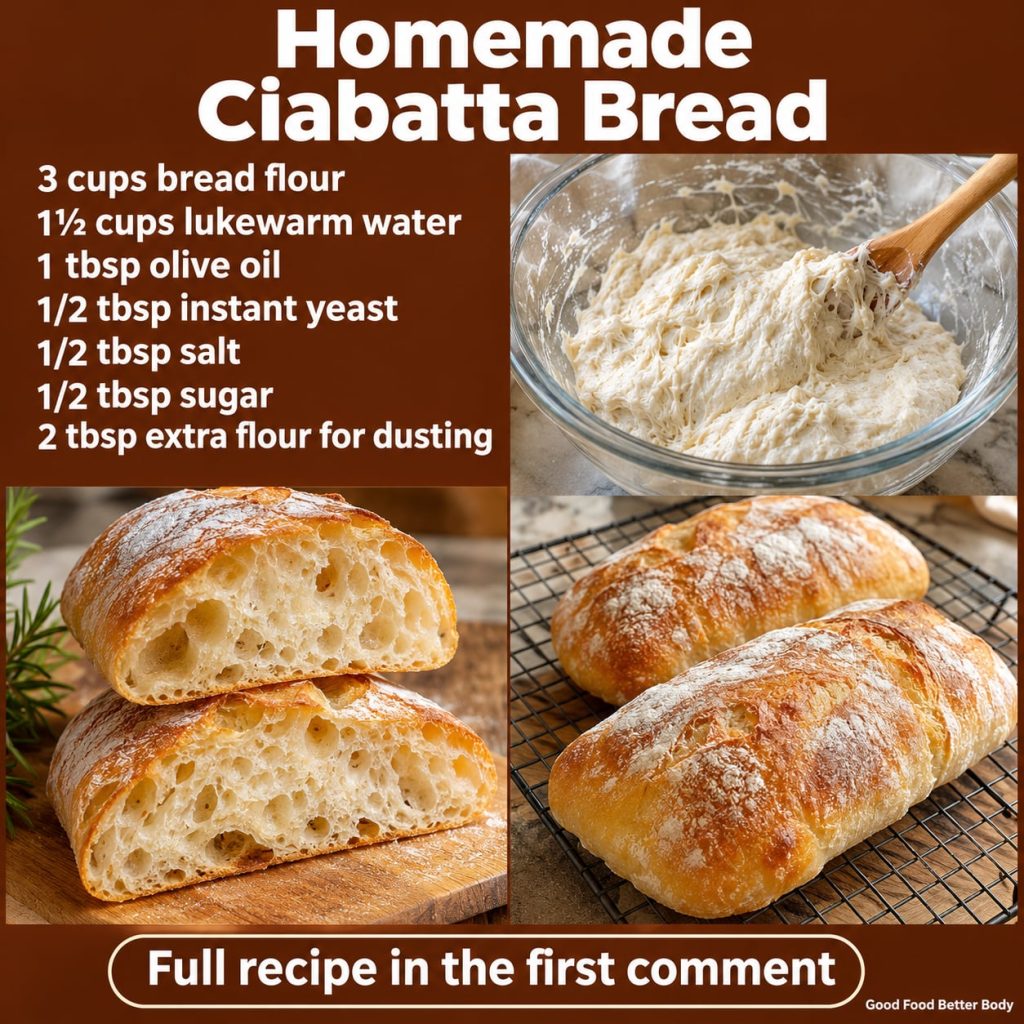
Servings: 2 loaves (about 10 slices each)
Prep time: 25 minutes
Rise / rest time: About 3 hours total
Bake time: 25 minutes
Ingredients:
- 500 g bread flour
- 375 g lukewarm water (about 75% hydration)
- 10 g fine sea salt
- 7 g instant yeast (about 1 packet)
- 30 ml extra virgin olive oil, plus extra for the bowl
Instructions:
- In a large bowl, mix the flour and yeast. Add the water and stir until shaggy and sticky. Rest 30 minutes.
- Sprinkle the salt and drizzle in the olive oil. Mix well, squeezing the dough through your fingers until everything is combined.
- Perform 3 sets of stretch-and-folds, spaced 30 minutes apart, pulling each side of the dough up and folding it over the center.
- Cover and let the dough rise at room temperature for about 2 hours, until roughly doubled and bubbly.
- Gently tip the dough onto a well-floured surface, without deflating it too much. Divide into two rectangular loaves.
- Dust generously with flour, cover, and let rest 45 minutes on a floured couche or parchment.
- Heat the oven to 230 °C (450 °F) with a baking tray or pizza stone inside. Carefully transfer the loaves to parchment and slide onto the hot surface, or add a tray of water to create steam.
- Bake 20 to 25 minutes until deep golden brown and hollow-sounding when tapped. Cool on a rack for at least 1 hour before slicing.
Storage / Serving Note: Best eaten the day it is baked. Store cut-side down in a paper bag or wrapped cloth for up to 2 days, or freeze slices for up to 3 months.
Recipe 2: Rosemary Olive Oil Ciabatta
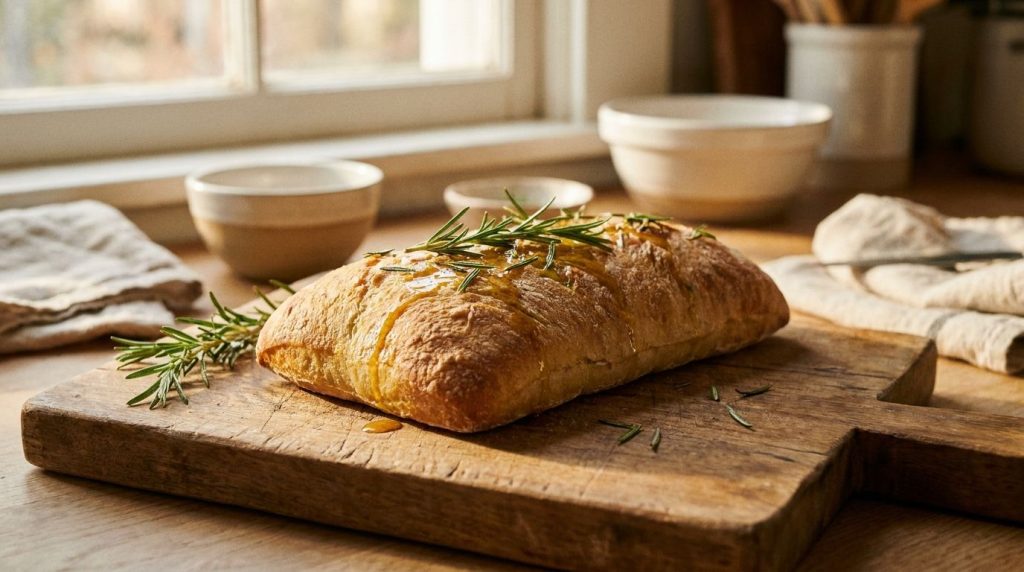
Servings: 2 loaves
Prep time: 25 minutes
Rise / rest time: About 3 hours total
Bake time: 25 minutes
Ingredients:
- Same base dough as Classic Homemade Ciabatta Bread
- 2 tablespoons finely chopped fresh rosemary
- 1 tablespoon extra olive oil for brushing
- Flaky sea salt for topping
Instructions:
- Make the classic dough through step 3, adding the chopped rosemary with the salt.
- Complete the rise, divide, and shape as in the classic method.
- Brush the tops lightly with olive oil and sprinkle with flaky salt before baking.
- Bake at 230 °C (450 °F) for 20 to 25 minutes until golden, then cool completely.
Storage / Serving Note: Serve warm with a simple olive oil dip. Store as you would the classic loaf.
Recipe 3: Whole Wheat Ciabatta
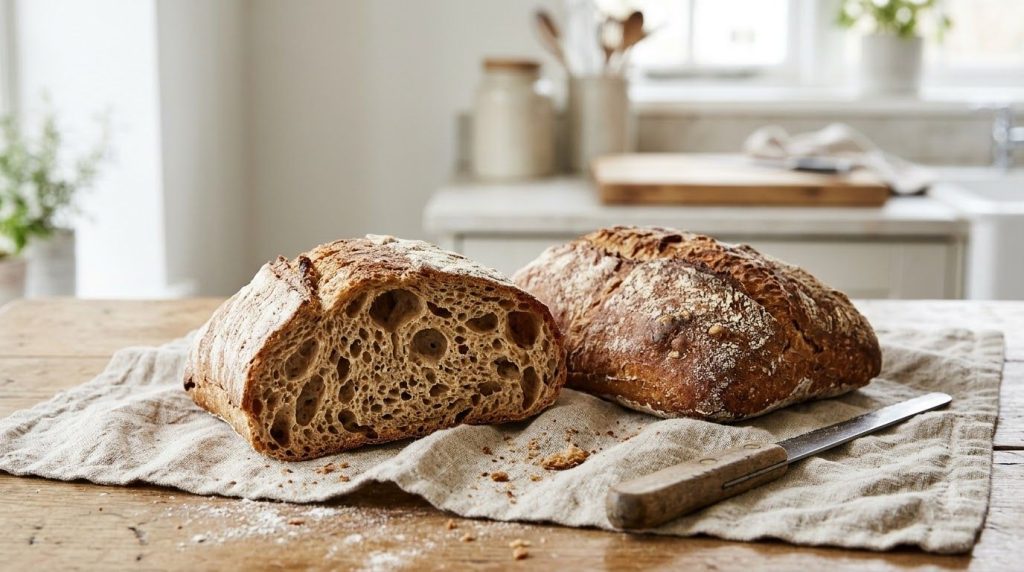
Servings: 2 loaves
Prep time: 25 minutes
Rise / rest time: About 3 hours total
Bake time: 25 minutes
Ingredients:
- 250 g bread flour
- 250 g whole wheat flour
- 380 g lukewarm water
- 10 g fine sea salt
- 7 g instant yeast
- 30 ml extra virgin olive oil
Instructions:
- Mix both flours and yeast, then add the water and rest 45 minutes, since whole wheat absorbs more liquid.
- Add salt and olive oil, then mix until smooth and sticky.
- Perform 3 stretch-and-folds at 30-minute intervals.
- Rise for 2 hours, divide, shape, and rest 45 minutes.
- Bake at 230 °C (450 °F) for 25 minutes until deep brown and hollow-sounding.
Storage / Serving Note: Whole wheat ciabatta keeps slightly longer than white and makes excellent sandwiches.
Recipe 4: Garlic Herb Ciabatta
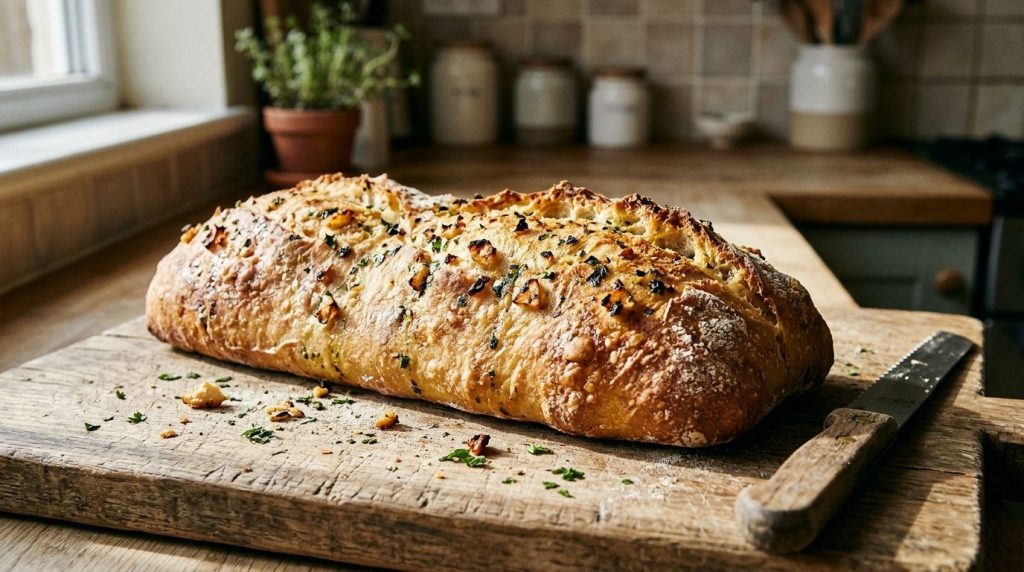
Servings: 2 loaves
Prep time: 30 minutes
Rise / rest time: About 3 hours total
Bake time: 25 minutes
Ingredients:
- Classic ciabatta dough ingredients
- 2 cloves garlic, finely minced
- 2 tablespoons chopped fresh parsley
- 1 teaspoon dried oregano
Instructions:
- Prepare the classic dough and add the garlic, parsley, and oregano during the first mix.
- Complete the stretch-and-folds and rise as usual.
- Shape the loaves, rest 45 minutes, and bake at 230 °C (450 °F) for 20 to 25 minutes.
Storage / Serving Note: Warm slices are excellent with olive oil or a soup alongside.
Recipe 5: Sun-Dried Tomato Ciabatta
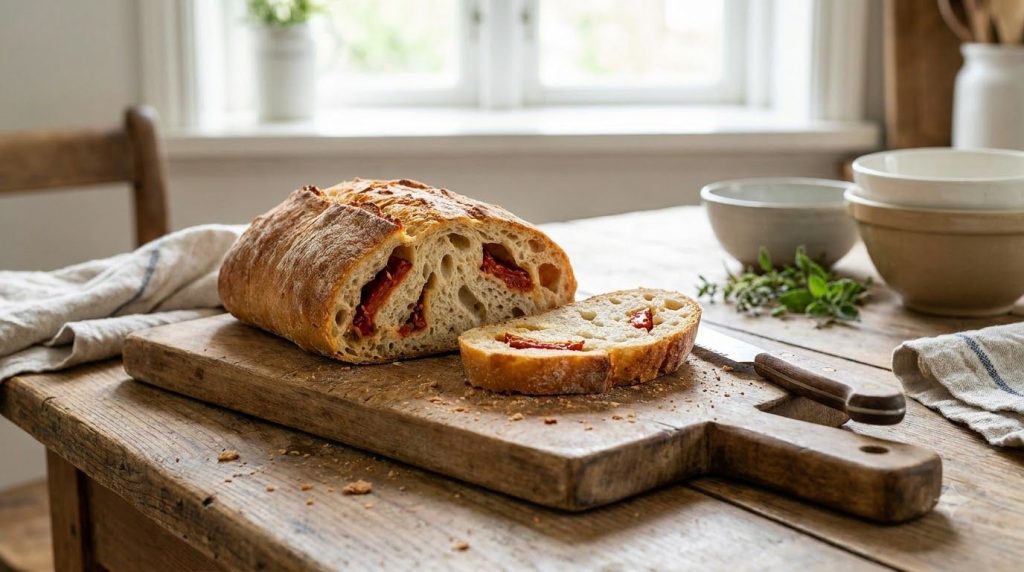
Servings: 2 loaves
Prep time: 30 minutes
Rise / rest time: About 3 hours total
Bake time: 25 minutes
Ingredients:
- Classic ciabatta dough ingredients
- 80 g oil-packed sun-dried tomatoes, drained and chopped
- 1 tablespoon oil from the tomato jar (optional, replaces part of the olive oil)
Instructions:
- Pat the tomatoes dry with a paper towel to prevent the dough from getting too wet.
- Mix the tomatoes into the dough during the last stretch-and-fold.
- Rise, shape, and rest as in the classic method.
- Bake at 230 °C (450 °F) for 20 to 25 minutes until golden.
Storage / Serving Note: Pairs well with fresh cheese or cured meats. Store as you would the classic loaf.
Recipe 6: Olive Ciabatta
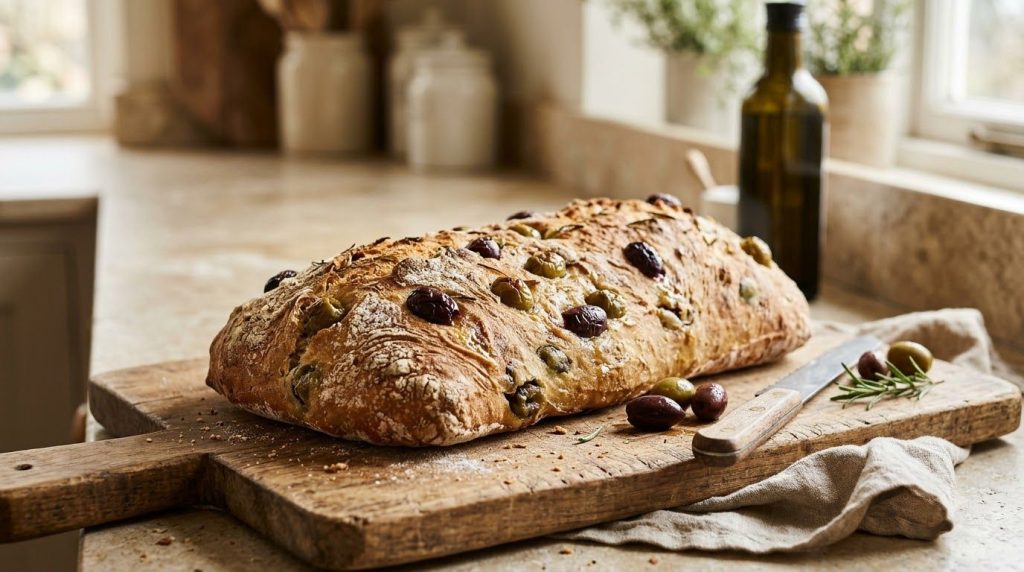
Servings: 2 loaves
Prep time: 30 minutes
Rise / rest time: About 3 hours total
Bake time: 25 minutes
Ingredients:
- Classic ciabatta dough ingredients
- 100 g pitted green or black olives, halved and patted dry
Instructions:
- Pat the olives completely dry to avoid moisture in the dough.
- Fold the olives in during the last stretch-and-fold.
- Shape the loaves gently to keep the olives intact, rest, and bake at 230 °C (450 °F) for 20 to 25 minutes.
Storage / Serving Note: Best served at room temperature with a drizzle of olive oil.
Simple Tips for Best Results
- Use a kitchen scale for accurate flour and water measurements.
- Handle the dough gently to keep the air bubbles that create the open crumb.
- Preheat the oven fully, and use steam for a crisp crust.
- Let the loaves cool completely before slicing so the crumb sets properly.
FAQ
Why is ciabatta dough so sticky?
Ciabatta uses a high-hydration dough, which creates the airy holes in the crumb. Lightly oil your hands and use a bench scraper to make handling easier.
Can I make ciabatta without a stand mixer?
Yes. The stretch-and-fold method works by hand and requires no kneading.
How do I know when the bread is fully baked?
The crust should be deep golden brown, and the loaf should sound hollow when tapped on the bottom.
Final Thoughts
Homemade ciabatta bread is a rewarding bake that rewards patience more than skill. Start with the classic loaf, then try these variations to make your own bakery-style bread at home.