A weak, uneven shower spray usually comes down to mineral buildup inside the nozzle holes. Hard water leaves behind white limescale, and the same kind of mineral residue can build up on the soleplate of a clothes iron. Both problems can be handled with a few pantry staples, a little patience and a gentle scrub.
Tip 1: Deep Clean a Clogged Showerhead
If your shower feels weaker than it used to, or the spray comes out in odd patterns, the nozzle holes are likely partly blocked. This method loosens limescale so you can scrub it away instead of forcing it out.
What You Will Need
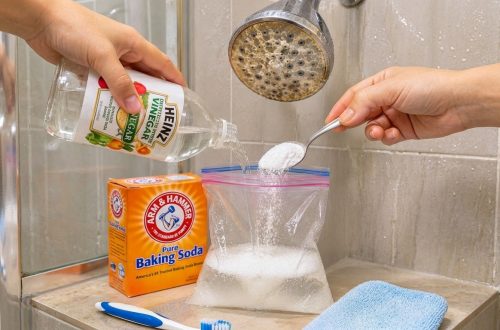
- About 1 cup distilled white vinegar, enough to fill a sealed plastic bag around the showerhead face
- 1 tablespoon baking soda
- A gallon-size zip bag or sturdy plastic bag
- A rubber band or twist tie
- An old toothbrush
- A soft cloth for wiping and drying
Why This Method Works
Vinegar is mildly acidic, and that acidity helps break down calcium-based limescale over time. Soaking keeps the liquid in contact with the deposits for longer than a quick wipe would. Baking soda adds a mild abrasive texture that helps lift loosened residue when you scrub, and the fizzing you see is a sign the two ingredients are reacting on the surface. The soak does the heavy lifting, and the toothbrush finishes the job.
How to Make and Apply the Soak
- Turn off the water and, if possible, unscrew the showerhead from the arm. If it will not come off, you can still soak it in place.
- Pour about 1 cup of white vinegar into the plastic bag.
- Add 1 tablespoon of baking soda. Add it slowly, because the mixture will fizz and may foam up.
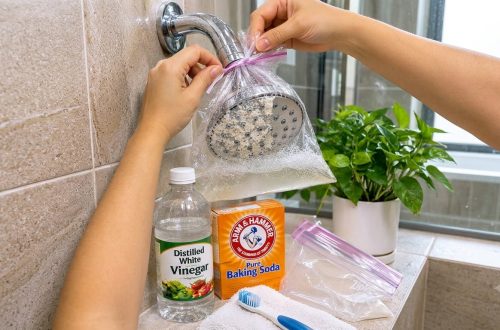
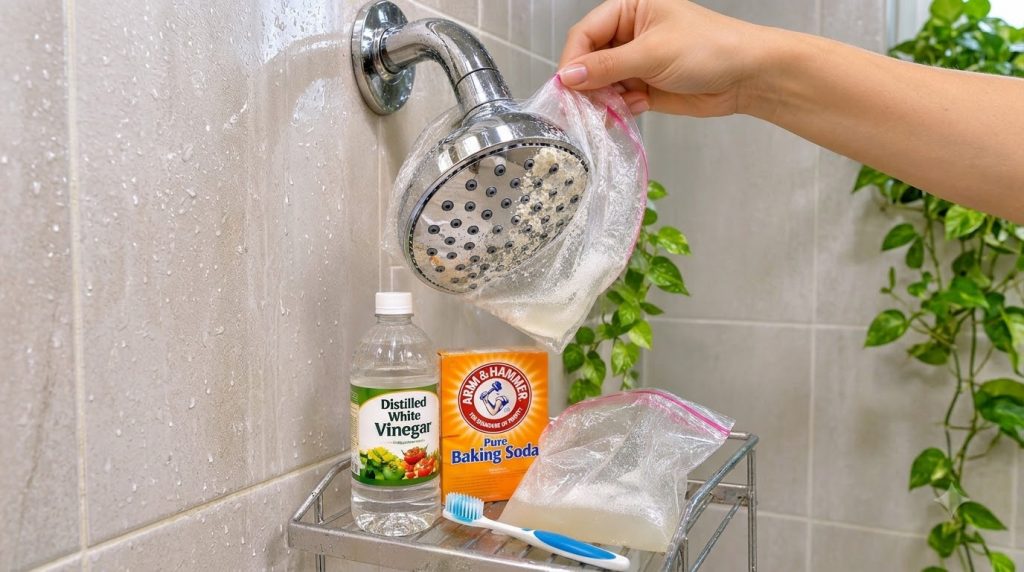
- Place the bag over the showerhead so the nozzle face is fully submerged. Secure the bag tightly with a rubber band or twist tie so the solution stays in place.
- Let it soak for at least 1 hour. For light buildup, 30 to 60 minutes may be enough. For heavy limescale, soak for 2 to 4 hours, or leave it overnight if the showerhead is removable and the finish is safe for it.
Scrubbing and Rinsing
- Remove the bag and dump the solution down the drain.
- Scrub the nozzle face and the area around each hole with the old toothbrush. Work in small circles and pay extra attention to the edges of the holes.
- Rinse the showerhead thoroughly under running water until no residue or gritty texture remains.
- Wipe the chrome surface with a soft cloth to remove any remaining film, then reattach the showerhead and turn the water back on.
Stubborn deposits may need a second round. If some holes still look blocked, repeat the soak and scrub with the toothbrush. Avoid pins, needles or metal tools, which can scratch the surface or enlarge the holes unevenly. A gentle tap of the head against the palm of your hand after rinsing can also help loosen small particles.
What to Expect
A successful deep clean gives you a cleaner chrome surface, more open nozzle holes and a stronger, more even spray. Results depend on how much buildup you have and how long the showerhead has gone without cleaning. Very heavy or old deposits may only improve partly after one soak, so regular cleaning every few months will keep the spray stronger for longer.
Important Notes for the Showerhead
- Never mix vinegar with bleach or other cleaning products. Rinse the showerhead well before using any other cleaner.
- Ventilate the bathroom by opening a window or running the exhaust fan.
- Vinegar can dull some finishes, including brass, lacquer and natural stone. Test a small hidden area first and rinse quickly if you notice any changes.
- If the showerhead is plastic-coated or has a special finish, check the manufacturer’s care instructions before soaking it for hours.
Tip 2: Clean a Burnt Iron Soleplate
Brown or black scorch marks and stuck-on residue on an iron’s soleplate can make clothes look dirty, even after washing. A gentle baking soda paste and a careful wipe can lift much of this buildup without harsh chemicals.
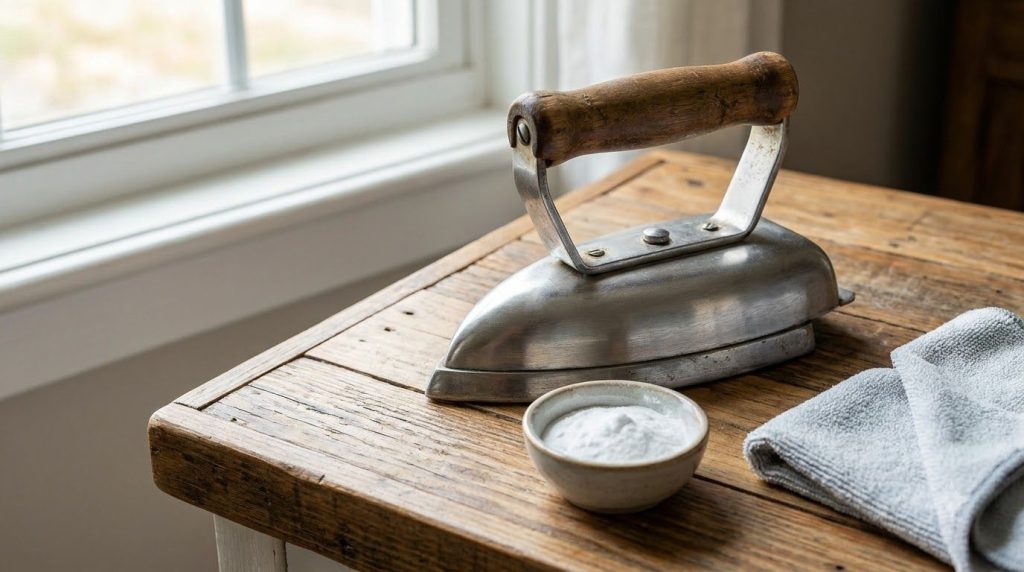
What You Will Need
- Baking soda
- Water, a few drops at a time
- A soft microfiber cloth
- A second cloth dampened with water
- A cotton swab or an old soft toothbrush for seams and vents
- A dry paper towel or dry cloth
How to Make the Paste
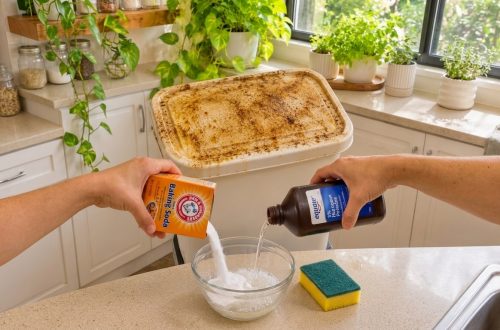
- Place about 3 parts baking soda in a small bowl.
- Add 1 part water a few drops at a time, stirring until you have a thick, spreadable paste. It should be thick enough to stay on the metal without dripping.
How to Clean the Soleplate
- Unplug the iron and let it cool completely. This can take several hours. Never clean a warm or plugged-in iron.
- Check the manufacturer’s label or instructions. Nonstick soleplates need extra caution, so use only the softest cloth and gentlest pressure.
- Dip the microfiber cloth into the paste and rub the stained metal in gentle circular motions. Focus on the brown or black marks rather than scrubbing the whole plate hard.
- For tough marks, let the paste sit on the soleplate for 5 to 10 minutes before rubbing again.
- Use a cotton swab or soft toothbrush to reach the seams and steam vents.
- Wipe away the paste with the damp microfiber cloth, then go over the plate with a dry cloth so no moisture remains.
What to Expect
Light scorch marks and residue should lift noticeably after one or two rounds. Deep, old burn marks may fade rather than disappear completely, especially on nonstick soleplates. The goal is a cleaner plate that glides more smoothly and stops transferring dark specks onto your clothes.
Important Notes for the Iron
- Never use steel wool, abrasive scouring pads or metal scrapers. These can scratch the soleplate and damage any nonstick coating.
- Do not submerge the iron in water or let paste get into the steam chamber or electrical parts.
- Test the cleaning method on a small area first if you are unsure about the finish.
- After cleaning, run the iron on a steam setting over an old cotton towel to clear any leftover residue, then check the plate is dry before using it on clothes.
Final Thoughts
Both of these fixes rely on simple household items and gentle, patient cleaning. Soak and scrub the showerhead to restore a stronger spray, and use a baking soda paste with a soft cloth to clean the iron without harsh scraping. Regular light cleaning will always work better than waiting until buildup becomes severe.