Have you ever wondered how fermented foods fit into a healthy routine? Fermenting is one of the oldest kitchen traditions, and it is easier than many people expect. With just fresh vegetables, salt, water, and a clean glass jar, you can make tangy, crunchy snacks that add variety to your meals.
Below, you will find eight beginner-friendly ferments, along with a few simple tips to help you get started with confidence.
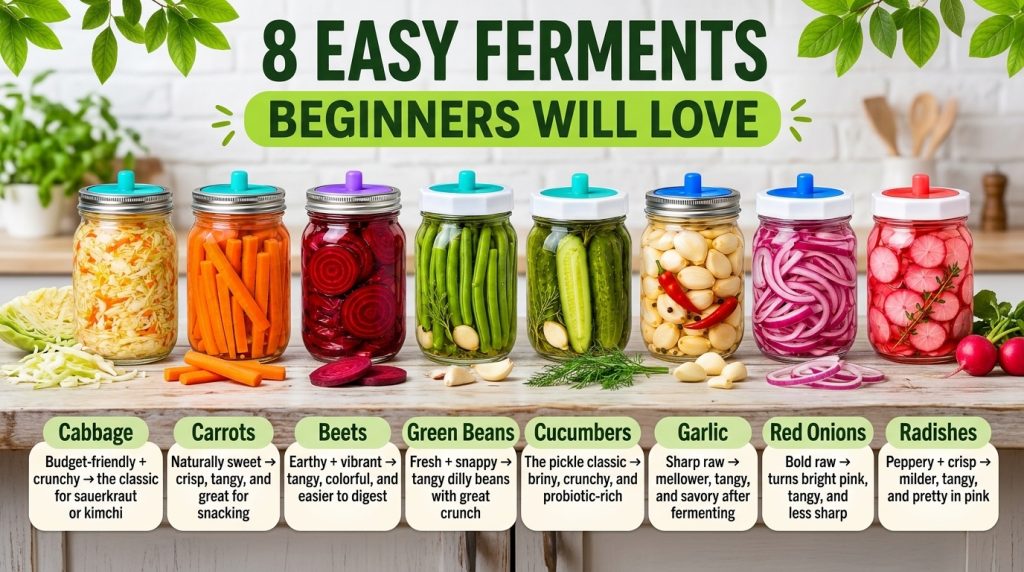
Why Fermented Vegetables Are Popular
Fermented vegetables have been enjoyed in many cultures around the world. They develop bright, tangy flavors and a pleasant crunch, and they are a simple way to make everyday meals more interesting. Many home cooks also enjoy them as a way to use up garden produce and reduce food waste.
8 Easy Ferments to Try First
-
1. Sauerkraut (Cabbage)
Shred cabbage, massage it with salt until it releases its juices, and pack it tightly into a jar. It is a classic starter ferment that pairs well with sandwiches, eggs, and roasted meals.
-
2. Carrot Sticks
Cut carrots into sticks or coins and place them in a lightly salted brine with a few herbs. They stay sweet and crisp, making them a great snack for lunchboxes.
-
3. Beets
Slice or cube beets and ferment them with garlic and a little dill. The result is a deep, earthy flavor and a vivid color that brightens any plate.
-
4. Green Beans
Pack trimmed green beans into a jar with garlic and peppercorns. They turn tender and tangy, and they are a good way to enjoy seasonal produce.
-
5. Cucumber Pickles
Use small, firm cucumbers and keep them fully submerged in brine. Add dill or a few black peppercorns for a classic pickle flavor.
-
6. Garlic Cloves
Peeled garlic cloves ferment into mellow, slightly sweet bites. Use them in dressings, sauces, or simply enjoy them on their own.
-
7. Red Onion Rings
Thinly sliced red onions soften and turn a bright pink color in the brine. They are a colorful topping for tacos, salads, and bowls.
-
8. Radishes
Sliced radishes lose some of their sharp bite and become pleasantly tangy and crisp. They work well on toast or in grain bowls.
Beginner Tips for Safe, Successful Ferments
- Use clean jars, utensils, and hands before you start.
- Use a simple salt brine or salt rub, following a trusted recipe for the right ratio.
- Keep the vegetables fully submerged under the brine, using a weight if needed.
- Ferment at a steady room temperature away from direct sunlight.
- Taste your ferment after a few days and continue until the flavor suits you.
- Discard any batch with fuzzy mold, a pink or black slimy surface, or an unpleasant smell.
Start Small and Enjoy the Process
Begin with one or two jars rather than trying all eight at once. Keep notes on what you made, how long it fermented, and what you liked best. Over time, you will develop your own favorites and a better feel for timing and flavor.
This article is for general information and home cooking inspiration only. It is not a substitute for professional medical advice. If you have specific dietary needs or health concerns, please speak with a qualified health professional.
Which one would you try first? Share your choice in the comments and let us know what you would like to see next!