If your shower spray has gone weak, uneven, or started spitting out flecks of white crust, limescale is the likely culprit. Hard water leaves mineral deposits inside the nozzles, and over time those deposits can block the holes completely. The good news is that you can clean most shower heads at home with two pantry staples, white vinegar and baking soda, plus a bag and a toothbrush.
What You’ll Need
Cleaning Ingredients
- White distilled vinegar, enough to fill a zip-top bag so the shower head is fully submerged (about 1 to 2 cups for most standard heads)
- Baking soda, about 2 tablespoons, plus a little water to make a paste
Tools
- A sturdy gallon-size or large zip-top plastic bag
- A rubber band or zip tie
- An old toothbrush
- A soft cloth or towel
Why This DIY Can Be Useful
Limescale is made of calcium and magnesium minerals left behind when water evaporates. White vinegar is mildly acidic, which helps break down these mineral deposits so they loosen from the metal and the spray holes. Baking soda is a mild abrasive, so it helps lift the softened residue when you scrub. Using the two in separate steps works better than mixing them together, which mostly just causes fizzing and wastes the cleaning power of the vinegar.
How to Make It
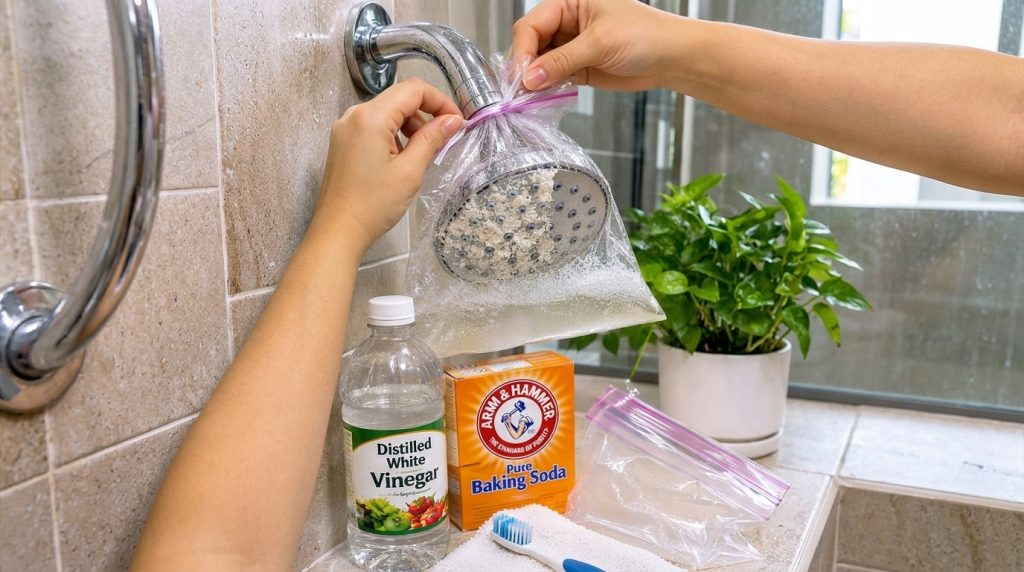
- Pour white vinegar into the zip-top bag. Use enough so the shower head will sit fully in the liquid once the bag is around it.
- Remove the shower head from the arm if you can. Many heads unscrew by hand or with a cloth for grip. If it will not come off, you can still soak it in place, but check that the bag is secure.
- Place the shower head into the bag and seal it. Slide the bag up around the head and secure the opening with a rubber band or zip tie so the nozzles stay submerged.
- Prepare a small amount of baking soda paste in a bowl by mixing about 2 tablespoons of baking soda with a few drops of water until it looks like toothpaste. Keep this separate from the vinegar bag.
How to Use It
Let the shower head soak for at least one hour. For heavier buildup, leave it for two to four hours or overnight. Remove the bag, then rinse the shower head with warm water to wash away loosened deposits.
Next, dip the toothbrush into the baking soda paste and scrub the face of the shower head, the nozzle holes, and the joints where white crust tends to collect. Gently work the bristles into each hole. Rinse thoroughly, then turn the water on for a minute to flush out any remaining debris. Wipe the finish dry with a soft cloth to keep water spots from forming.
What to Expect
Most light to moderate limescale should loosen after one soak, and the spray pattern usually improves noticeably after scrubbing. Heavily crusted heads may need a second round, and very old or damaged heads may not return to a perfect finish. The goal is clearer spray and better water flow, not a brand-new look.
Helpful Tips
- Check the shower head’s finish before you start. Vinegar can dull some decorative coatings, such as brushed or oil-rubbed finishes, so a short test on a hidden spot is a smart idea.
- Clean the shower head every few months in hard water areas to prevent heavy buildup.
- Use an old toothpick or a soft brush to clear any stubborn holes that still look blocked.
Important Notes / Safety
- Never mix vinegar with bleach or other cleaning products. Doing so can release harmful fumes.
- Rinse the shower head well after cleaning so no vinegar smell or residue is left behind.
- Ventilate the bathroom by opening a window or running the exhaust fan while you work.
- Keep the vinegar and baking soda stored in their original containers and out of reach of children.