If your skin feels tight, dry, or dull after a long day, you may have noticed how quickly a simple moisturizing routine can make a difference. Many people like to try homemade masks because they use everyday ingredients and feel like a relaxing break at home. One popular combination is petroleum jelly mixed with pure aloe vera gel, often shared online as an overnight glow treatment.
This mask works best as a short, gentle moisturizing treatment rather than a miracle fix. Petroleum jelly helps seal water into the skin, while aloe vera gel can feel cooling and soothing. Together, they may help skin feel softer and more comfortable for a little while. In this article, you will learn a simple recipe, how to apply it safely, how often to use it, and why leaving it on overnight is not something we recommend.
Beauty Recipe Overview
- Recipe Name: Vaseline and Aloe Vera Moisturizing Mask
- Beauty Category: Facial moisturizing mask
- Suitable Skin Type: Dry or normal skin that is not prone to breakouts
- Preparation Time: 2 minutes
- Application Time: 15 minutes
- Total Time: About 17 minutes
- Difficulty Level: Easy
- Yield: One single-use application
- Recommended Usage Frequency: Once or twice a week
- Storage Recommendation: Use immediately and discard any leftovers
Why You’ll Love This Recipe
- It uses just two accessible ingredients.
- It takes only a few minutes to prepare.
- It is budget-friendly and simple to make at home.
- It fits easily into a relaxing self-care routine.
- It can feel comforting on dry, tight-feeling skin.
- It is easy to adjust, so you can use less petroleum jelly if your skin feels heavy.
Complete Ingredients
Ingredients:
- 1 teaspoon white petroleum jelly (pure, unscented, and clean)
- 1 teaspoon pure aloe vera gel (100% aloe with no added alcohol, fragrance, or colorants)
If you cannot find pure aloe gel, you can use a fresh aloe leaf, but only after carefully scraping the clear inner gel and rinsing away any yellow sap. Fresh aloe can irritate some people, so a patch test is especially important. Do not substitute oils or fragrant lotions for the aloe gel in this recipe.
Equipment
- Small clean bowl
- Clean measuring spoon
- Clean spatula or spoon
- Soft washcloth
- Lukewarm water
Step-by-Step Preparation
- Wash your hands with mild soap and dry them completely.
- Place 1 teaspoon of petroleum jelly into a small clean bowl. Use a clean spoon, not a utensil that has touched food or other products.
- Add 1 teaspoon of pure aloe vera gel to the bowl.
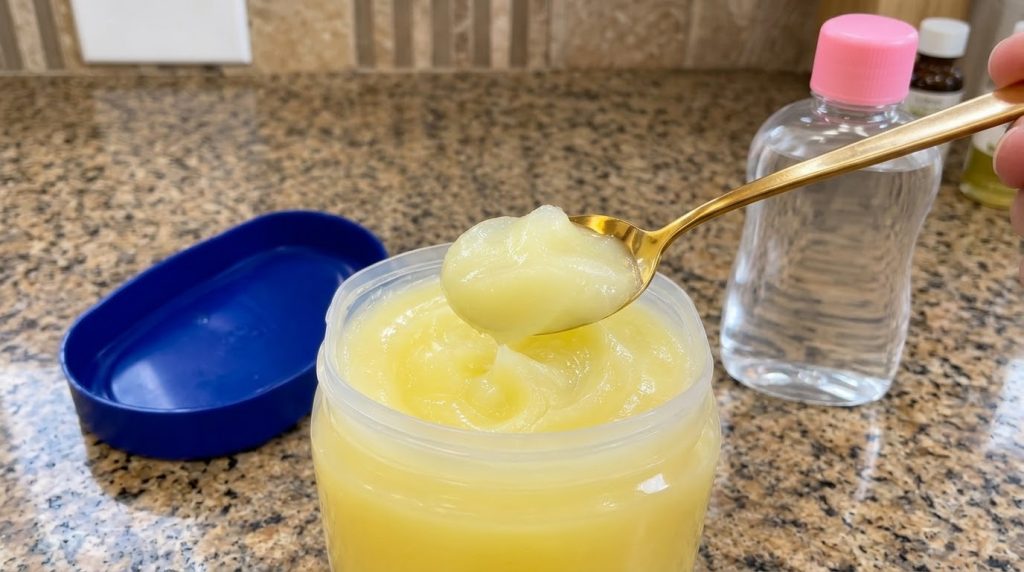
- Stir gently for about 30 seconds until the mixture looks smooth and evenly blended. It should feel soft, slightly glossy, and spreadable, similar to a thick lotion.
- If the mixture feels too heavy, add a few drops more aloe gel. If it feels too thin, add a small amount more petroleum jelly, a little at a time.
- Use the mixture right away. Do not save it for later use.
How to Apply the Mask
- Cleanse your face with a gentle, fragrance-free cleanser and pat your skin dry. Your skin should be clean and slightly damp or fully dry, not irritated.
- Using clean fingertips or a clean applicator, apply a thin layer of the mixture to your face and neck. Avoid the eyes, the inside of the nose, and any cuts, scrapes, or irritated areas.
- Leave the mask on for no more than 15 minutes. Do not sleep in it.
- Remove the mask by gently wiping it off with a soft washcloth dampened with lukewarm water. Avoid rubbing hard.
- Pat your face dry and follow with your regular moisturizer if you wish.
Petroleum jelly can feel greasy, so a clean washcloth and a few gentle passes usually work best. Wipe your hands and the bowl afterward to reduce mess.
Ingredient Benefits
Petroleum Jelly
Petroleum jelly is an occlusive ingredient. This means it forms a light barrier on the skin that can help reduce water loss. For dry skin, this may help skin feel softer and more comfortable. It does not add much water to the skin on its own, so it works best when used lightly and often combined with a hydrating ingredient.
Aloe Vera Gel
Aloe vera gel is commonly used in cosmetics for its light, cooling, and hydrating texture. It may help skin feel refreshed and comfortable. Aloe is not a treatment for acne, eczema, or other skin conditions, and it can still cause irritation or allergic reactions in some people.
Recommended Frequency
Using this mask once or twice a week is a reasonable starting point for most people with dry or normal skin. If your skin is sensitive, start with once every two weeks and see how your skin responds. Avoid using it more often than suggested, since too much occlusive product can feel heavy and may trap oil and debris on the skin for some people.
Expert Beauty Tips
- Apply a thin layer. A little goes a long way, and a heavy layer may feel greasy without adding extra benefit.
- Use a patch test first. Apply a small amount behind your ear or on your inner forearm, wait 24 hours, and watch for redness, itching, or swelling.
- Keep the mask away from your eyes. Petroleum jelly can irritate sensitive eye areas and be difficult to remove.
- Choose pure products. Check ingredient labels for alcohol, fragrance, or added colors, since these can irritate the skin.
- Pair the mask with a hydrating routine. Apply a fragrance-free moisturizer after cleansing to support your skin.
- Notice how your skin feels. If your skin looks shiny or feels heavy, reduce the amount next time.
Safe Recipe Variations
- Less petroleum jelly: Use half a teaspoon of petroleum jelly with one teaspoon of aloe gel. This version feels lighter and may suit normal or combination skin better.
- Aloe gel only, followed by a thin balm: Apply a thin layer of aloe gel, let it absorb for a few minutes, then add a very small amount of petroleum jelly to dry patches only. This may be helpful if the full mixture feels too heavy.
Avoid adding essential oils, citrus juice, baking soda, honey, or spices to this mask. These ingredients can irritate the skin or make the mixture less predictable.
Storage and Shelf Life
This mixture contains aloe, which is water-based, and fresh preparations can spoil quickly. Make only what you plan to use right away. Do not store leftovers, and do not refrigerate the mixture for later use, since refrigeration does not make a homemade cosmetic safe for long-term storage. Keep your petroleum jelly and aloe gel in their original closed containers, away from heat and direct sunlight, and discard any product that changes color, smell, or texture.
Safety Precautions
- Do a patch test before your first use, and wait 24 hours before applying the mask to your face.
- Stop using the mask if you notice redness, burning, itching, swelling, or small bumps.
- Do not apply the mask to broken, sunburned, or irritated skin.
- Keep the mixture away from your eyes, and rinse with lukewarm water if it gets into them.
- Do not sleep in the mask. Leaving occlusive products on for long periods can trap sweat, oil, and bacteria.
- If you have acne, rosacea, eczema, or another ongoing skin condition, speak with a qualified doctor or dermatologist before trying this recipe.
This recipe is a simple cosmetic treatment, not a medical treatment. It cannot cure skin conditions, remove wrinkles, or replace sunscreen. Always use sunscreen during the day.
Common Mistakes to Avoid
- Leaving the mask on overnight: Sleeping in a thick occlusive layer can trap oil and bacteria. Limit wear time to 15 minutes.
- Using too much product: A heavy layer can feel greasy and may clog pores for some people. Use a thin, even layer.
- Skipping the patch test: Even natural ingredients can cause allergic reactions. Test first.
- Storing the mixture: Aloe-based preparations can spoil. Make a fresh, single-use batch each time.
- Applying to broken skin: Stinging and irritation are more likely on damaged skin. Wait until your skin has healed.
Frequently Asked Questions
Is this mask suitable for sensitive skin?
It may be gentle for some people, but sensitive skin can react to aloe. Always patch test first and start with less frequent use.
How often can I use this mask?
Once or twice a week is a reasonable routine for most people with dry or normal skin.
Can I make the mixture in advance?
It is best to make it fresh and use it right away. Aloe-based mixtures can spoil, so do not store leftovers.
Should I refrigerate leftovers?
No. Refrigeration does not make a homemade mixture safe to keep. Discard any leftovers after use.
Can I replace one of the ingredients?
You can adjust the amounts, but avoid adding essential oils, citrus, baking soda, or other irritating ingredients.
What should I do if my skin becomes irritated?
Stop using the mask right away, rinse your face with lukewarm water, and avoid other new products until your skin calms down. If redness, swelling, or pain continues, contact a doctor.
Can this recipe replace my regular skincare products?
No. This mask can be an occasional addition to your routine, but it should not replace cleansing, moisturizing, and daily sunscreen.
Conclusion
A simple mix of petroleum jelly and pure aloe vera gel can be a comforting, budget-friendly way to give dry skin a little extra moisture during a relaxing self-care moment. It is quick to prepare, but it works best when used gently, in small amounts, and for a short time.
Consistent, gentle care is what supports healthy-feeling skin over time. Enjoy your routine, listen to your skin, and keep it simple.