Ever looked at a patch of dandelions or a row of beet tops and wondered whether you were looking at dinner? Many of the leaves we treat as weeds or thinning scraps are tender, nutrient-rich, and surprisingly versatile in the kitchen. The trick is knowing which leaves are safe, how to harvest them without stressing the plant, and how to prepare them so they taste great.
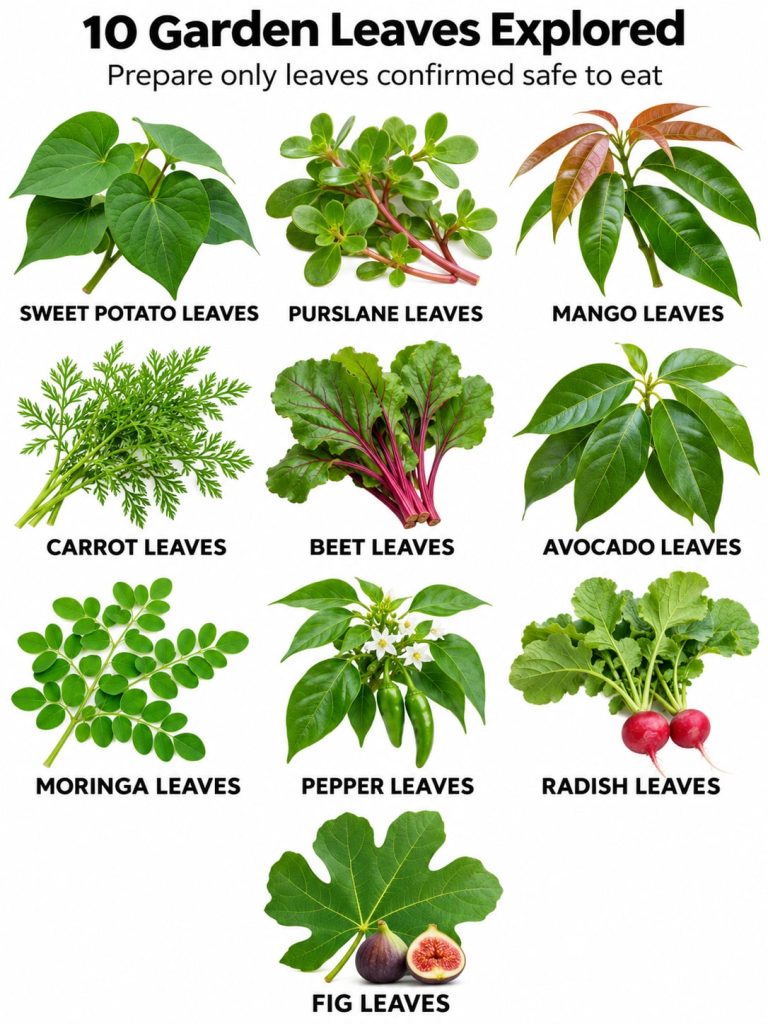
Your garden may already hold more edible greens than you realize. This guide walks through nine common leaves you can grow or forage, with practical advice on identification, harvesting, and preparation. Before you start, keep one rule in mind: only eat a plant when you are certain of its identity, and never harvest leaves from areas treated with herbicides or pesticides, or from spots near busy roads.
The Core Principle: Know Your Plant, Then Harvest Gently
Edible leaves are not all equal. Some are mild salad greens, some are better cooked, and a few contain compounds that require moderation. Before eating any leaf, confirm its identity with a reliable field guide or your local cooperative extension office. Also, avoid leaves from ornamental or landscape plants unless you know they are edible, because many garden plants are toxic. Harvest leaves from healthy plants, take the outer leaves first, and leave the center growth so the plant can keep producing.
1. Dandelion (Taraxacum officinale)
Dandelion is a perennial that grows in most of the United States, typically in USDA zones 3 through 9. Young leaves are the most tender and least bitter, so pick them in early spring before the plant flowers heavily. Rinse them well, then toss them into salads or sauté them with garlic and olive oil. Harvest from lawns only if you know they have not been treated with weed killer. Mature leaves can be quite bitter, so blanch them briefly in boiling water if you prefer a milder flavor.
2. Swiss Chard (Beta vulgaris subsp. vulgaris, Cicla Group)
Swiss chard is grown as an annual or biennial in most climates and tolerates a wide range of conditions. It performs well in full sun to light shade and in fertile, well-drained soil. Harvest the outer leaves when they reach about 6 to 8 inches long, cutting near the base and leaving the inner stalks to keep growing. Chard leaves are excellent sautéed, while the colorful stems can be cooked separately because they take longer to soften. Chard contains vitamin K, so people taking warfarin should keep their intake steady rather than suddenly eating large amounts.
3. Beet Greens (Beta vulgaris)
Beet greens come from the same plant that gives you the root, so you can harvest them while still growing roots below. Thin your beet seedlings to about 2 to 3 inches apart, and use the thinnings in salads while they are small. Mature leaves are excellent steamed or sautéed, especially with a squeeze of lemon. Do not remove more than about one-third of the foliage at once if you want a good root harvest later.
4. Lamb’s Quarters (Chenopodium album)
Lamb’s quarters is a fast-growing annual that often appears as a volunteer in vegetable beds. Its young leaves are mild, similar to spinach, and taste best before the plant becomes tall and woody. Because lamb’s quarters contains oxalates, like spinach, cook it rather than eating large quantities raw, and avoid making it a major part of your diet if you are prone to kidney stones. Pull it while it is young to keep it from crowding your crops.
5. Purslane (Portulaca oleracea)
Purslane is a warm-season succulent annual that thrives in heat and dry soil. Its thick, smooth leaves have a mildly tangy, lemony taste, making them a good addition to salads or quick sautés. Purslane is commonly grown in USDA zones 4 through 11 as an annual, and it spreads low to the ground, often reaching 12 to 18 inches across. Wash it well because the leaves can trap soil, and keep it away from areas where it may spread into lawns or beds you do not want to fill.
6. Nasturtium (Tropaeolum majus)
Nasturtium is a cheerful annual with round, peppery leaves and bright edible flowers. It grows well in full sun or part shade and prefers average soil that is not overly rich, since heavy fertilizing can produce lush leaves with fewer flowers. Use young leaves in salads or sandwiches for a peppery bite, and use flowers as a colorful garnish. Use nasturtium only if you have confirmed the plants have not been sprayed with pesticides.
7. Sorrel (Rumex acetosa)
Garden sorrel is a hardy perennial, generally grown in USDA zones 3 through 8, with bright, lemony leaves. It is best used in small amounts, such as chopped into soups, sauces, or egg dishes, because it contains oxalic acid. Harvest the young leaves in spring and remove flower stalks to keep the plant producing tender growth. People with kidney problems or a history of kidney stones should avoid large servings of sorrel and check with a healthcare provider.
8. Kale (Brassica oleracea, Acephala Group)
Kale is one of the most cold-tolerant edible greens, often grown in USDA zones 2 through 10 depending on the variety and season. It thrives in cool weather, and many gardeners find the flavor improves after light frost. Harvest the lower leaves first, cutting them off near the stem and leaving the top cluster intact. Massage raw kale with a little oil and salt to soften it for salads, or braise it for a more tender texture. Like chard, kale contains vitamin K, so consistency matters for people on blood-thinning medication.
9. Arugula (Eruca vesicaria)
Arugula is a fast-growing, cool-season annual with a sharp, peppery flavor. Sow seeds directly in the garden in early spring or late summer, and keep the soil evenly moist to prevent the plants from bolting into bitter flowers. Harvest baby leaves in about three to four weeks, or wait longer for larger leaves with more bite. Succession sowing every two to three weeks gives you a steady supply without a single overwhelming harvest.
Practical Preparation Tips
Wash all leaves thoroughly in cold water, lifting them out of the water so grit settles to the bottom. Dry them with a salad spinner or clean towel before storing. Store fresh greens in a breathable bag in the refrigerator, and use them within a few days for the best texture. Cooking softens bitterness in dandelion, sorrel, and beet greens, while raw preparation works well for arugula, nasturtium, and young chard.
Warnings Every Gardener Should Know
Some garden leaves are not safe to eat. Rhubarb leaves are toxic, and the leaves of tomato, potato, and eggplant plants contain compounds that should not be eaten. Mushrooms, bulbs, and seeds from unknown plants should never be tested on a whim. If you have allergies, take medications, are pregnant, or manage a chronic condition, speak with a healthcare provider before adding new greens to your diet in larger amounts.
Common Mistakes and How to Avoid Them
The most common mistake is eating a plant you have not properly identified. Use clear photos, a field guide, and extension resources, and remember that look-alike plants can cause real problems. Another mistake is harvesting from chemically treated lawns or roadside areas, where contamination is a real concern. Finally, many beginners strip a plant too heavily. Take no more than about one-third of the leaves at a time so the plant can recover and keep growing.
How Your Region Changes the Harvest
In USDA zones 3 through 5, focus on cool-season greens like kale, sorrel, and dandelion in spring and fall, and protect summer crops from heat stress. In zones 6 through 8, you can often grow chard, beet greens, arugula, and nasturtium in spring and fall, with lamb’s quarters and purslane thriving in midsummer. In zones 9 through 11, many greens can be grown in cooler winter months, while purslane and nasturtium may handle the heat better in the warmest part of the year. Local frost dates, soil temperature, and summer heat matter more than the calendar, so check your regional extension service for planting windows.
Start Small and Build Your Edible Garden
You do not need a large garden to enjoy these leaves. Start with two or three plants, such as chard, arugula, and nasturtium, and expand as you learn what grows well in your yard. Keep a simple harvest log, note how each plant responds to heat and rain, and enjoy the satisfaction of cooking with food you grew yourself. Try one new leaf this week, then share your favorite recipe in the comments and tell us which edible leaf surprised you most.