Craving a slice of classic pound cake but don’t have an oven on hand? This homemade no-oven pound cake brings together simple pantry staples, a creamy batter, and a gentle steaming method to produce a golden, tender loaf. It’s an easy homemade cake for weeknights, weekend baking, or any occasion that calls for something warm and comforting.
In this guide, you’ll find the full ingredient list, the equipment you need, and step-by-step instructions for mixing the batter, steaming the loaf, and checking for doneness. You’ll also find tips for storing and serving the finished cake.
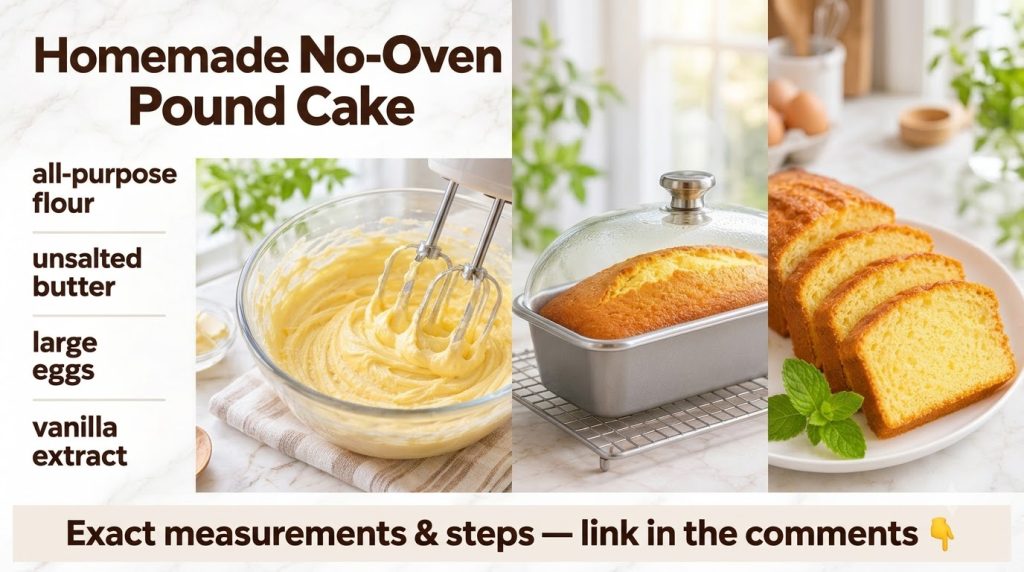
Ingredients for No-Oven Pound Cake
This recipe uses classic pound cake ingredients. Measure everything before you begin so the mixing goes smoothly.
- 1 1/2 cups all-purpose flour
- 3/4 cup granulated sugar
- 1/2 cup unsalted butter, softened to room temperature
- 3 large eggs, at room temperature
- 1/2 cup whole milk
- 1 1/2 teaspoons baking powder
- 1 teaspoon vanilla extract
- 1/4 teaspoon salt
Equipment You’ll Need
- A 9 x 5 inch metal loaf pan
- A large pot with a tight-fitting lid, wide enough to hold the loaf pan
- A trivet, steamer rack, or heatproof ring to lift the pan off the bottom of the pot
- Parchment paper and aluminum foil
- A hand mixer, stand mixer, or whisk, and a large glass mixing bowl
Servings: 8 to 10 slices
Prep time: 20 minutes
Steaming time: 50 to 60 minutes
Cooling time: about 1 hour
How to Make No-Oven Pound Cake
Step 1: Prepare the Pan
- Grease the loaf pan with butter or a neutral oil.
- Line the bottom and long sides with a strip of parchment paper so the cake lifts out easily.
Step 2: Cream the Butter and Sugar
- In a large glass bowl, beat the softened butter and granulated sugar with a hand mixer on medium speed for 3 to 4 minutes. The mixture should look light, fluffy, and pale.
Step 3: Add the Eggs and Vanilla
- Add the eggs one at a time, beating well after each addition.
- Stir in the vanilla extract.
Step 4: Combine the Dry Ingredients
- In a separate bowl, whisk together the flour, baking powder, and salt.
Step 5: Alternate Flour and Milk
- On low speed, add about one third of the flour mixture to the butter mixture and mix until just combined.
- Pour in half of the milk and mix until just combined.
- Repeat with another third of the flour, the remaining milk, and then the last of the flour.
- Stop mixing as soon as the flour disappears. Overmixing can make the cake tough.
Step 6: Fill the Pan
- Spread the batter evenly into the prepared loaf pan and tap the pan gently on the counter to release large air bubbles.
- Cover the top loosely with a piece of greased aluminum foil, crimping the edges around the pan.
Step 7: Steam the Loaf
- Pour about 1 to 2 inches of water into the large pot and set the trivet or rack inside. The water should not touch the bottom of the loaf pan.
- Bring the water to a gentle simmer over medium heat.
- Place the loaf pan on the rack, cover the pot with its lid, and reduce the heat to medium-low so the water keeps steadily simmering.
- Steam for 50 to 60 minutes. Check the water level every 15 to 20 minutes and add hot water as needed.
Step 8: Test for Doneness
- Insert a wooden skewer or toothpick into the center of the loaf. It is ready when it comes out clean or with a few moist crumbs.
- If the batter is still wet in the center, cover the pot again and steam for another 5 to 10 minutes before testing again.
Step 9: Cool the Cake
- Remove the pan from the pot with oven mitts or tongs and let it rest for 10 minutes.
- Run a thin knife around the edges, then lift the cake out using the parchment and transfer it to a cooling rack.
- Let the cake cool completely before slicing for the cleanest cuts.
Tips for a Tender, Evenly Cooked Loaf
- Use room-temperature butter and eggs. They blend more smoothly and help create a finer crumb.
- Keep the steam steady. Water that boils too hard can splash onto the foil and leave the top uneven.
- Expect a slightly denser, moister crumb than an oven-baked cake. Steaming gives a soft texture, so it is best enjoyed fresh.
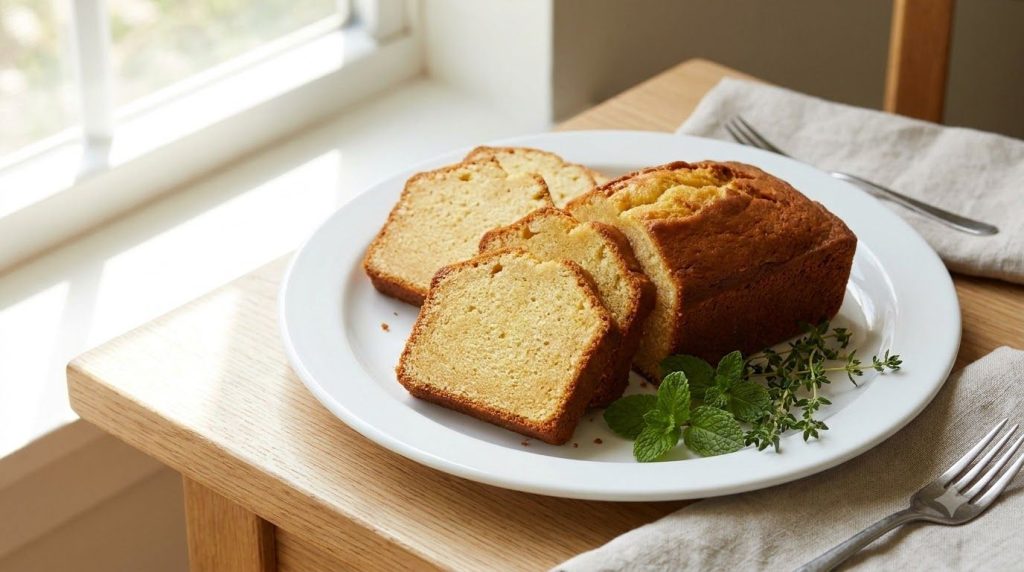
- Fresh green herbs, shown as a garnish in the infographic, are an optional finishing touch and not part of the cake itself.
How to Store and Serve No-Oven Pound Cake
Once completely cool, wrap the cake tightly in plastic wrap or store it in an airtight container. It keeps well at room temperature for up to 3 days. For longer storage, wrap the cooled loaf tightly and freeze it for up to 2 months. Thaw it at room temperature before slicing.
Serve plain with a cup of tea or coffee, or pair it with fresh fruit for a simple dessert. Leftover slices also make a satisfying snack during the day.
Frequently Asked Questions
Can I make this pound cake without an oven?
Yes. The recipe is steamed on the stovetop in a covered pot. The lid traps heat and moisture, which gently cooks the batter through.
Why is my cake gummy in the middle?
The loaf may need more steaming time, or the steam may have dropped too low. Test the center with a skewer and steam for a few extra minutes if needed.
Can I use a different pan?
A metal loaf pan of similar size is best. Make sure it fits inside your pot with the lid still closing properly.
This recipe is for general home baking and is not a substitute for personalized dietary advice. If you have an egg allergy, dairy sensitivity, or other food restrictions, consult a qualified healthcare professional before eating.
Final Thoughts
This no-oven pound cake shows that a golden, tender loaf doesn’t always require an oven. With simple ingredients, careful mixing, and steady steam, you can bake a homemade cake that’s perfect for any occasion.