Bananas are one of the most popular snacks in the world, and for good reason. They are naturally sweet, easy to carry, and packed with potassium and fiber. But did you know that the same fruit can look very different on a nutrition label depending on whether it is fresh or dried? A 100-gram portion of dried banana can contain far more calories and sugar than the same weight of fresh banana. Understanding why this happens can help you make smarter snack choices that fit your daily goals.
The Numbers at a Glance
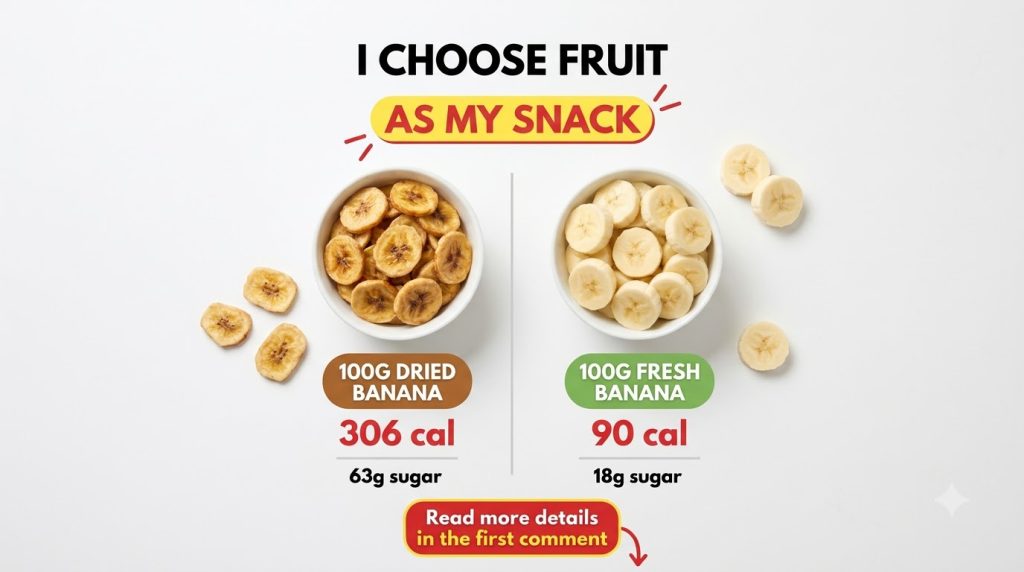
The comparison below is based on the 100-gram portions shown in our infographic:
- Fresh banana (100 g): about 90 calories and 18 g of sugar
- Dried banana (100 g): about 306 calories and 63 g of sugar
Notice the difference: the dried version carries roughly three times the calories and more than three times the sugar of the fresh version, even though both portions weigh the same. Values can vary by variety, ripeness, and brand, so always check the label on the package you buy.
Why Does Drying Change So Much?
Drying removes most of the water from the fruit. Water adds weight but no calories, so when it leaves, the remaining fruit becomes much more concentrated. A 100-gram portion of dried banana therefore contains far more of the fruit’s natural sugars than a 100-gram portion of fresh banana. Many commercial dried fruits also contain added sugar or sweet coatings, which can push the numbers even higher.
What This Means for Your Daily Intake
Sugar is not the enemy, and whole fruit is still a healthy choice. The key is portion awareness. Because dried fruit is so easy to eat in large amounts, a small handful can quickly add up to the calories of a full meal. Here are a few practical tips:
- Measure your portion. A small handful of dried fruit is far more concentrated than a whole fresh banana.
- Pair it with protein or fat. A few nuts or a spoonful of plain yogurt can help you feel full and slow down sugar absorption.
- Read labels carefully. Look for dried fruit with no added sugar or syrups.
- Choose fresh first. When you want something sweet, a fresh banana offers fiber, potassium, and volume for fewer calories.
Smart Snacking Swaps
Small changes can make a real difference over time. Try slicing a fresh banana over oatmeal instead of adding dried banana chips, or keep a bowl of fresh fruit visible on your counter so it is the first thing you reach for. If you love the chewy texture of dried fruit, enjoy it occasionally in a measured portion rather than straight from the bag.
Making informed choices is about balance, not perfection. Knowing the difference between fresh and dried fruit helps you enjoy both with confidence.
The Bottom Line
Fresh and dried bananas come from the same fruit, but their calorie and sugar content are very different per 100 grams. By understanding why drying concentrates sugar and calories, you can enjoy your snacks with more awareness and better manage your daily intake. Want the full breakdown? Check the details in the first comment and start building smarter snacking habits today.