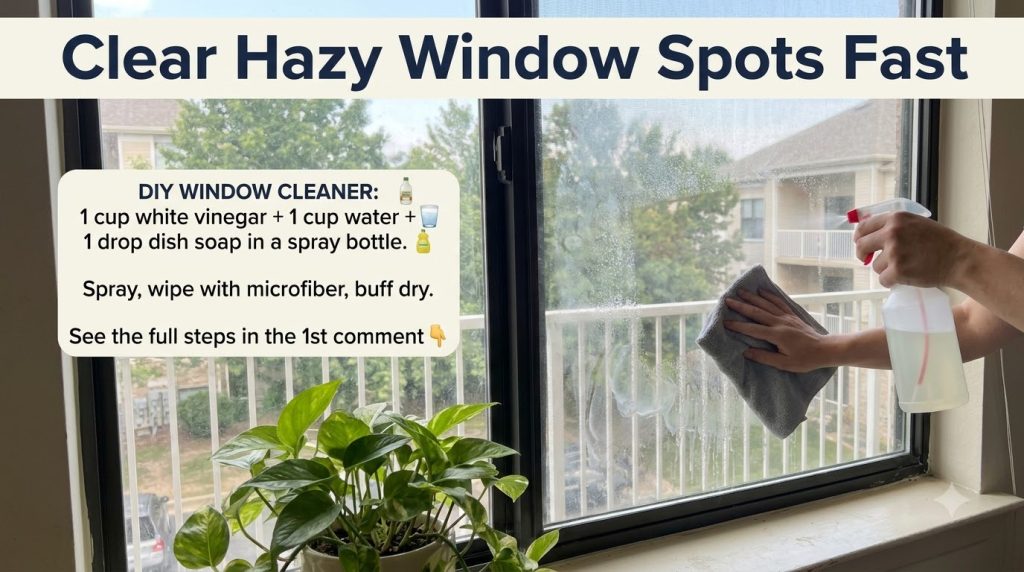
Stubborn window streaks can make a bright room look dull, especially when the sun hits the glass and every smudge shows up. The good news is that clear windows don’t require harsh products or a lot of effort. With the right mix, a clean cloth, and a simple technique, you can get a streak-free finish in about 15 minutes per window.
This guide walks you through a simple homemade glass cleaner and a method that works on most standard glass. It also explains why the spray can in many cleaning photos is not the best choice for glass, so you can avoid a greasy film that attracts more dust.
What You’ll Need
Cleaning Solution
- 1 cup distilled water (or tap water if you have soft water)
- 1 cup white vinegar
- 1 tablespoon rubbing alcohol (optional, helps the solution dry faster)
- A few drops of mild dish soap (optional, for greasy spots)
Tools
- A clean spray bottle
- Two or three lint-free microfiber cloths
- A squeegee (optional, for larger panes)
- A soft scrub sponge or plastic scraper for stuck-on residue
- A bucket of warm water for rinsing tools
Why This DIY Can Be Useful
Most streaks come from leftover residue, minerals, or oily film that a dry or dirty cloth simply spreads around. White vinegar helps break down mineral deposits and everyday grime, while distilled water keeps tap-water minerals from drying on the glass as new spots. Rubbing alcohol speeds up drying, which gives you less time for streaks to form. The optional drop of dish soap helps lift fingerprints and greasy patches near handles and window edges.
How to Make It
- Pour the distilled water and white vinegar into a clean spray bottle.
- Add the rubbing alcohol and a few drops of dish soap if you are using them.
- Close the bottle and swirl gently. Avoid shaking hard, which can create excess foam.
- Label the bottle clearly so no one mistakes it for another cleaner.
How to Use It
- Choose a cloudy day or a time when the window is out of direct sun. Glass dries too fast in hot sunlight and leaves streaks.
- Dust the frame and sill first so loose dirt does not turn into mud when it gets wet.
- Lightly mist the glass. Two or three sprays per window section is usually enough.
- Wipe with a damp microfiber cloth using overlapping S-shaped or straight strokes from top to bottom.
- Clean the edges and corners with a folded section of cloth or a small scrub sponge.
- Dry the glass with a second, dry microfiber cloth or a squeegee. Wipe the blade clean after each pass.
- Buff any remaining haze with a clean, dry section of the cloth.
What to Expect
After one good cleaning, most windows will look noticeably clearer, especially in bright light. Heavy hard-water staining or old film may need a second pass or a gentle scrub with the sponge. Expect the best results when you use fresh cloths and clean tools, and when you do not let the solution dry on the glass before wiping.
Helpful Tips
- Use two cloths: one to clean and one to dry. Mixing them is a common cause of streaks.
- Flip the cloth often and switch to a fresh side as soon as it looks dirty.
- Rinse your microfiber cloths in warm water without fabric softener, since softener leaves a film that causes streaking.
- Clean windows twice a year, or more often if you live near a busy road or in an area with hard water.
Important Notes / Safety
- Avoid using multi-use lubricant sprays, including WD-40-style cans, on glass. They are oil-based, can leave a sticky film, and attract dust and fingerprints.
- Do not mix vinegar with bleach or ammonia-based cleaners. Mixing these products can release harmful fumes.
- Test the solution on a small, hidden area first if your window has tinted film, decorative etching, or a special coating.
- Keep the solution away from painted wood and natural stone sills, since vinegar can dull some finishes over time.
- Store the mixture in a clearly labeled bottle away from children and pets, and keep the rubbing alcohol out of direct heat.
- Use a stable ladder and avoid leaning out of upper-floor windows when cleaning from the outside.