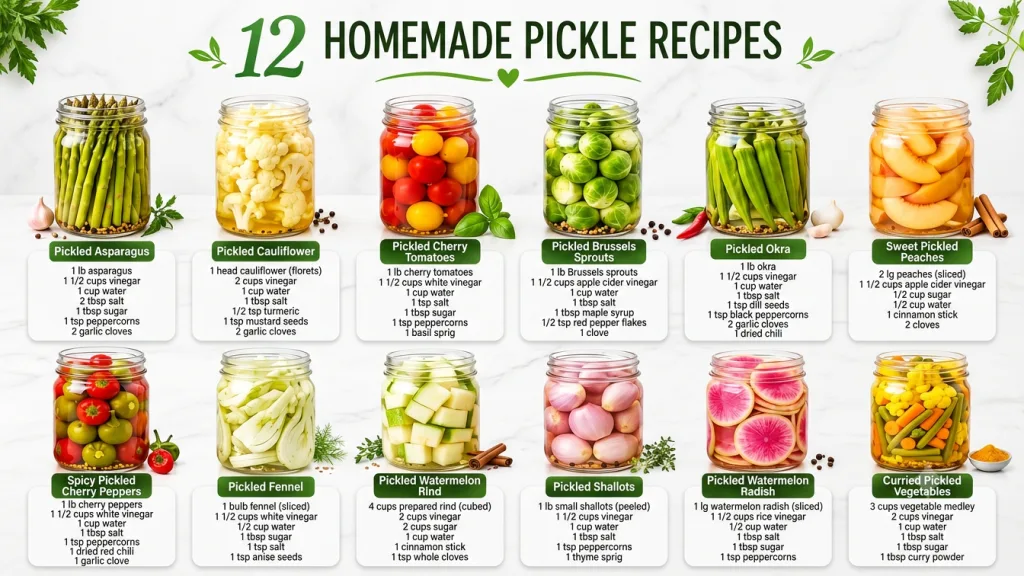
12 Homemade Pickle Recipes to Try at Home
Homemade pickles are one of the easiest ways to make everyday vegetables more exciting. A jar of crisp, tangy pickles can brighten a sandwich, add crunch to a rice bowl, or serve as a simple snack. Pickling also gives you a way to use up produce before it goes soft.
This roundup covers a range of pickle ideas, from quick refrigerator pickles to jars you can keep in the pantry. Most of them follow the same basic process, so once you learn the method, you can adapt it to nearly any vegetable or fruit you have on hand.
Why You’ll Love Making Pickles at Home
- Simple ingredients: Most pickle brines use vinegar, water, salt, and sugar, plus whatever spices you like.
- Flexible: You can pickle cucumbers, carrots, onions, peppers, and many other vegetables and fruits.
- Great for using up produce: Pickling is a practical way to make use of extra vegetables.
- Customizable flavor: You control the level of sourness, sweetness, heat, and herbs.
- Quick options available: Refrigerator pickles can be ready in a few hours, though they taste even better after a day or two.
Basic Quick Pickle Brine
Many of the recipes in this collection start with a similar brine. Use this as a general guide and adjust the ratios to suit your taste and the vegetable you are using.
- 1 cup (240 ml) white vinegar
- 1 cup (240 ml) water
- 1 tablespoon (15 g) sugar
- 1 1/2 teaspoons (9 g) kosher salt
How to Make Quick Pickles
- Wash your vegetables or fruit well and cut them into even slices, spears, or chunks so they pickle at the same rate.
- Pack the pieces tightly into a clean glass jar. Add any spices or herbs you like, such as garlic, dill, peppercorns, or chili flakes.
- In a small saucepan, combine the vinegar, water, sugar, and salt. Heat over medium until the sugar and salt dissolve, about 3 to 5 minutes. The liquid should look clear, not cloudy.
- Carefully pour the hot brine over the vegetables until they are fully covered. Leave about half an inch of space at the top of the jar.
- Let the jar cool to room temperature, then cover it with a lid and refrigerate.
- Wait at least a few hours before eating. For the best flavor, let the pickles rest for 24 hours.
Tips for Choosing Pickle Recipes
When you pick a recipe from a collection like this, think about how you plan to eat the pickles. Crunchy cucumber or carrot pickles work well for snacking and sandwiches. Onions and peppers add bold flavor to tacos, salads, and grain bowls. Sweeter fruit pickles pair nicely with cheese boards and roasted meats.
Common Mistakes to Avoid
- Using soft produce: Pickles stay crisp best when you start with firm, fresh vegetables.
- Cutting pieces unevenly: Thin and thick pieces will not pickle at the same rate.
- Skipping the rest time: Flavors develop as the pickles sit in the brine.
- Using unclean jars: Wash jars and lids in hot, soapy water before use.
Storage Tips
Refrigerator pickles should be kept cold at all times and stored in clean, tightly sealed glass jars. Use a clean utensil each time you take pickles out, and keep the vegetables fully submerged in the brine. Most homemade refrigerator pickles are best enjoyed within several weeks, and you should check them regularly for off smells, unusual colors, or soft texture before eating.
Frequently Asked Questions
Can I use this method for any vegetable?
Most firm vegetables, such as cucumbers, carrots, radishes, and onions, work well with this method. Very soft vegetables may become mushy, so choose firm produce when possible.
How long do homemade pickles last in the fridge?
Store them refrigerated in a sealed jar and check them regularly for changes in smell, color, or texture. Quality is usually best within the first few weeks.
Why are my pickles soft?
Soft pickles often come from overripe produce, cutting pieces too thin, or leaving them in the brine too long. Start with firm, fresh vegetables and check them after a few days.
Which pickle recipe are you planning to try first? Let us know in the comments!