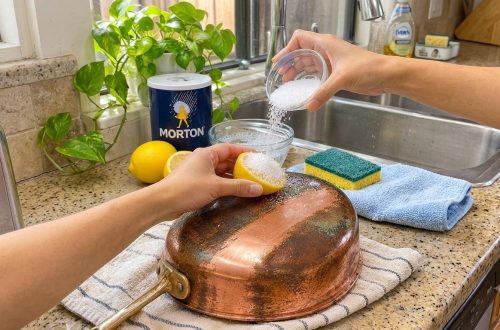
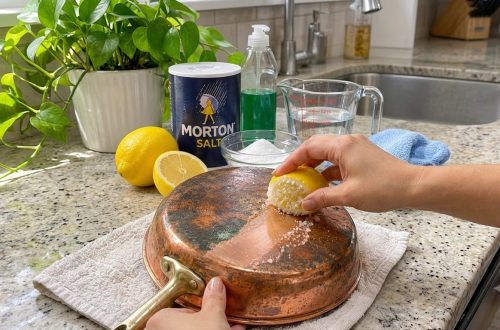
Tarnished copper cookware can look dull, dark, and worn, but it often just needs a gentle cleaning to bring back its warm glow. Lemon and salt are two common kitchen staples that can lift light to moderate tarnish without harsh scrubbing. This method works best on copper pots and pans that are dull or spotted but still in good condition.
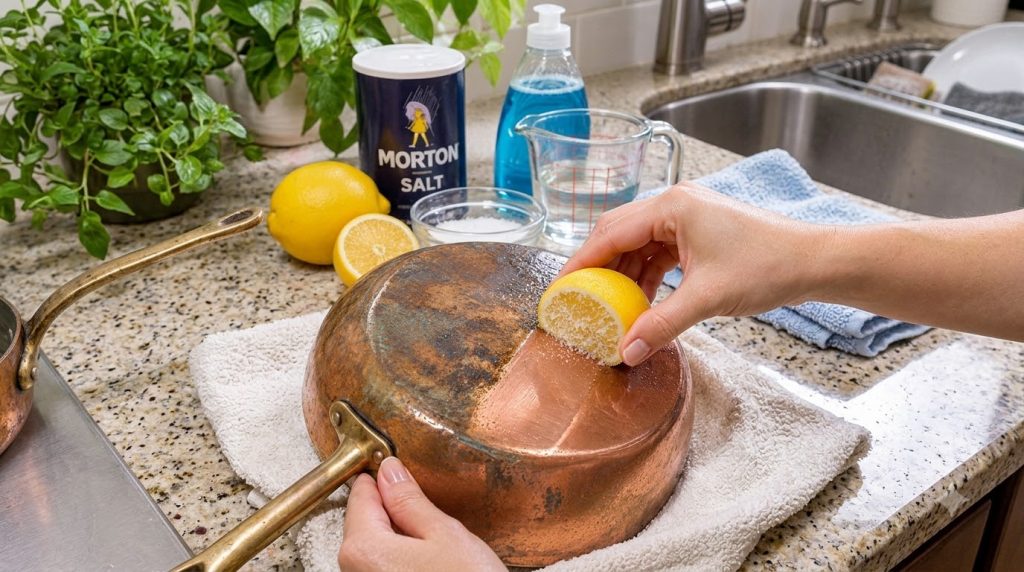
What You’ll Need
Cleaning Ingredients
- 1 fresh lemon, cut in half
- Coarse salt, such as table salt or kosher salt, enough to coat the cut side of the lemon
- Optional: a few drops of mild dish soap mixed into warm water for a final wash
Tools
- A cutting board and knife
- A small bowl for the salt
- A soft cloth or sponge
- A clean, dry towel for buffing
Why This DIY Can Be Useful
Lemon juice contains natural acid that helps loosen the dull, discolored layer that builds up on copper. Salt adds a mild abrasive texture, so the lemon half can be used to scrub the surface without needing steel wool or harsh cleaners. Together, they make a simple option for routine polishing when copper has lost its shine.
How to Make It
- Cut a fresh lemon in half. Keep the cut side fresh and ready to use.
- Pour a small amount of coarse salt onto a plate or into a small bowl.
- Press the cut side of the lemon into the salt so it is lightly coated. You do not need a fixed ratio. Just add enough salt to create a slightly gritty surface.
- If you prefer a gentler finish, fill a small bowl with warm water and add a few drops of mild dish soap. Keep this ready for rinsing.
How to Use It
- Place the copper pan on a towel so the surface stays steady and protected.
- Work on one small area at a time. Rub the salted lemon in gentle, circular motions, following the direction of the metal where possible.
- Let the lemon and salt sit on stubborn spots for a minute or two so the acid can loosen the tarnish.
- Scrub lightly, then rinse the area with warm water. Repeat on any remaining spots.
- For a final clean, wash the pan with warm, soapy water, rinse thoroughly, and dry it right away with a clean towel.
What to Expect
Light tarnish usually improves after one pass, and the copper should look brighter and more even. Heavily oxidized or deeply stained pans may need several rounds of cleaning, and some dark areas may remain. Results depend on how thick the tarnish is and how much time the copper has spent building up that layer.
Helpful Tips
- Work in small sections so the lemon does not dry out and lose its effect.
- Use a fresh lemon half for each section if the first one becomes soft or flat.
- Keep the scrubbing gentle. Copper can scratch, so light pressure works better than hard rubbing.
- Dry the pan completely after cleaning to help prevent new spots from forming.
Important Notes / Safety
- Do not use this method on lacquered or coated copper, since the citrus and salt can damage the finish.
- Test a small hidden area first, especially on antique pieces or pans with a tin or silver lining.
- Avoid using this method on the interior of cookware where food contact is a concern unless you rinse thoroughly and wash with soap afterward.
- Do not mix lemon or salt with bleach or other chemical cleaners.
- Rinse and dry the pan completely before storing it.