Most people walk past bottlebrush every day without a second look at its leaves. The red brush-like flowers get all the attention, but the narrow, aromatic leaves are the part home preparers usually save. This guide shows you how to make a simple leaf-infused oil for external use, how to confirm you have the right plant, and which mistakes quietly ruin the batch.
What It Is
Bottlebrush belongs to the Callistemon group, a family of shrubs related to eucalyptus and myrtle. Its leaves contain aromatic plant compounds, which is why they have a fresh, resinous scent when crushed. That scent is also why it is best treated as a plant for careful external preparations, not a casual kitchen ingredient.
Before You Harvest: Check the Plant
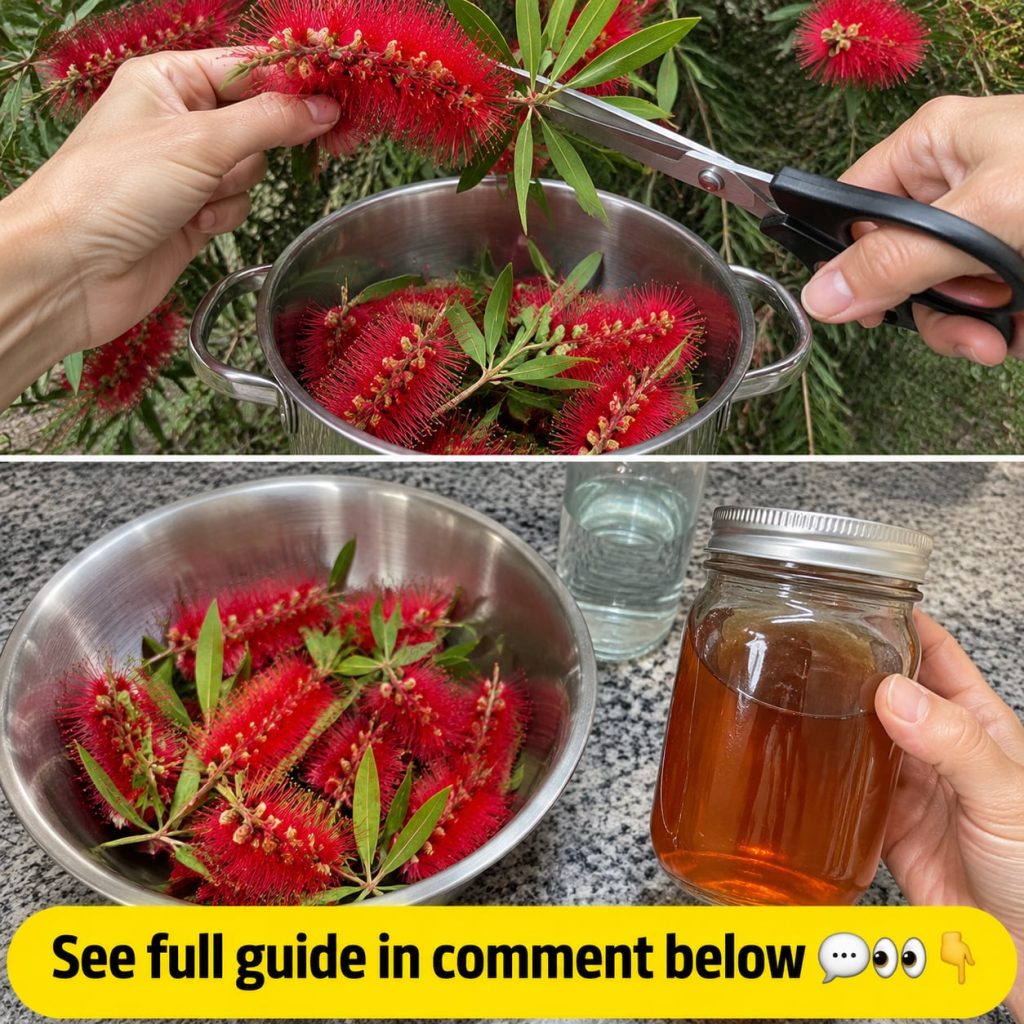
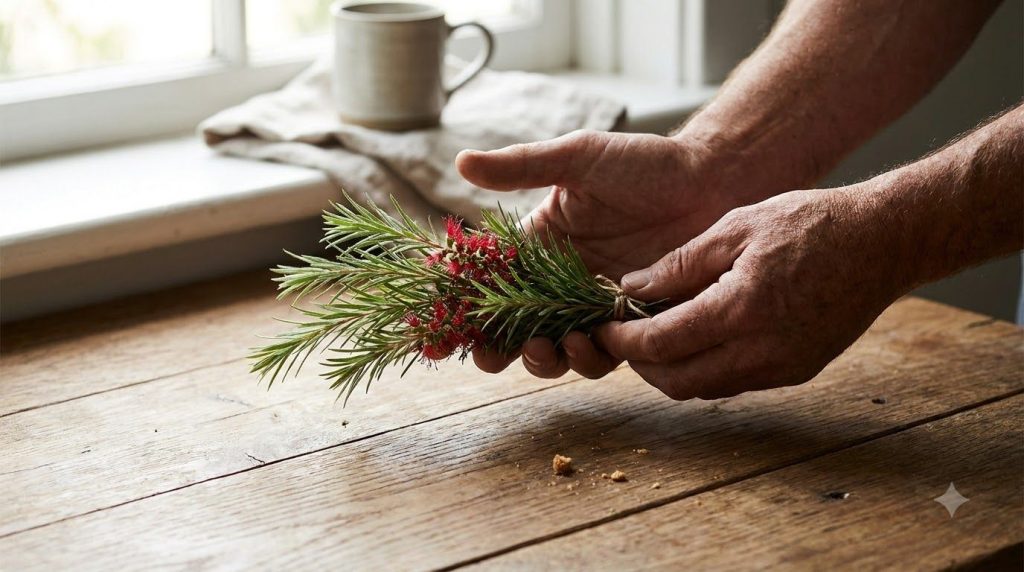
Identification comes first. Confirm the shrub by its bottle-shaped flower spikes and narrow, lance-shaped leaves. Do not harvest from plants near busy roads, areas that get pesticide or herbicide treatments, or spots where dogs and pets roam. Choose a shrub you know, and avoid any plant you cannot identify with confidence.
Ingredients
- 1 cup (about 30 g) fresh bottlebrush leaves, or 15 g dried leaves
- 1 cup (240 ml) light carrier oil such as sweet almond or light olive oil
- A clean, completely dry glass jar with a tight lid
- Cheesecloth or a fine strainer
- A dark glass bottle for storage
Approximate Measurements
A simple ratio is about 1 part leaves to 4 parts oil by volume. Use less leaf material if your leaves are very fresh and moist, because extra water shortens shelf life.
Formula and Step-by-Step Method
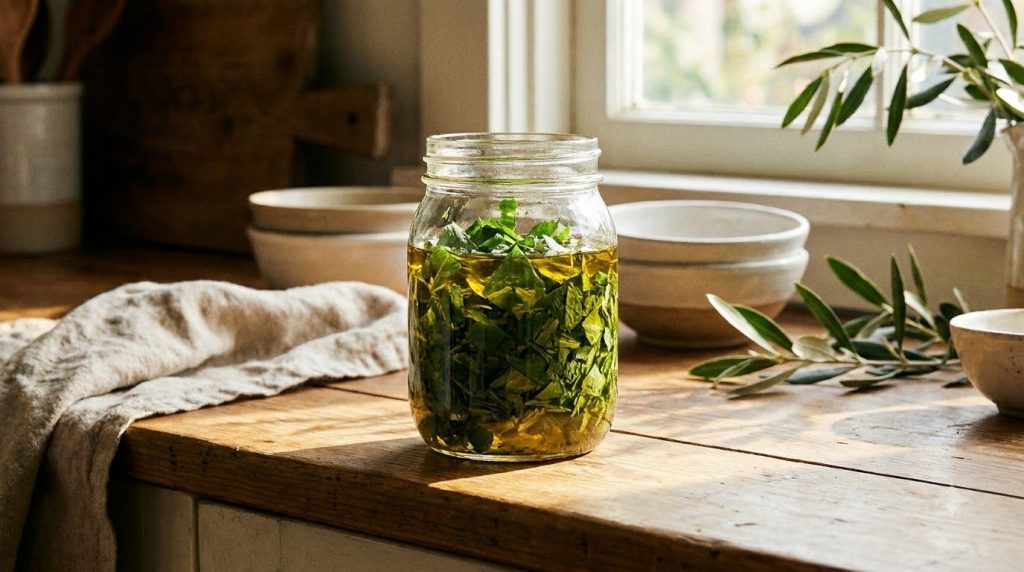
Rinse the leaves gently in cool water and pat them dry. Then spread them on a clean towel for two to four hours until no visible moisture remains. Chop the leaves roughly. Place them in the dry jar and cover with oil so the leaves are fully submerged by about one centimeter.
For a faster method, set the closed jar in a bowl of warm water over low heat for one to two hours, keeping the water below a gentle simmer. Do not boil the oil. For a slower method, leave the jar in a cool, dark cupboard for two to three weeks, shaking it once a day.
Strain the oil through cheesecloth into a clean bottle, squeezing gently. Label it with the date and the word leaf oil.
How to Use It
Use the oil externally only. Apply a thin layer to a small area of intact skin, such as the inner forearm, and wait 24 to 48 hours before using it more widely. Stop if you notice redness, itching, or irritation. Keep it away from the eyes, mouth, and broken or irritated skin.
How Often to Use It
Start with one application per day on a small area, for no more than a week. Then pause and reassess. Many people prefer a few times per week rather than daily use, which keeps the skin from becoming over-stimulated.
Quick-Reference Table
| Version | Best Use | Typical Shelf Life |
|---|---|---|
| Fresh-leaf oil | Short batches, cool storage | About 1 to 2 months |
| Dried-leaf oil | Longer storage, less moisture | About 3 to 6 months |
| Oil with fresh leaves in the fridge | Not recommended for long storage | Use within 1 week |
Fresh vs Dried
Dried leaves are easier to control because they carry less water, which lowers the risk of spoilage. Fresh leaves give a brighter scent but need careful drying before infusion. If you are new to this, start with dried leaves.
Storage
Keep the finished oil in a dark glass bottle, tightly sealed, in a cool cupboard away from sunlight. Refrigeration can extend freshness for fresh-leaf batches, but cloudiness is normal in cold oil. Discard any oil that smells sour, rancid, or musty.
Practical Tips
- Use a fresh jar and fresh towel every time to reduce contamination.
- Label each batch with the date and the plant part used.
- Test a small amount before applying the full batch to skin.
Common Mistakes
- Using damp leaves, which invites mold and spoilage.
- Boiling the oil, which can change the scent and quality.
- Harvesting from sprayed or roadside plants.
- Storing the oil in a clear bottle in direct sunlight.
- Skipping the patch test because the batch looks clean.
Cautions and Who Should Avoid It
Do not take bottlebrush preparations by mouth. Avoid this oil if you are pregnant, breastfeeding, caring for infants or young children, or if you have asthma or sensitive airways, since aromatic plant oils can be strong. People with known allergies to plants in the myrtle or eucalyptus family should skip it. If you have a medical condition or take prescription medication, speak with a qualified healthcare professional before trying any home preparation.
Quick Summary
- Best preparation: leaf-infused oil, made from dry, clean leaves.
- Best use: small external applications on intact skin, after a patch test.
- Storage: dark glass bottle, cool place, labeled with the date.
- When to use: a few times per week, not daily for extended periods.
- What to avoid: internal use, sprayed plants, damp leaves, and broken skin.
FAQ
Can I use fresh or dried leaves? Both work, but dried leaves are safer for beginners because they carry less moisture.
How long does the oil last? Dried-leaf oil typically keeps about three to six months when stored cool and dark. Fresh-leaf oil lasts less time.
Can I refrigerate it? Yes, refrigeration can help, especially for fresh-leaf batches. The oil may thicken or cloud, which is normal.
How often should I apply it? Start with one small application per day for no more than a week, then reassess.
Can I freeze it? Freezing is not necessary and can cause condensation when thawed. Store it cool and dark instead.
Can I reuse the leaves? It is better to discard them after one infusion, because reused leaves carry less aroma and higher spoilage risk.
When should I avoid it? Avoid it if you are pregnant, breastfeeding, have asthma, have plant allergies, or have broken or irritated skin.
Conclusion
The bottlebrush on your street is more than a colorful shrub. With careful identification, dry leaves, gentle heat, and a patient infusion, you can make a simple external oil that is easy to store and easy to label. Start small, test first, and keep the process clean.
You may also like: Read more about simple leaf-infused oils in our full guide. Continue with: our guide to drying herbs at home. Related remedy: see the full guide to homemade carrier oil blends.