Most people assume homemade wine needs expensive equipment and months of guesswork. In reality, a ripe pineapple, some sugar, water and a packet of wine yeast are enough to make a clean, fruity batch at home. The key is preparation: most failed batches come from overripe fruit, dirty containers or sealing the jar too early.
What Is Pineapple Wine?
Pineapple wine is a simple fruit wine made by fermenting pineapple juice and sugar with wine yeast. Yeast converts the sugar into alcohol and carbon dioxide, which gives the drink its light, tropical character. A basic batch is usually ready to bottle in about four to six weeks, though it can be aged longer.
Ingredients
- 1 medium ripe pineapple (about 1.5 kg before peeling)
- 750 g granulated white sugar
- 3.5 liters filtered or boiled-and-cooled water
- 1 packet (about 5 g) wine yeast
- 1 teaspoon yeast nutrient (optional but helpful)
Approximate Measurements
Use a 4-liter or larger food-grade fermentation vessel with a lid and airlock. Glass demijohns and food-grade plastic buckets both work well. Make sure the vessel is never filled above about 80 percent, because fermentation produces foam.
Step-by-Step Method
- Wash your hands, jars, spoons and the fermentation vessel with hot water and unscented cleaner. Rinse thoroughly.
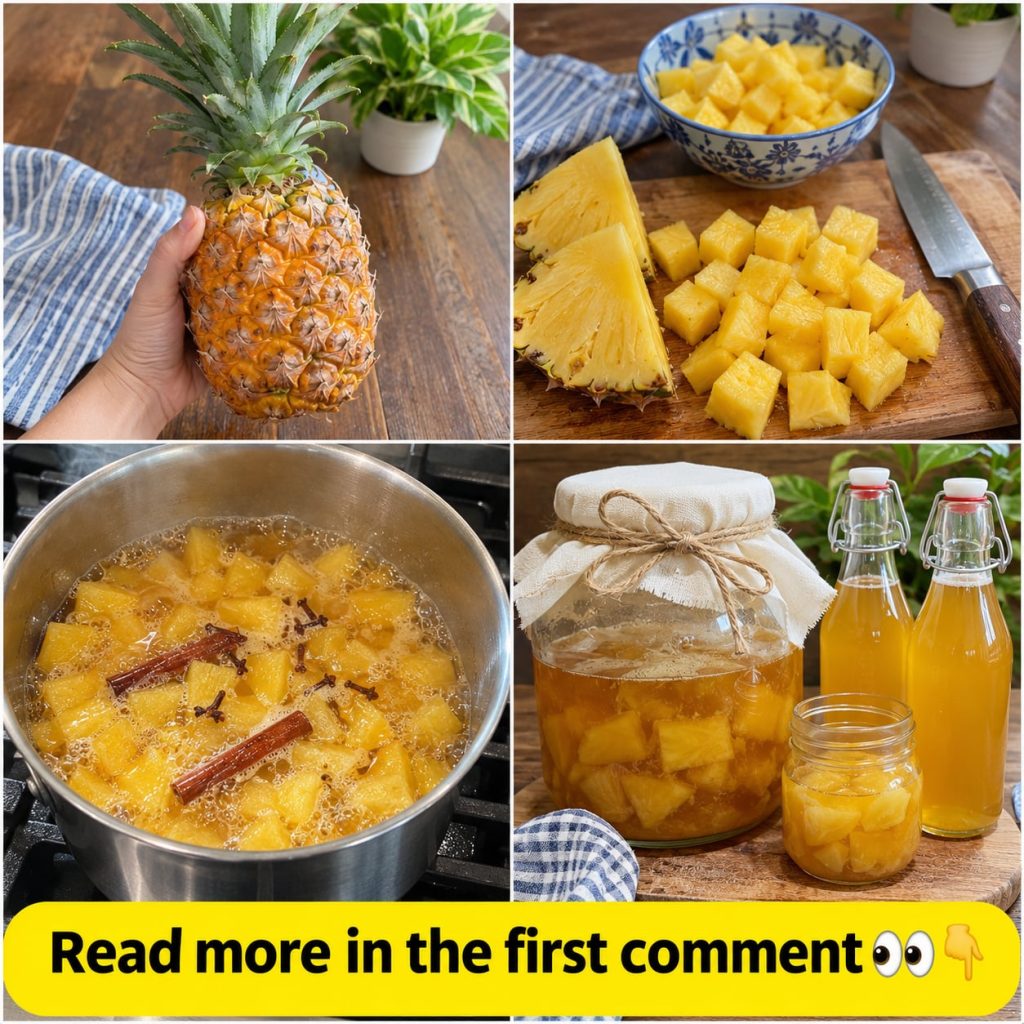
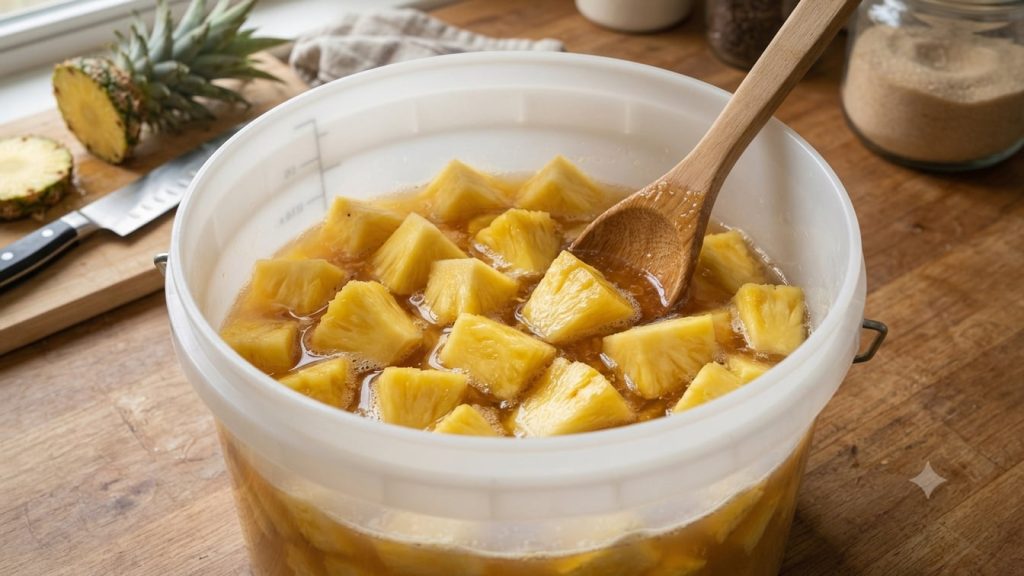
- Cut off the crown and peel the pineapple. Remove the eyes completely, then chop the flesh into small chunks.
- Place the pineapple in a clean bowl and crush it with clean hands or a potato masher to release the juice.
- Heat about 1 liter of the water until warm, not boiling. Dissolve the sugar in it.
- Add the sugar syrup, the crushed pineapple and the remaining cool water to the fermentation vessel.
- Check the temperature. It should be around 20 to 25 degrees Celsius before adding yeast.
- Sprinkle the wine yeast and yeast nutrient on the surface, stir gently, then cover loosely with a cloth for the first 24 hours.
- Once bubbling starts, fit the airlock filled with water and keep the vessel in a dark, warm spot.
Fresh vs Dried Fruit
Fresh pineapple gives the most natural flavor. Dried pineapple is not recommended for this recipe because it lacks juice and can add off-flavors. Canned pineapple in syrup is not ideal either, since added sugar and preservatives can change the fermentation.
How to Use and How Often to Use It
Start checking the batch after about 5 to 7 days. Bubbling in the airlock should slow to one bubble every minute or more. Once fermentation is almost quiet, siphon the wine into a clean container, leaving the sediment behind. Let it clear for two to four weeks before bottling. Serve in small glasses, as the alcohol content is similar to many table wines.
How to Choose Good Ingredients
Look for a pineapple that smells sweet at the base, feels heavy for its size and gives slightly when pressed. Avoid fruit with dark soft spots or a sour, alcoholic smell before you start. Use plain white sugar for the cleanest taste, and buy wine yeast from a home brewing supplier rather than bread yeast.
Storage
Keep the finished wine in sealed glass bottles in a cool, dark place between 10 and 15 degrees Celsius. Properly stored bottles can keep for several months, and many batches improve with a few weeks of rest. Once opened, refrigerate and use within about one week.
Practical Tips
Quick Tip: Keep the fermentation area away from direct sunlight and strong temperature swings. Did You Know? Pineapple contains natural enzymes that can cloud the wine, so letting it settle and racking it carefully gives a clearer result.
Common Mistakes
- Using overripe or moldy pineapple, which can introduce unwanted bacteria.
- Skipping sanitation, leading to sour or vinegary flavors.
- Sealing the vessel tightly during the first days, which can cause pressure buildup.
- Boiling the pineapple or water too hot, which can kill the yeast.
- Bottling too early before fermentation has finished, risking bottle pressure.
Cautions and Who Should Avoid It
This is an alcoholic beverage. Do not serve it to anyone under the legal drinking age, and avoid it if you are pregnant, breastfeeding, taking medication that interacts with alcohol, or recovering from alcohol dependence. Homemade wine has no reliable alcohol strength, so drink responsibly.
Quick Summary
| Topic | Best Choice |
|---|---|
| Best fruit | Ripe, fragrant fresh pineapple |
| Best use case | Small servings with meals or at gatherings |
| Storage | Sealed bottles in a cool, dark place |
| When to bottle | After fermentation is nearly silent and the wine is clear |
| What to avoid | Overripe fruit, dirty equipment, hot water with yeast |
Frequently Asked Questions
Can I use fresh or dried pineapple?
Use fresh pineapple. Dried pineapple lacks the juice needed for a smooth fermentation.
How long does the wine last?
Sealed bottles stored cool and dark can last several months. Once opened, keep it refrigerated and drink within about a week.
Can I refrigerate the wine during fermentation?
No. Fermentation needs warmth. Refrigerate only after the wine is finished and bottled, to slow further changes.
Can I freeze pineapple wine?
Freezing is not recommended for finished wine, as it can affect texture and clarity. Freezing fresh pineapple before fermentation is an option if you need to store fruit.
Can I reuse the pineapple pulp?
It is best to strain and discard the pulp after the first racking. Reusing it can increase the risk of off-flavors.
How often should I check the batch?
Check the airlock daily during the first week and then every few days until bubbling stops.
Why is my wine cloudy?
Cloudiness is common in fruit wines. Let it settle for several weeks and rack it into a clean container.
When should I avoid making it?
Avoid making or drinking this wine if you cannot safely consume alcohol or if you are caring for children without strict supervision of the batch.
Conclusion
Homemade pineapple wine is a practical project once you master cleanliness, timing and patience. Start with a small batch, track the fermentation, and you will get a result you can be proud of.
You may also like: Read more about simple fruit ferments in our full guide to homemade fruit wines. Related guide: learn how to store homemade drinks safely at home.