Ultimate Guide to Homemade Pickles
Homemade pickles are one of the most rewarding kitchen projects you can try. With a basic brine, a clean jar, and a few fresh vegetables or fruits, you can make crisp, tangy pickles that taste far better than many store-bought versions. This guide walks you through the basic methods, the ingredients that matter most, and the common mistakes to avoid.
Why You’ll Love Making Pickles at Home
- Simple ingredients: Most pickle recipes use vegetables, vinegar, water, salt, sugar, and a few spices you probably already have.
- Flexible flavors: You can adjust the heat, sweetness, and seasoning to suit your taste.
- Great for using up produce: Pickling is a practical way to use extra cucumbers, carrots, peppers, or fruit from the garden or market.
- Little cooking required: Many quick pickles only need a short simmer for the brine and some patience while the flavors develop.
- Versatile: Homemade pickles work on sandwiches, in salads, alongside grilled meats, or as a snack straight from the jar.
Understanding the Basic Types of Pickles
Most pickles fall into two broad categories. Knowing the difference will help you choose the right method for your kitchen.
- Quick (refrigerator) pickles: Vegetables are covered with a hot or warm vinegar brine and stored in the refrigerator. They are ready in a day or two and are best eaten within several weeks.
- Fermented pickles: Vegetables are soaked in a salt brine so naturally occurring bacteria can ferment them over days or weeks. They have a tangy, complex flavor, but the process requires more attention and a tested method.
This article focuses mainly on quick refrigerator pickles, which are the easiest starting point for beginners.
Ingredients for a Basic Pickle Brine
The exact amounts depend on how many vegetables you use and how large your jar is. As a starting point, many home cooks use a 1:1 ratio of vinegar to water, plus salt and sugar to taste.
- 1 cup (240 ml) white vinegar or apple cider vinegar
- 1 cup (240 ml) water
- 1 tbsp (15 g) kosher salt or pickling salt
- 1 to 2 tbsp (12 to 25 g) sugar, optional
- Fresh vegetables or fruit, such as cucumbers, carrots, jalapeños, or sliced mango, enough to fill a 1-quart (about 1 L) jar
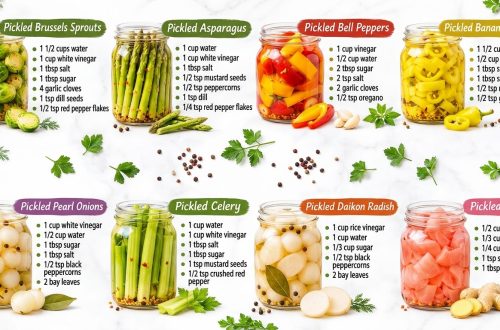
- Optional flavorings: garlic cloves, dill, peppercorns, mustard seeds, bay leaves, or red pepper flakes
Ingredient Notes
Vinegar: Distilled white vinegar gives a clean, sharp flavor. Apple cider vinegar adds a mellower, slightly fruity taste. Choose a vinegar with at least 5 percent acidity, which is standard for most grocery store brands.
Salt: Use kosher salt or pickling salt. Table salt often contains anti-caking agents or iodine that can make the brine cloudy or affect flavor.
Sugar: Sugar balances acidity and rounds out the flavor. You can reduce it or leave it out for a more savory pickle.
Fresh produce: Firm, fresh vegetables give the crispest results. Cucumbers should be firm with no soft spots, and carrots should snap cleanly when bent.
Equipment You’ll Need
- A clean glass jar with a lid, about 1 quart (1 L)
- A medium saucepan for the brine
- A cutting board and sharp knife
- A measuring cup and spoons
- A ladle or heatproof measuring cup for pouring
How to Make Quick Refrigerator Pickles
- Wash your jar and produce. Wash the jar in hot, soapy water and rinse well. Scrub the vegetables under cool running water and trim the ends.
- Cut the produce. Slice cucumbers into spears or rounds about 1/4 inch (6 mm) thick. Cut carrots into sticks that fit the jar. Slice jalapeños into rings, and cut mango into thin strips if you are making a fruit pickle.
- Pack the jar. Add garlic, dill, peppercorns, or other flavorings to the bottom of the jar. Pack the produce in tightly, leaving about 1/2 inch (1 cm) of space at the top.
- Make the brine. Combine vinegar, water, salt, and sugar in a saucepan. Heat over medium heat, stirring occasionally, until the salt and sugar dissolve. The liquid should be hot and clear, but it does not need to boil for long.
- Pour the brine. Carefully pour the hot brine over the produce until it is completely covered. Tap the jar gently to release air bubbles.
- Cool and seal. Let the jar cool on the counter until it is warm to the touch, then cover it with a tight lid.
- Refrigerate. Place the jar in the refrigerator. Many cooks wait at least 24 hours before tasting, and flavor usually improves over the next few days.
Pro Tips for Crisp, Flavorful Pickles
- Start with very fresh produce. Pickles can only be as crisp as the vegetables you begin with.
- Trim the blossom end of cucumbers. This end contains enzymes that can soften pickles over time.
- Keep everything submerged. Vegetables that float above the brine can discolor and soften.
- Taste the brine before pouring. Adjust salt, sugar, or vinegar so it tastes pleasantly sour and salty.
- Use whole spices for a cleaner flavor. Whole peppercorns and mustard seeds release flavor gradually without making the brine cloudy.
- Label your jars with the date. This makes it easier to track freshness.
Common Mistakes to Avoid
- Using old or soft produce: Limp vegetables will stay soft no matter how well you pickle them. Choose firm, fresh ingredients.
- Using the wrong salt: Table salt with additives can cloud the brine. Stick with kosher or pickling salt.
- Packing the jar too loosely: Loose packing can let vegetables float. Pack snugly so everything stays under the liquid.
- Expecting instant flavor: Pickles taste milder right after they are made. Give them time in the refrigerator.
- Reducing vinegar without adjusting the recipe: Vinegar provides the acidity that keeps quick pickles tasting fresh. If you change the ratio significantly, use a tested recipe.
Variations and Substitutions
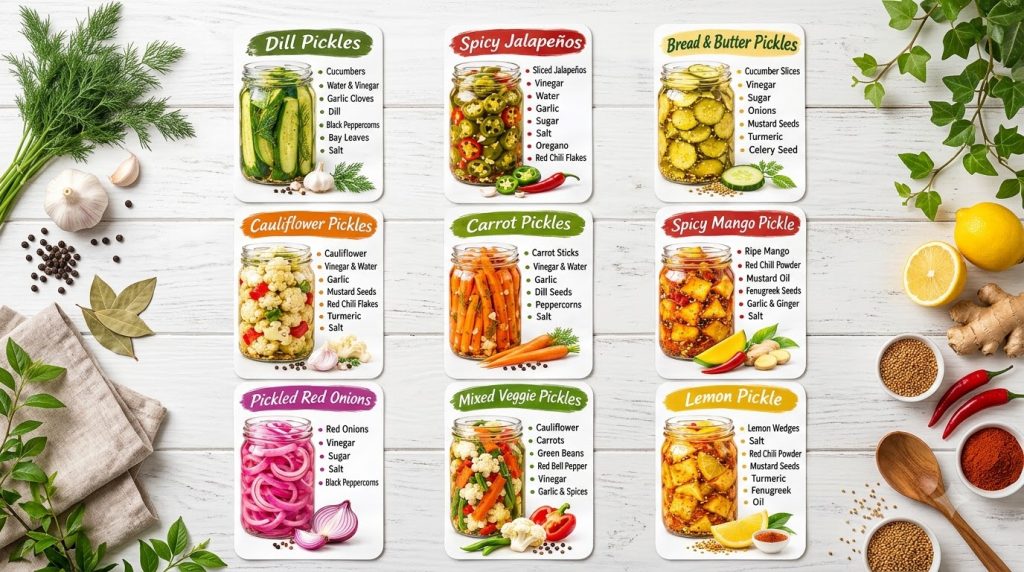
- Spicy jalapeño pickles: Add sliced jalapeños and a few garlic cloves to the jar. Red pepper flakes add extra heat if you want more.
- Dill pickles: Add fresh dill sprigs, garlic, and black peppercorns.
- Carrot pickles: Add thin carrot sticks, a little sugar, and a pinch of red pepper flakes for a crunchy side dish.
- Mango pickles: Use firm, slightly underripe mango with a pinch of chili powder or mustard seeds for a sweet and tangy flavor.
- Apple cider vinegar version: Replace white vinegar with apple cider vinegar for a milder, slightly fruity brine.
Serving Suggestions
Homemade pickles pair well with sandwiches, burgers, tacos, grain bowls, and charcuterie boards. Chopped pickles can also add brightness to potato salad, egg salad, or slaw. For a simple snack, serve spears or carrot sticks with cheese, crackers, or sliced meats.
Storage and Reheating
Quick refrigerator pickles should be stored in the refrigerator at all times. Keep the vegetables fully submerged in brine, and use clean utensils each time you take some out. Pickles are generally best within several weeks, and their texture softens gradually over time. Because these pickles are not processed for shelf-stable storage, do not leave them at room temperature. Pickles are served cold and do not need reheating.
Frequently Asked Questions
How long do homemade pickles need before eating?
Many quick pickles are ready after 24 hours in the refrigerator, but flavor usually deepens over several days. Taste them periodically to find your preferred level of tang.
Can I make pickles without sugar?
Yes. You can reduce or omit sugar for a more savory, sharper pickle. The brine will taste more acidic, so adjust the vinegar and water ratio to your liking.
Why did my pickles turn soft?
Soft pickles are often caused by produce that was not fresh, a cucumber blossom end that was not trimmed, or vegetables that were not fully submerged in brine.
Why is my brine cloudy?
Cloudiness can come from table salt with anti-caking agents, hard water, or ground spices. Using kosher or pickling salt and whole spices usually keeps the brine clear.
Can I use the same brine for different vegetables?
Yes, but flavor and texture vary. Firm vegetables such as cucumbers and carrots hold up well, while softer produce may need a shorter soak to keep its texture.
Do I need canning equipment to make pickles?
Not for quick refrigerator pickles. If you want shelf-stable jars, follow a tested canning recipe and proper processing guidelines to ensure food safety.
What is your favorite vegetable to pickle? Share your favorite combination in the comments below!