Staying on track with your fitness and nutrition goals does not mean you have to skip the drive-thru entirely. Life is busy, and sometimes a quick stop for a meal is the only realistic option between work, school, errands, and family commitments. The good news is that many fast food restaurants offer menu items that deliver a solid dose of protein, which can help you feel fuller for longer and support muscle repair and daily energy.
Why Protein Matters When You Are on the Go
Protein is one of the three macronutrients your body needs in larger amounts, alongside carbohydrates and fats. It supplies amino acids that help build and repair muscle tissue, supports healthy immune function, and plays a role in producing enzymes and hormones. Protein also has a high satiety effect, meaning it tends to keep hunger signals quieter after a meal compared with meals that are mostly refined carbohydrates. For people who are active or trying to manage their weight, this can make a meaningful difference in avoiding unplanned snacking later in the day.
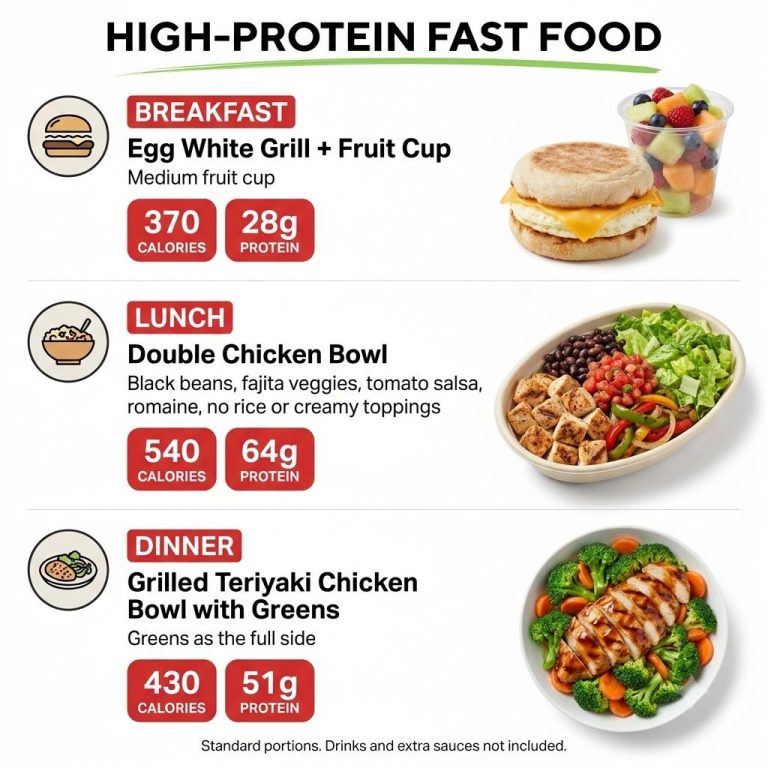
Top High-Protein Fast Food Options to Consider
Menus vary by location and change over time, so always check the current nutrition information on the restaurant’s website or app. That said, these types of items often provide a strong protein base:
- Grilled chicken sandwiches or wraps: Grilled rather than fried preparation usually means less added fat while keeping protein levels high.
- Chicken salads with lean grilled protein: Choose a light dressing on the side so you can control how much you add.
- Egg-based breakfast sandwiches: Eggs provide high-quality protein and can be a satisfying start to a busy morning, especially when paired with fruit.
- Bowls built around chicken, beef, or beans: Bowls allow you to add vegetables and whole grains for fiber, which supports digestive health.
- Protein-forward kids or side-size portions: Smaller portions can be useful when you want a lighter meal without giving up protein.
Smart Ordering Strategies
Knowing what to order is only part of the equation. How you customize your meal can shift its nutritional profile considerably. Consider these practical strategies:
- Ask for sauces, dressings, and spreads on the side to control portions.
- Swap fries for a side salad, fruit cup, or apple slices when available.
- Choose water, unsweetened tea, or sparkling water instead of sugary beverages.
- Add extra vegetables such as lettuce, tomato, onion, or peppers for fiber and micronutrients.
- Skip the extra cheese or bacon if you are monitoring sodium or saturated fat.
Building a Balanced Meal in a Hurry
A balanced fast food meal generally includes a lean protein source, a fiber-rich carbohydrate or vegetable, and a modest amount of healthy fat. This combination helps stabilize blood sugar and keeps you satisfied until your next meal. If you are very active, you may need a slightly larger portion or an additional protein item, and that is perfectly reasonable. The goal is not perfection but consistency across your week.
Planning Ahead for Busy Days
The best way to avoid last-minute decisions is to plan. Keep a few quick options in mind, pack a protein-rich snack such as Greek yogurt, hard-boiled eggs, or a handful of almonds, and consider a simple meal prep session on your least busy day. Having a backup plan reduces the temptation to default to the least nutritious choice on the menu.
Key Takeaways
Fast food does not have to derail your health goals. By choosing grilled proteins, customizing your order, adding vegetables, and planning ahead, you can enjoy convenient meals that support your energy, fitness, and satiety. Save this guide for your next busy day, and remember that small, informed choices add up over time.