Most people reach for harsh oven cleaners when a pan is scorched, but the bottom of a burnt pot often responds better to a gentle, abrasive paste. The trick is pairing the mild acidity of fresh lemon with the fine, adsorbent grit of activated charcoal. Together they loosen carbon residue so you can scrub with far less effort.
What This Paste Is
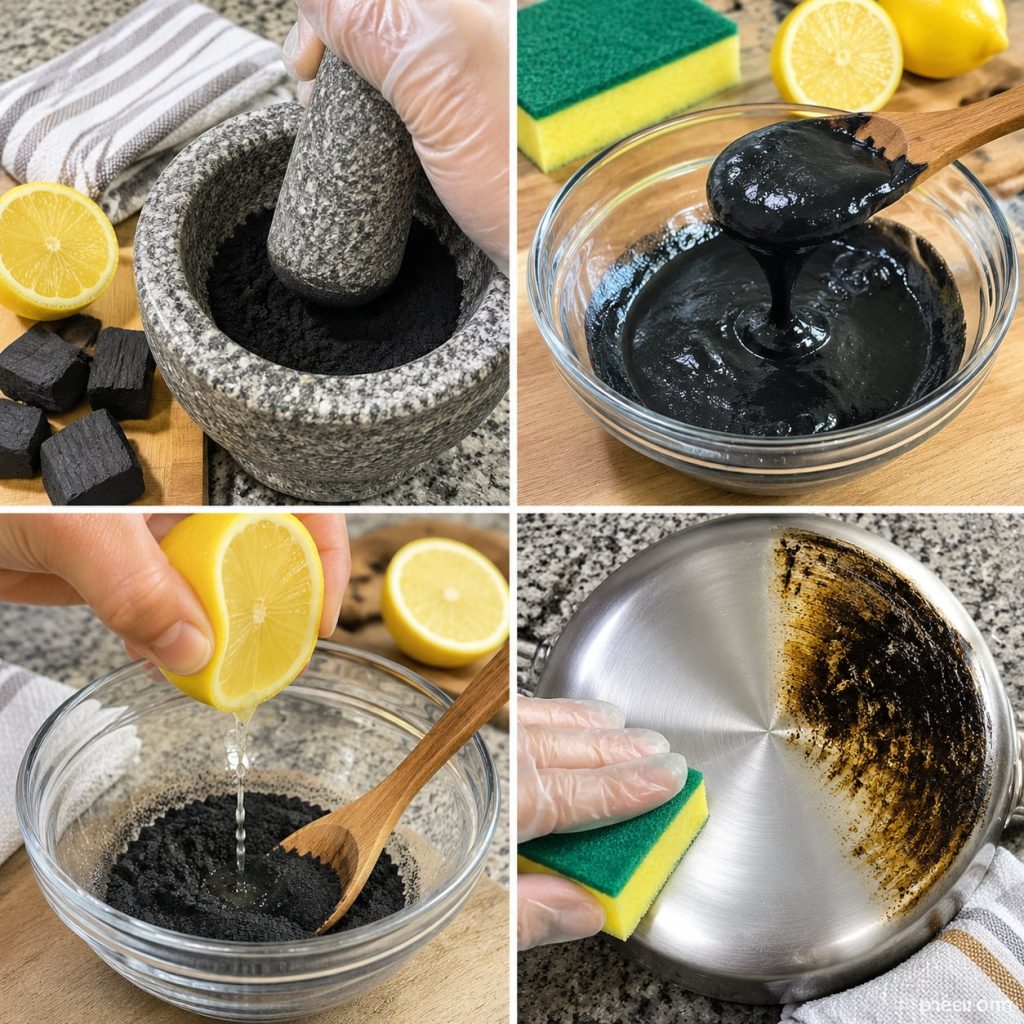
This is a simple household cleaning paste, not a medicine or cosmetic product. Lemon juice helps lift mineral deposits and light residue, while activated charcoal powder adds gentle abrasion that helps grip baked-on carbon. It works best on stainless steel and ceramic-coated surfaces that can handle light scrubbing.
Ingredients and Approximate Measurements
- 2 tablespoons fresh lemon juice (about half a medium lemon)
- 1 tablespoon activated charcoal powder (food-grade or cleaning grade)
- 1 teaspoon baking soda, optional for extra lift
- Water, added slowly as needed
For a single medium pan, this amount is usually enough. Adjust the ratio until the mixture looks like thick toothpaste.
Step-by-Step Method
- Juice fresh lemons and strain out seeds and pulp.
- Place the charcoal powder in a small bowl and add the lemon juice gradually while stirring.
- Stir in baking soda if you are using it. Add water one teaspoon at a time until the paste is spreadable but not runny.
- Spread a thick layer over the burnt area and let it sit for 15 to 20 minutes.
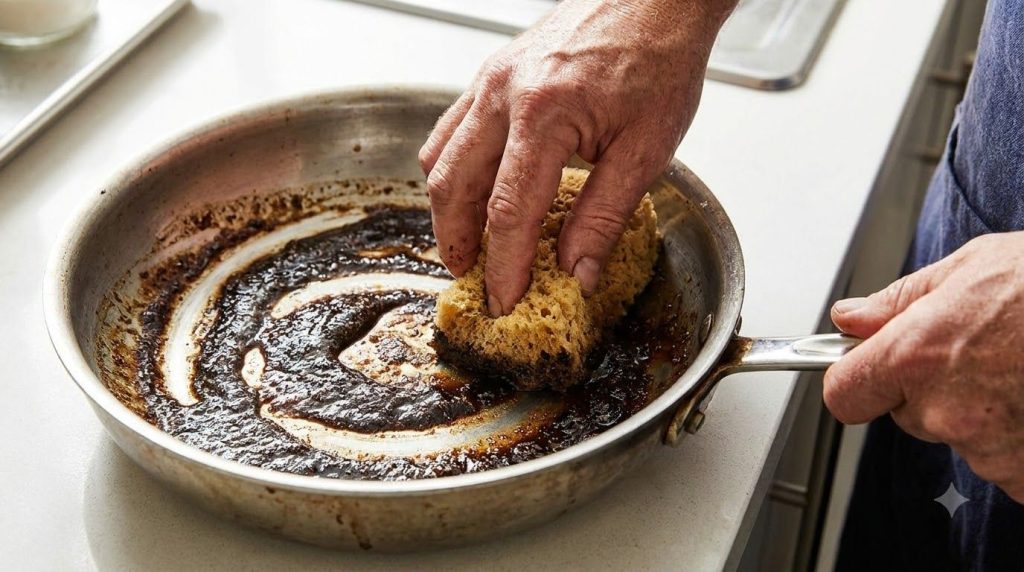
- Scrub gently with a non-scratch sponge in small circles, then rinse with warm water.
- Wash with dish soap, rinse thoroughly, and dry completely.
How to Use It and How Often
Use this paste only when stains are stubborn. For routine cleaning, hot soapy water is usually enough. Repeat the paste method once or twice a month on cookware that sees frequent high heat, and never more than once a week on the same surface.
Comparison: Paste vs Other Cleaning Methods
| Method | Best For | Effort | Surface Safety |
|---|---|---|---|
| Lemon and charcoal paste | Burnt, baked-on residue | Medium | Stainless steel, ceramic |
| Lemon juice soak | Light mineral marks | Low | Most cookware |
| Baking soda paste | Greasy residue | Medium | Most cookware |
| Commercial oven cleaner | Heavy carbon buildup | Low | Check label first |
How to Choose Good Ingredients
Choose fresh lemons that feel firm and heavy for their size, since they yield more juice. For charcoal, select a fine, odorless activated charcoal powder labeled for cleaning or food use. Avoid charcoal briquettes, which contain binders and additives.
Storage
Juice should be used within a few hours for best results. If you must store it, keep it in a sealed glass jar in the refrigerator for up to 24 hours. Do not store the mixed paste, since the moisture can cause it to separate and lose its texture.
Practical Tips
Quick Tip: Warm the pan slightly before applying the paste. The residue softens and lifts more easily. Did You Know? Charcoal powder is very fine, so a small amount goes a long way and can stain light surfaces if it is not rinsed well.
Common Mistakes
- Scrubbing with steel wool, which can scratch the surface and make future burns stick faster.
- Using the paste on aluminum, copper, or cast iron seasoning, where lemon acid can cause discoloration or strip protective layers.
- Leaving lemon on the surface for hours, which can dull polished finishes.
- Mixing the paste with bleach or other cleaners, which can create harmful fumes.
- Skipping the final rinse, leaving gritty charcoal residue behind.
Cautions and Who Should Avoid It
Test a small hidden spot first. Avoid this method on non-stick coatings, which can be damaged by abrasive powder. Keep charcoal powder away from children and pets, and wear gloves if you have sensitive skin or open cuts on your hands. Do not ingest any cleaning paste.
Quick Summary
- Best preparation: fresh lemon juice mixed with activated charcoal powder into a thick paste.
- Best use case: stubborn burnt residue on stainless steel or ceramic cookware.
- Storage: use the juice within hours; do not store the finished paste.
- When to use: occasionally, when regular washing is not enough.
- What to avoid: non-stick, aluminum, copper, cast iron, and mixing with bleach.
Frequently Asked Questions
Can I use bottled lemon juice?
Fresh juice works better because it is more consistent in acidity and has no added preservatives that may interfere with cleaning.
How long does the paste last?
Mix only what you need. The paste is best used immediately and should not be kept for more than a day.
Can I refrigerate the paste?
It is better to make a fresh batch each time. Refrigeration may separate the mixture and reduce its spreadability.
Can I freeze lemon juice for later?
Yes. Freeze juice in ice cube trays and thaw one cube when you need it.
Is this safe for every pan?
No. Stick to stainless steel and ceramic surfaces, and always test a hidden area first.
Why does my pan still look stained?
Very old carbon buildup may need a longer soak or a second application. Repeat the process gently rather than scrubbing harder.
Final Thoughts
A lemon and activated charcoal paste is a practical, low-cost option for lifting stubborn burnt residue from suitable cookware. Use it carefully, keep it occasional, and your pans will stay easier to clean for longer.
Read more: how to remove hard water spots from stainless steel
See the full guide: natural kitchen cleaning ideas for everyday use
Related remedy: a baking soda paste for greasy cookware