Have you ever noticed a cracked corner of your mouth that seems to hang around for days, or bruises that show up after a light bump? Small physical changes like these can make us wonder whether our bodies are trying to tell us something. While these signs are rarely cause for alarm on their own, they can be a helpful nudge to take a closer look at what is on your plate.
Why Your Body Sends Small Signals
Your skin, nails, hair, mouth, and energy levels are often the first places people notice changes. These areas respond to many factors, including sleep, hydration, stress, and the variety of foods you eat each day. Because so many things can influence them, physical signs should be read as clues rather than conclusions.
Common Signs People Often Notice
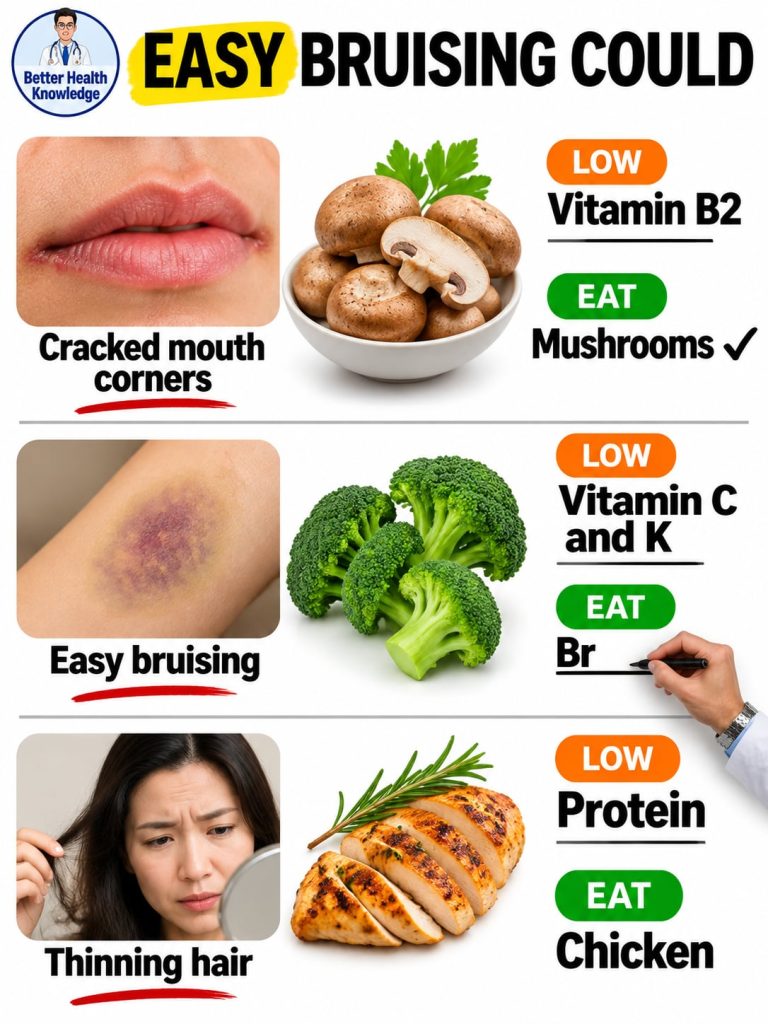
- Cracked mouth corners: Dryness or irritation here is sometimes linked to low intake of certain vitamins or minerals, but hydration and lip habits play a role too.
- Easy bruising: Bruises that appear with little cause can relate to diet, medication, or simply getting older, so it is worth mentioning to a healthcare professional if it keeps happening.
- Dull or brittle nails: Nails that split or look lackluster may reflect a diet that is light on protein or certain nutrients.
- Dry, flaky skin: Skin that feels rough or tight may improve with more healthy fats, fruits, and vegetables in your meals.
- Ongoing tiredness: Feeling drained through the day can have many causes, including sleep, stress, and eating patterns.
- Slow healing or frequent gum irritation: Gums and small cuts that take longer to recover can be a reason to review your overall eating habits.
Simple Foods to Add to Your Meals
Instead of focusing on one nutrient, many people find it easier to build balanced plates. Here are some everyday foods that bring variety and useful nutrients to your routine:
- Leafy greens such as spinach and kale, which add fiber, vitamins, and minerals.
- Broccoli, a versatile vegetable that works well steamed, roasted, or added to soups.
- Mushrooms, which can add savory flavor and a useful range of nutrients to stir-fries and omelets.
- Lean protein like eggs, beans, lentils, chicken, or tofu to support everyday energy and repair.
- Colorful fruits such as berries, citrus, and kiwi for natural vitamins and hydration.
- Nuts and seeds for healthy fats that fit easily into snacks and breakfasts.
Easy Habits for Balanced Daily Wellness
You do not need a complicated plan to eat more thoughtfully. Start by filling half your plate with vegetables at lunch and dinner, choose whole grains when you can, and keep a bowl of fruit visible on the counter. Drinking enough water throughout the day also supports skin, digestion, and energy. Small, consistent changes often feel more sustainable than dramatic overhauls.
When to Check With a Professional
If you notice signs that persist, worsen, or come with other symptoms, it is wise to speak with a doctor or registered dietitian. They can review your diet, discuss any testing that may be appropriate, and help you understand what is going on. Natural habits support wellness, but they are not a substitute for professional medical advice.
Final Thoughts
Your body often gives gentle hints when it could use a little extra nourishment. By paying attention to these subtle signals and building meals around wholesome foods, you can take a simple step toward feeling your best. Try adding one new vegetable or protein source to your meals this week, and notice how your routine feels. Have you noticed any of these signs in your own life? Share your thoughts in the comments below!