Losing belly fat is rarely about one magic food. It is usually about the overall pattern of what you eat, how often you eat it, and how the rest of your day supports your goals. This guide breaks down a simple three-part framework that makes grocery shopping and meal decisions easier: foods to eat regularly, foods to limit, and foods to avoid most of the time.
Why Belly Fat Responds to Everyday Food Choices
Visceral fat, the deeper fat that surrounds the organs in the abdomen, is closely linked to overall calorie balance, sleep quality, stress levels, and physical activity. Foods that are high in fiber and protein tend to keep you fuller for longer, which can make it easier to eat in a calorie deficit without feeling constantly hungry. Foods that are refined, fried, or loaded with added sugar often deliver many calories with little satiety, which makes overeating more likely.
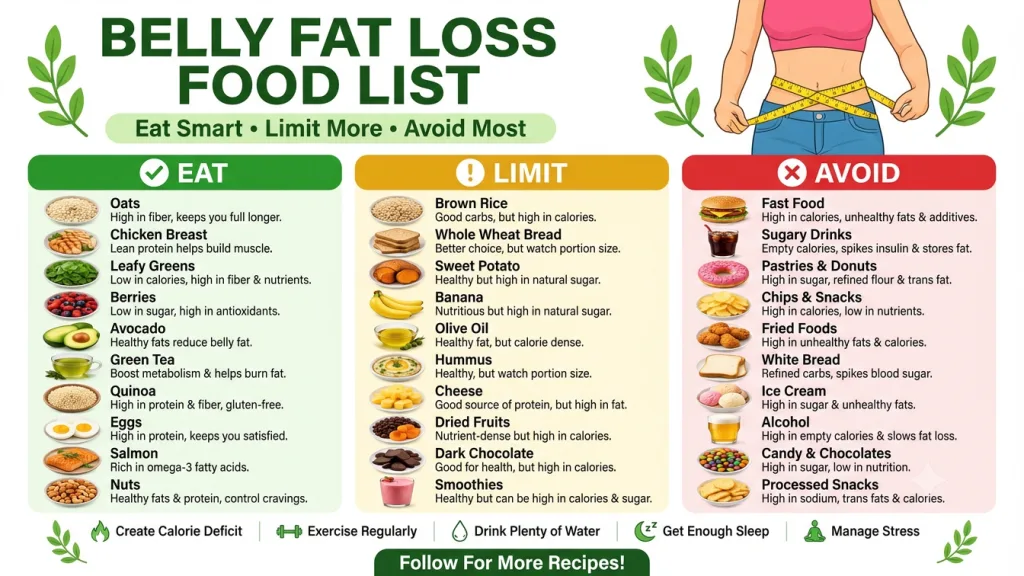
Foods to Eat Regularly
These foods are nutrient-dense, rich in fiber or protein, and generally support steady energy and fullness. Building most of your meals around them is a practical way to improve your diet quality.
- Oats: A source of soluble fiber that supports fullness and steady blood sugar.
- Chicken breast: A lean protein that helps preserve muscle while you lose weight.
- Leafy greens: Low in calories and high in vitamins, minerals, and fiber.
- Berries: Naturally sweet and packed with antioxidants, making them a smart dessert swap.
- Avocado: Provides healthy monounsaturated fats that add satisfaction to meals.
- Green tea: Contains catechins and can be a calorie-free alternative to sweetened drinks.
- Quinoa: A whole grain with protein and fiber that works well in place of refined grains.
- Eggs: High-quality protein that supports a satisfying breakfast.
- Salmon: Rich in omega-3 fatty acids that support heart and overall metabolic health.
- Nuts: Offer protein, fiber, and healthy fats, but portions should stay small because they are calorie-dense.
Foods to Limit
Limit does not mean eliminate. These foods can fit into a balanced diet, but portion size and frequency matter. Pay attention to how much you eat and what you pair them with.
- Brown rice and whole wheat bread: Better than white versions, yet still calorie-dense in large amounts.
- Sweet potato and banana: Nutritious carbohydrates that can add up quickly if portions grow large.
- Olive oil: Heart-friendly fat, but a little goes a long way.
- Hummus and cheese: Satisfying and useful in moderation, especially with vegetables.
- Dried fruits: Concentrated natural sugars, so a small handful is usually enough.
- Dark chocolate: A smaller square with high cocoa content can satisfy cravings when eaten mindfully.
- Smoothies: Healthy when made with whole ingredients, but easy to overload with sugar and calories.
Foods to Avoid Most of the Time
These foods are typically high in added sugar, refined flour, unhealthy fats, or sodium, and they are easy to overconsume. Reducing them often produces the biggest improvement in daily habits.
- Fast food and fried foods, which are often high in calories and unhealthy fats.
- Sugary drinks, including soda and sweetened juices, which add liquid calories without much fullness.
- Pastries, donuts, candy, and ice cream, which provide refined sugar and little nutritional value.
- White bread, which digests quickly and may leave you hungry sooner.
- Chips, processed snacks, and alcohol, which are easy to overeat and can slow fat loss progress.
Beyond Food: Habits That Support Fat Loss
Food is only one piece of the puzzle. Consistent habits make a noticeable difference over time, and they work best together.
- Create a moderate calorie deficit that you can sustain.
- Exercise regularly, combining cardio and strength training.
- Drink plenty of water throughout the day.
- Get enough quality sleep, since poor sleep can increase appetite.
- Manage stress, because chronic stress can encourage cravings and abdominal fat storage.
Practical Tips for Your Next Grocery Trip
Start by filling your cart with the Eat list first, then add a few Limit items you enjoy. Read labels to spot hidden sugars and refined starches, and plan simple meals so you are less tempted by takeout. Small, consistent changes are easier to maintain than strict rules.
Remember that individual needs vary. If you have a medical condition or are taking medication, speak with a healthcare professional before making major changes to your diet or exercise routine. Save this guide, share it with a friend, and take one step toward healthier habits today.