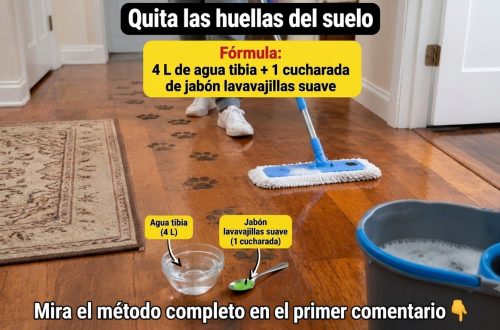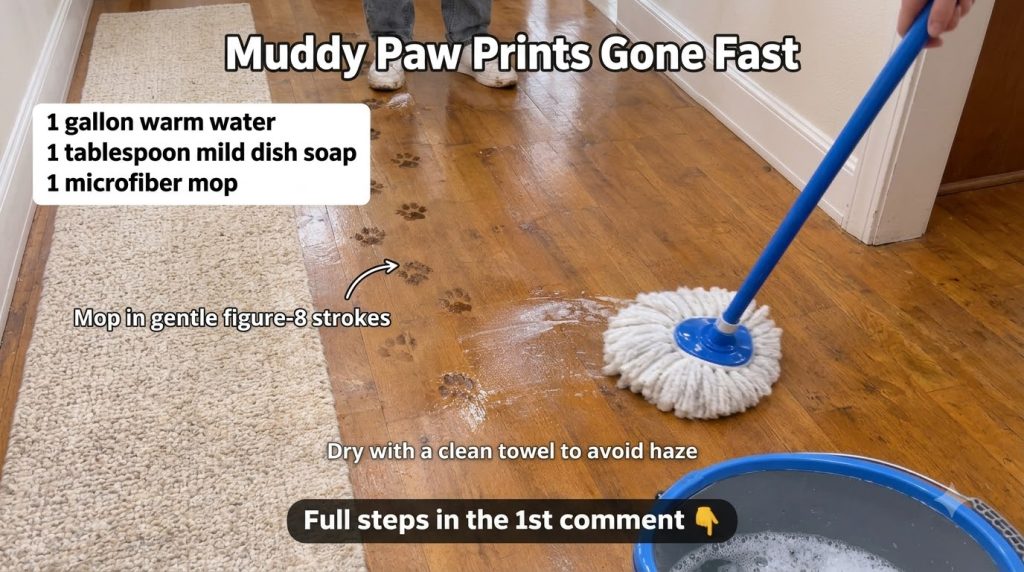
If you share your home with a dog or cat, you already know how quickly a clean hallway can turn into a trail of muddy paw prints. The good news is that varnished wood floors are usually easy to restore with a short, careful mopping routine. You do not need harsh chemicals or a full day of scrubbing. You just need the right amount of cleaner, a damp mop, and a little patience.
What You’ll Need
- A spin mop or a flat microfiber mop with a washable pad
- A gray or any clean bucket, large enough for two buckets of water if needed
- Warm water
- A few drops of pH-neutral wood floor cleaner, or a small squirt of mild dish soap
- A second bucket of clean water for rinsing the mop head (optional but helpful)
- A dry microfiber cloth for spot-checking and buffing
- A soft broom or dry dust mop for loose dirt and grit
Why This Method Works
Muddy paw prints are mostly loose grit and a bit of moisture sitting on top of the finish. Sweeping first removes the sand and debris that can scratch the surface when you mop. A lightly soapy, damp mop then lifts the remaining dirt without soaking the floor. Mild, pH-neutral cleaners are gentle on varnish and leave less residue than strong all-purpose products, which can leave a dull film over time.
How to Make the Cleaning Solution
- Fill your bucket with warm water. Warm water loosens dirt better than cold, but it should not be hot enough to make the floor feel steamy.
- Add a few drops of pH-neutral wood floor cleaner, following the label. If you only have dish soap, use just a small squirt, since too much soap is the most common cause of a sticky or cloudy floor.
- Stir gently until the water is just slightly sudsy, then wring out your mop before the first pass.
How to Use It
- Sweep or dust mop the entire floor first, paying extra attention to corners and along the baseboards where paw prints collect dirt.
- Pull the rug edge back or work around it, then start mopping at the far end of the hallway so you do not walk on freshly cleaned boards.
- Wring the mop until it is damp, not dripping. On a spin mop, use the pedal or spin function until the pad feels only slightly wet.
- Mop in long, overlapping strokes, following the direction of the boards. Rinse the mop head often in your second bucket, especially after you hit a heavy muddy spot.
- For stubborn paw prints, go over the spot once more with a barely damp pad. Avoid scrubbing hard, which can dull the varnish.
- Finish with a clean, dry microfiber cloth or a dry mop pass to remove any streaks and leave the floor looking even.
What to Expect
After one good mopping session, the muddy marks should lift and the boards should look noticeably cleaner with a more even sheen. Very dried-in mud or old residue may need a second pass or a bit of extra soaking time on that spot. Expect the floor to look refreshed rather than brand new, especially in high-traffic areas where normal wear is part of the finish.
Helpful Tips
- Wipe up fresh mud as soon as you notice it. Dried mud is much harder to remove.
- Keep a doormat at each entrance and place a towel by the back door for quick paw wipe-downs.
- Change your mop water when it starts to look gray. Dirty water only spreads grime around.
- Mop a little more often in busy hallways rather than doing one large session each week.
Important Notes and Safety
- Check your floor manufacturer’s care instructions before using any new cleaner.
- Test any product on a small, hidden area first, such as inside a closet, to make sure it does not dull the finish.
- Avoid soaking the floor. Standing water can seep between boards and cause swelling or warping over time.
- Do not use vinegar, ammonia, bleach, or oil-based polish on varnished wood unless the manufacturer specifically recommends it. These can break down the finish or leave a sticky buildup.
- Rinse the mop head thoroughly after each use and let it air dry before storing it, so it does not develop odor.
- Keep cleaning products out of reach of pets and children, and store them in their original containers.
With a simple routine and a damp mop, muddy paw prints do not have to mean an endless cleanup. A little regular care keeps your varnished floors looking warm and cared for, even in the busiest part of the house.