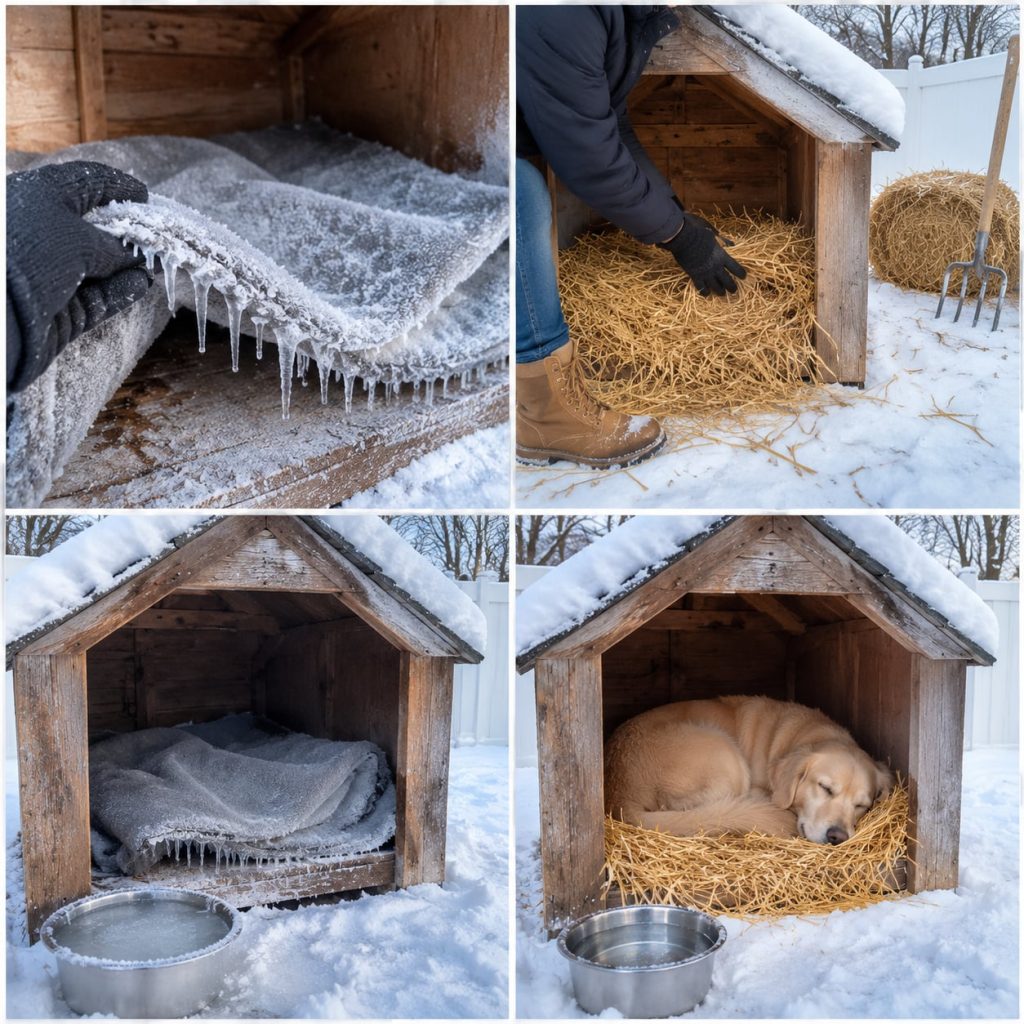
Most dog owners assume a thick blanket is the warmest choice for an outdoor dog house. The part most people skip is what happens after the first wet night. Fabric soaks up breath moisture, rain, and melted snow, then stays cold against your dog’s body for hours.
What Is Dry Straw Bedding?
Dry straw is the hollow stalk left after grain harvest, usually wheat or barley. Unlike blankets, straw traps air inside each stalk and sheds moisture instead of holding it. That combination makes it a practical option for outdoor dog houses where the floor stays cold and damp for weeks.
Why Fabric Fails in Freezing Weather
Fabric works well indoors because it stays dry. Outdoors, it becomes a sponge. Once a blanket is damp, it pulls heat away from the body instead of holding it in. Many owners also notice that a wet blanket freezes stiff overnight, which makes the nest colder than an empty floor.
Ingredients and Materials You Need
- Clean, dry straw (wheat or barley preferred)
- A raised plywood or wooden floor board, if the house sits directly on soil or concrete
- A small rake or pitchfork for fluffing
- A tarp or sealed bin for storing extra straw
- A waterproof cover or flap for the entrance
Approximate Measurements
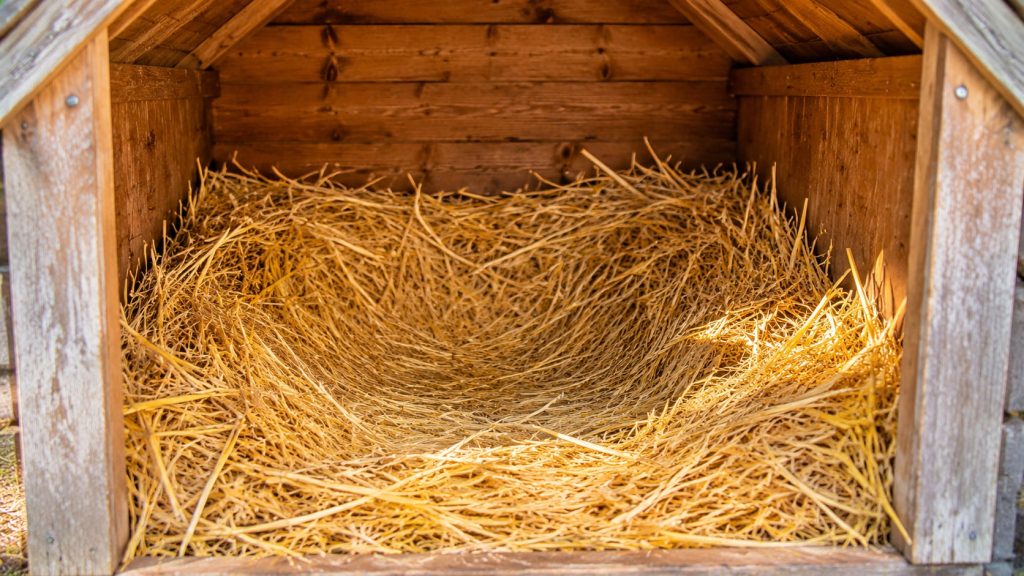
For a small to medium dog house, aim for a floor layer of 4 to 6 inches of straw. Larger houses may need 6 inches. Build a shallow hollow in the center, deep enough for your dog to curl up and nest. A single bale usually provides enough straw for several refills in a small house, but this varies with house size and how quickly the bedding gets soiled.
Step-by-Step Method
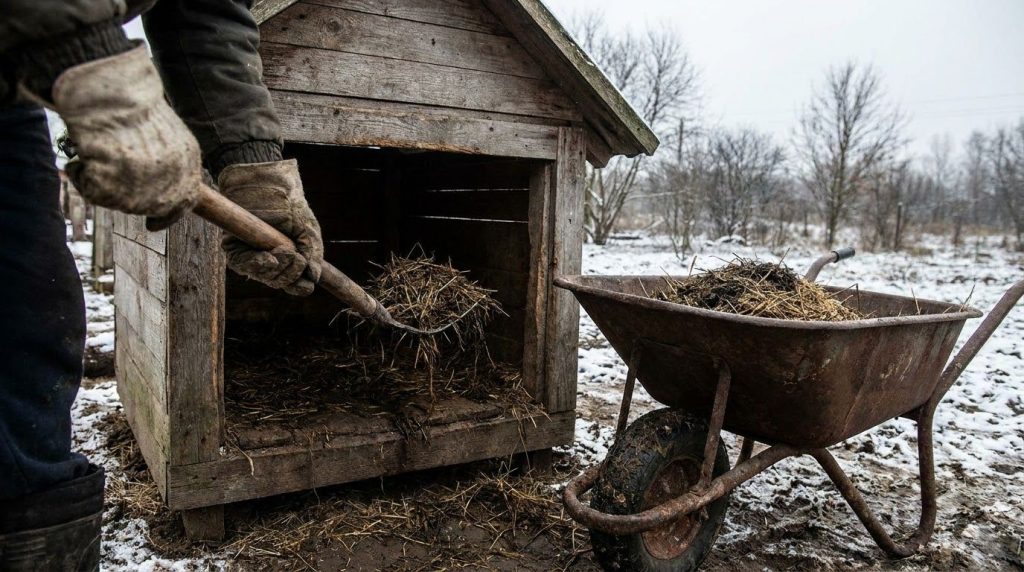
- Remove the old fabric blanket and any wet material from the house.
- Scrape out damp or matted bedding and let the floor dry completely if possible.
- Place a raised board or pallet piece on the floor to lift the house off cold ground.
- Spread 4 to 6 inches of dry straw evenly across the floor.
- Press the center down to form a nest, leaving the edges slightly higher as a windbreak.
- Check that the entrance flap closes snugly and does not let snow blow inside.
How to Use Straw Bedding Safely
Fill the house with straw, then let your dog settle in and watch how it curls up. Most dogs will rearrange the nest themselves. Keep the straw loose rather than packed flat, since trapped air is what provides insulation.
Read more: how to build a simple raised floor for an outdoor dog house.
How Often to Change It
Check the bedding every few days. Replace it sooner if it becomes wet, flattened, or soiled. Dry straw can last several weeks in good conditions, but damp straw should be removed right away because it stops insulating and can encourage mold.
How to Buy and Choose Straw
Look for straw that is golden, dry, and free of mold or a musty smell. Avoid hay for bedding, since it contains leaf matter and seed heads that hold moisture and can grow mold. Buy from a feed store or farm supplier, and check that the bales are stored off the ground.
Storage Tips
Store straw in a dry shed, on pallets, and under cover. Keep it away from walls where condensation can form. Once a bale gets damp, it loses its usefulness, so do not leave it outside in rain or snow.
Practical Tips
Quick Tip: Add a second layer of straw on the coldest nights instead of adding fabric. Did You Know? Straw sheds water quickly, so a dry layer on top of a clean floor can stay usable much longer than a blanket. Before You Refill: Shake out the old straw and check for ice or damp spots underneath.
Common Mistakes
- Using blankets or towels as the main bedding layer
- Using hay instead of straw, which holds more moisture
- Packing the straw down flat, which removes the insulating air
- Leaving soiled or wet bedding in place for days
- Placing the house directly on frozen ground without a raised base
Comparison: Straw vs Fabric vs Hay
| Bedding | Moisture Handling | Insulation When Wet | Best Use |
|---|---|---|---|
| Dry straw | Sheds water and dries faster | Keeps air pockets | Outdoor winter nests |
| Fleece or towels | Absorbs and holds water | Loses insulation quickly | Indoor use only |
| Hay | Holds moisture longer | Can mold | Feeding, not bedding |
Cautions and Who Should Be Careful
Check your dog regularly, especially puppies, senior dogs, short-haired breeds, and dogs with health conditions. If your dog shows shivering that does not stop, lethargy, or stiff movement, contact a veterinarian promptly. Avoid cedar shavings or heating devices without safety guards, since they can cause irritation or fire risk. Straw is a bedding material, not a substitute for proper shelter.
Quick Summary
Best option: dry straw, 4 to 6 inches deep, on a raised floor. Best use case: outdoor dog houses during cold, wet months. Storage: dry, elevated, and covered. When to use: all winter, with frequent checks. What to avoid: fabric blankets, hay, damp bedding, and cold direct contact with the ground.
Frequently Asked Questions
Can I use fresh or dried straw?
Use dry straw only. Fresh-cut plant material holds moisture and can rot.
How long does straw bedding last?
In good conditions, dry straw can last several weeks. Replace it as soon as it becomes damp or flattened.
Can I reuse straw?
Only if it is still dry and clean. Soiled or wet straw should be discarded or composted.
Can I store straw in the garage?
Yes, if the space is dry, ventilated, and raised off the floor.
Is it safe to add a blanket on top of straw?
It is better to skip fabric entirely. A blanket on top will absorb moisture from the dog and the air.
How do I know if my dog is too cold?
Look for persistent shivering, curling tightly with no rest, or reluctance to go outside. Contact a veterinarian if you are concerned.
Should I remove the bedding in spring?
Yes. Clean the house thoroughly before summer to prevent mold and pests.
Final Thoughts
Swapping fabric for dry straw is a simple change that keeps the nest drier and more insulating through the coldest months. Check the bedding often, keep the house off the ground, and your dog will have a warmer place to rest.
You may also like: how to choose a weatherproof dog house.
See the full guide: winter care tips for outdoor pets.