Most people walking past a fig tree never notice the thin white liquid that appears when a green fig or leaf stem is snapped. That milky latex is the part gardeners quietly collect in tiny glass vials. It looks mysterious, but the method is simple, and it is also one of the easiest ways to get hurt if you skip the safety steps. Here is what the practice involves, how it is usually done, and where its limits are.
What It Is
Fig trees (Ficus carica) produce a milky latex when their leaves, stems, or young fruit are cut. This sap is a defensive fluid that the plant uses to deter insects and seal wounds. Folk traditions have used it for centuries, mostly for topical purposes, but modern research on fig latex is limited, so no specific health benefit is proven. Treat it as a traditional gardening and craft material, not a guaranteed remedy.
Ingredients and Tools
- Young green figs or fresh leaf stems from a healthy, unsprayed tree
- Small clear glass vials or dropper bottles, about 5 to 10 ml each
- Clean cotton swabs or a small paper towel
- Disposable gloves and safety glasses
- Cold water and mild soap for cleanup
Approximate Measurements
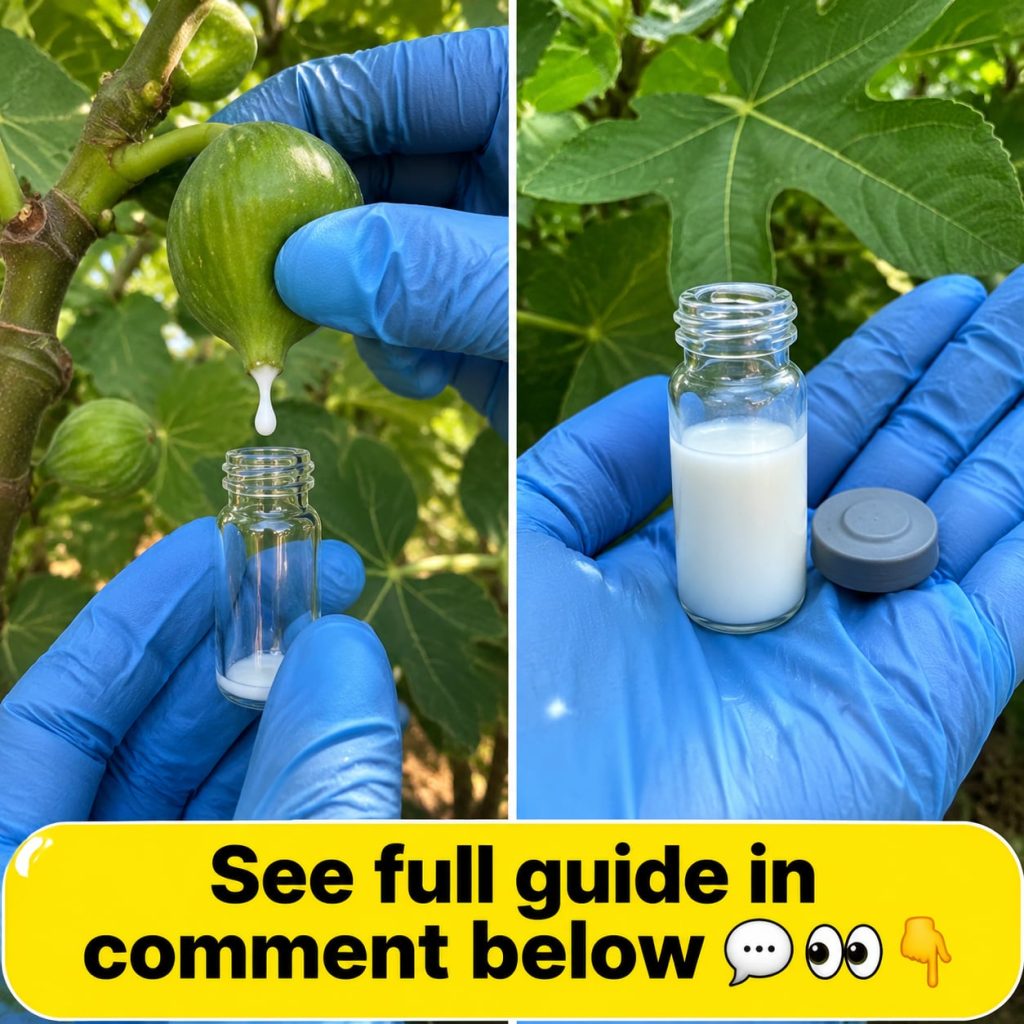
Most gardeners collect only a few drops per fruit. A single 5 ml vial usually fills after you collect sap from 3 to 6 small green figs, depending on size and how fresh the cut is. Avoid stripping the tree, because heavy sap collection stresses the plant.
Step-by-Step Collection Method
- Choose a green, unripe fig that is still firm. Ripe figs produce less latex and are more fragile.
- Put on gloves and eye protection before you touch the tree.
- Make a clean, small cut on the stem near the fruit using sharp pruners. Do not tear the stem.
- Hold the vial below the cut and wait for a few seconds while drops collect.
- Stop once you have enough for your purpose. Seal the vial immediately.
- Wash your hands and tools with soap and water. Do not touch your eyes or face during the process.
Quick Tip: Collect in the early morning, when the tree is cool and the latex flows more steadily.
How to Use It
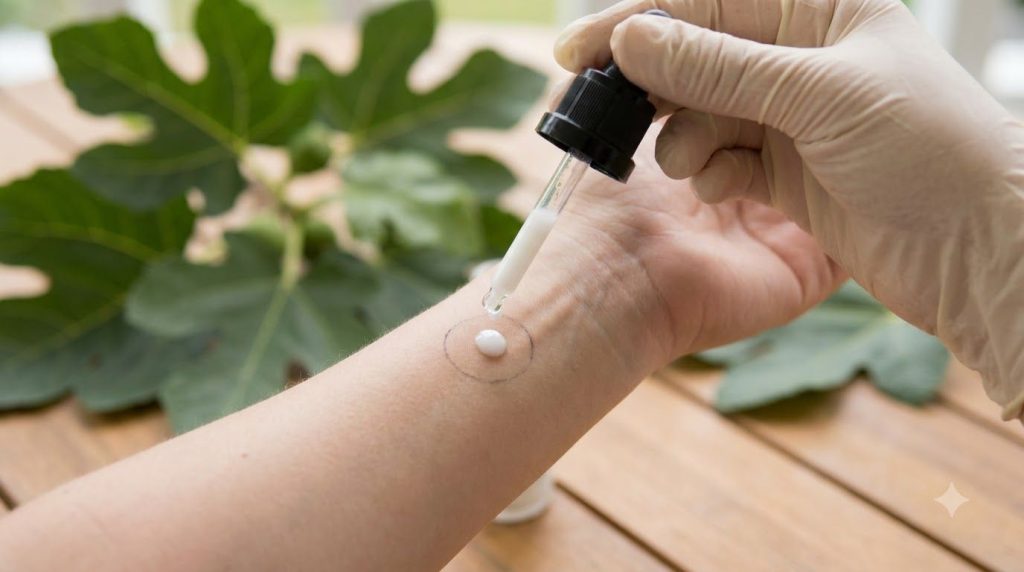
Gardeners most often use fig latex as a small-scale craft or preparation ingredient rather than as a daily product. It should never be swallowed. Some people apply a tiny amount to a small test spot of skin first, then wait 24 hours. If redness, itching, or swelling appears, wash the area and stop using it.
How Often to Use It
Use fresh latex only when you need it and keep applications rare. Repeated contact with the sap increases the chance of irritation. Never use it on broken skin, near the eyes, or on children.
How to Choose Figs
Pick trees you know are free of pesticides, and avoid trees near busy roads. Choose firm, green figs with unbroken skin. If you are buying figs for the sap, check with the seller that the fruit has not been treated.
Storage
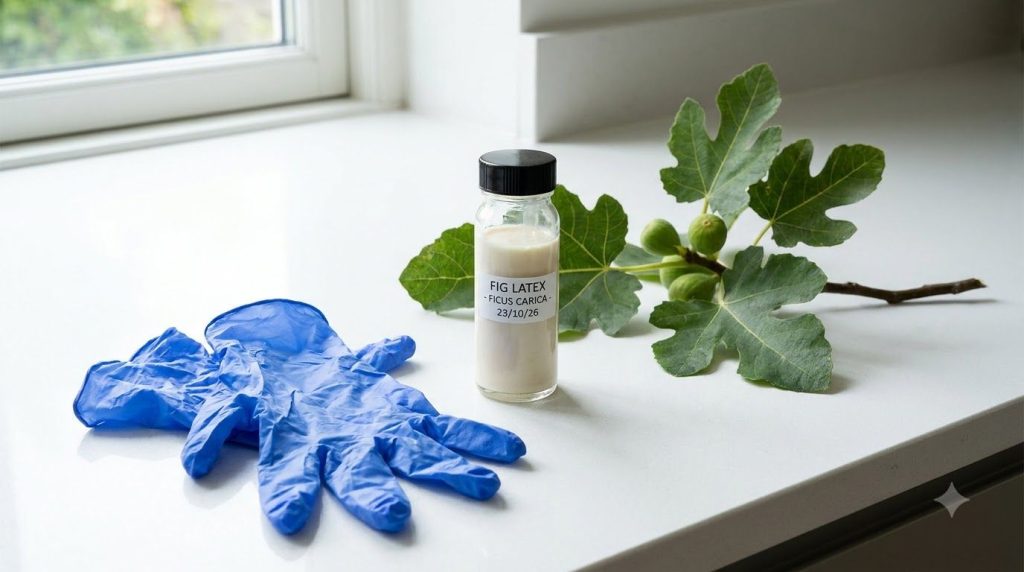
Fresh fig latex oxidizes and thickens quickly. Store it in a sealed glass vial in the refrigerator and label it with the collection date. Use it within 48 hours. Do not store it in plastic containers, which can absorb the sap.
Fresh vs Stored Latex
| Option | Best Use | Shelf Life | Notes |
|---|---|---|---|
| Fresh latex | Small craft or patch test | Up to 48 hours refrigerated | Most fluid and easiest to collect |
| Thickened latex | Not recommended | Discard | Harder to control and more irritating |
| Dried latex film | Not recommended for skin | Not applicable | Can trap residue and irritate |
Practical Tips
- Work on a clean, covered surface and label every vial.
- Collect from a single branch rather than many branches.
- Keep children and pets away from the tree during collection.
Common Mistake: Assuming more sap means a better result. Extra latex increases irritation without adding any clear benefit.
Common Mistakes
- Collecting from ripe or damaged figs, which yields less and more messy sap.
- Skipping gloves and rubbing your eyes afterward.
- Using sap from sprayed or unknown trees.
- Storing the vial in warm conditions or for longer than two days.
- Skipping the patch test before applying to skin.
Cautions and Who Should Avoid It
Fig latex can irritate skin and eyes, and some people develop contact dermatitis after handling fig trees. Avoid it if you have sensitive skin, allergies to latex or plants in the Moraceae family, or a skin condition. Do not apply it to open wounds. Never take it by mouth. If you experience persistent irritation, consult a healthcare professional.
Quick Summary
- Best preparation: Fresh latex collected in the morning from young green figs.
- Best use case: Small craft or patch-test purposes only.
- Storage: Sealed glass vial, refrigerated, used within 48 hours.
- When to use: Rarely, and only after a patch test.
- What to avoid: Eyes, broken skin, internal use, sprayed trees, and repeated exposure.
FAQ
Can I use fresh or dried fig latex?
Fresh latex is the only form most gardeners consider. Dried latex can trap residue and is not recommended for skin.
How long does fig latex last?
Refrigerated fresh latex should be used within 48 hours.
Can I refrigerate it?
Yes. Keep it sealed in a glass vial in the refrigerator.
Can I freeze it?
Freezing is not recommended because it changes the texture and makes it harder to control.
Which part of the fig gives the most sap?
Young green figs and fresh leaf stems produce the most latex.
Can I reuse the leaves?
Leaves can be reused for other gardening purposes, but avoid using old, wilted leaves as a sap source.
When should I avoid it?
Avoid it if you have latex sensitivity, sensitive skin, open wounds, or if you are pregnant or breastfeeding without medical advice.
Conclusion
Fig latex collection is a traditional gardener’s practice that rewards careful handling and a clear purpose. Keep the amounts small, protect your skin and eyes, and treat every result as a test rather than a promise.
You may also like: Read more about safe plant handling in our garden guide.
Related remedy: See the full guide to homemade plant-based preparations.