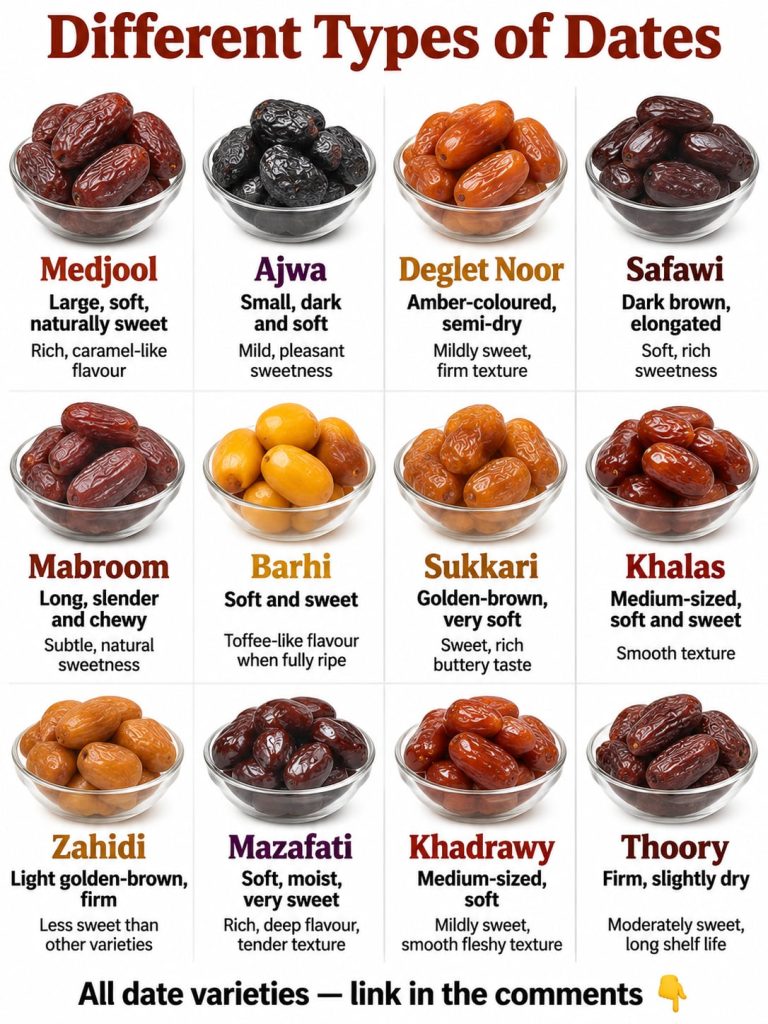
Most people only ever try one kind of date, which means they miss out on varieties that taste like warm caramel or rich brown sugar. Dates come in many forms, and each one carries its own colour, size, texture and sweetness. Once you know what to look for, choosing dates for snacking, baking or breakfast becomes much more enjoyable.
This guide walks through the main differences between date varieties, starting with the features that are easiest to notice and moving on to the flavour and texture details that help you choose the right date for each use.
Why Date Varieties Taste So Different
Dates are the fruit of the date palm, and the many varieties grown around the world vary in how they develop on the tree. Growing conditions, ripeness at harvest and processing all influence the final result. That is why two dates can look similar at first glance yet taste quite different when you bite into them.
Colour is often the first clue. Lighter dates tend to be firmer and milder, while darker dates are usually softer and more concentrated in flavour. Size and texture follow closely behind, and sweetness rounds out the picture.
Key Features to Notice
- Colour: Shades can range from pale golden to deep reddish-brown, and colour often hints at how soft and sweet a date will be.
- Size: Larger dates are often easier to stuff, chop or serve on their own as a snack.
- Texture: Some dates are soft and moist, while others are firmer and more chewy.
- Sweetness: Flavour can range from mild and fruity to deep, caramel-like or reminiscent of brown sugar.
A Closer Look at Medjool Dates
Medjool dates are one of the most recognisable varieties. They are large, soft and caramel-like, which makes them a popular choice for eating fresh. Their rich sweetness also pairs well with nuts, yoghurt and oats.
How to Choose the Right Date for Your Needs
For Snacking
Softer, larger dates are usually the most satisfying to eat on their own. They make a naturally sweet snack that can be paired with a handful of nuts.
For Cooking and Baking
Dates with a deeper, brown-sugar-like flavour can add natural sweetness to baked goods, sauces and energy bites. Chopped dates blend easily into batters and fillings.
For Everyday Breakfasts
A few chopped dates can add sweetness to overnight oats, smoothies or porridge, which may help you enjoy a satisfying breakfast without added refined sugar.
Tips for Enjoying Dates Well
- Start with a small portion and taste a few varieties to learn your favourites.
- Store dates in a sealed container in a cool place, or in the refrigerator for longer freshness.
- Pair dates with protein or fibre, such as nuts or yoghurt, to make a more balanced snack.
Final Thoughts
Learning about date varieties is a simple way to bring more flavour and variety into your everyday eating. Colour, size, texture and sweetness each offer clues about what a date will taste like, and exploring them can make healthy eating more enjoyable. Dates are naturally sweet and can fit well into a balanced diet when enjoyed in moderation.
This article is for general information only and is not a substitute for professional medical advice. If you have diabetes or other dietary concerns, consult a qualified healthcare professional before making changes to your diet.