Have you noticed people sharing a simple mix of Vaseline and aloe vera on social media? This popular beauty routine is catching attention because it is affordable, easy to prepare, and commonly used in DIY beauty routines for a smoother-looking, comfortable feel. Let us look at what the routine involves, how people prepare it, and what you should know before you try it.
What Is This Routine?
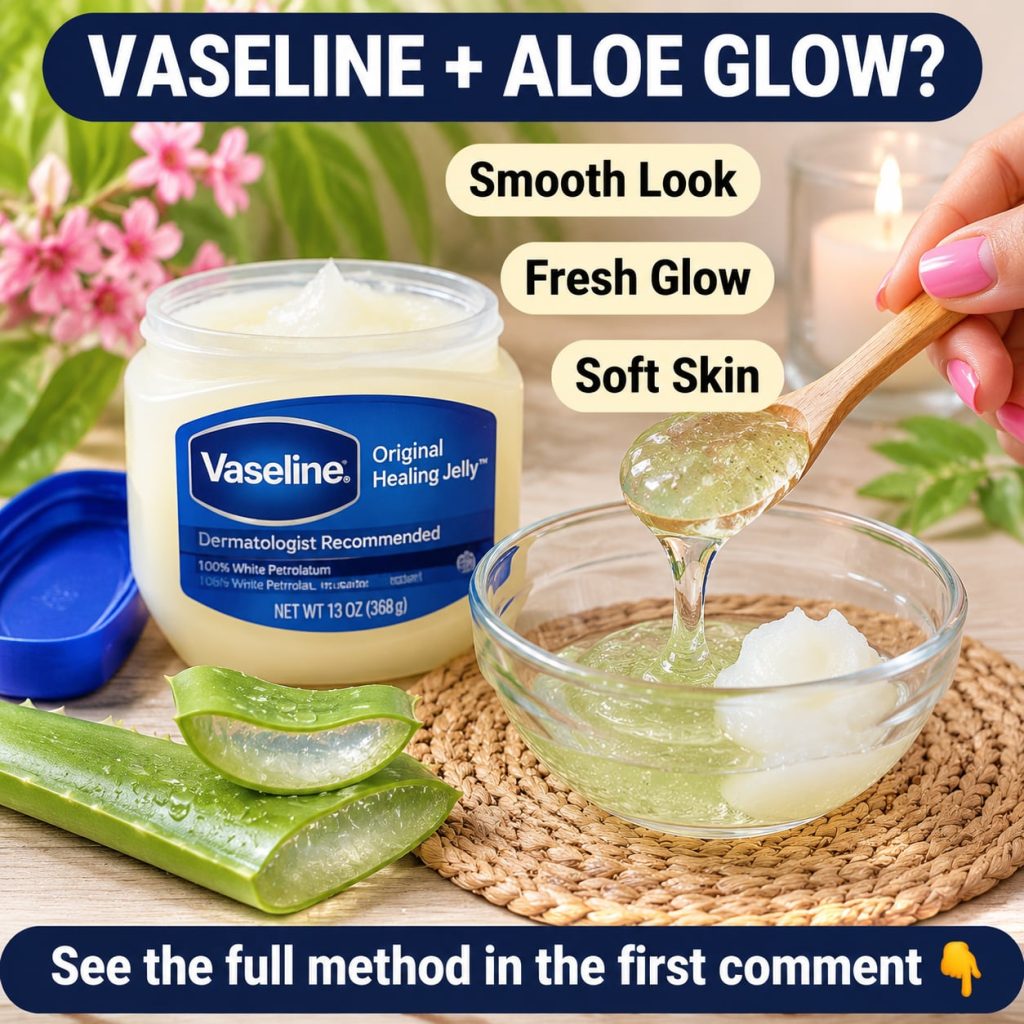
Petroleum jelly, often sold as Vaseline, is an occlusive ingredient. This means it helps seal moisture onto the surface of the skin. Aloe vera gel is lightweight and water-rich, and many people enjoy its cooling, soothing feel. Together, they are often described as a hydrating night treatment that can make skin feel softer and more comfortable.
What You Will Need
- Plain petroleum jelly (Vaseline)
- Pure aloe vera gel, ideally without added fragrance or alcohol
- A small clean glass jar with a lid
- A clean spoon or spatula
How People Prepare It
- Wash your hands and clean the jar and spoon thoroughly.
- Add about one teaspoon of aloe vera gel to the jar.
- Add about one teaspoon of petroleum jelly.
- Mix gently until the texture is smooth and evenly blended.
- Apply a thin layer to clean, slightly damp skin, focusing on drier areas such as elbows, heels, or cheeks.
- Store the mixture in a covered container, make small batches, and discard it if the smell or color changes.
Before You Try This
- Patch test first by applying a small amount to the inner elbow and waiting 24 to 48 hours.
- Avoid using it on broken, irritated, or sunburned skin.
- Petroleum jelly can feel heavy and may not suit everyone, especially those with acne-prone skin.
- Stop using the mixture if you notice redness, itching, or discomfort.
Tips for Best Results
Use the mixture as a night step after your usual moisturizer, since it works best as a sealing layer. Keep your routine simple and give your skin time to respond. Pair it with gentle cleansing and daily sun protection for the most balanced results.
The Bottom Line
The Vaseline and aloe vera routine is a popular, budget-friendly DIY idea that many people try for softer-looking skin. It is not a cure for any skin condition, and results vary from person to person. If you have persistent concerns, consult a dermatologist for personalized advice.