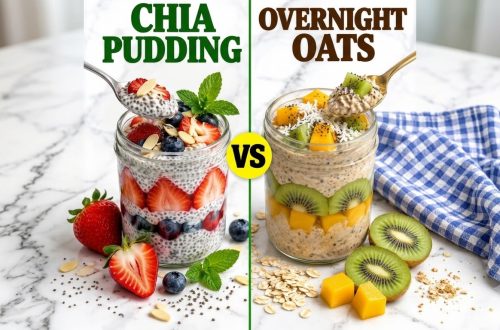
Which side are you on? Chia pudding and overnight oats are two of the most popular make-ahead breakfasts, and both can fit neatly into a busy morning routine. Here is a quick answer, followed by a closer look at how they differ and how to make each one at home.
The Quick Answer
Chia pudding is a great choice if you want a creamy, seed-based breakfast that is high in fiber and omega-3 fats. Overnight oats are a good pick if you want a heartier, grain-based breakfast with a softer, oatmeal-like texture. Both are simple, both can be prepared the night before, and both are easy to customize with fruit, nuts and spices.
What Is Chia Pudding?
Chia pudding is made by soaking chia seeds in a liquid such as milk, plant-based milk or yogurt. The seeds absorb the liquid and swell into a thick, gel-like texture that resembles tapioca pudding.
Chia seeds are naturally rich in fiber, plant-based protein, and alpha-linolenic acid, a type of omega-3 fat. Because of their fiber content, they may help you feel full for longer after a meal.
What Are Overnight Oats?
Overnight oats are rolled oats soaked in milk, yogurt or another liquid in the refrigerator. By morning, the oats soften into a creamy, spoonable breakfast that can be eaten cold or lightly warmed.
Oats are a whole grain and a source of soluble fiber called beta-glucan, which is studied for its role in supporting healthy cholesterol levels as part of a balanced diet.
Chia Pudding vs. Overnight Oats: Side-by-Side
- Texture: Chia pudding is thick and gel-like with crunchy seed bits. Overnight oats are creamy and soft with a chewy bite.
- Fiber: Chia seeds are very high in fiber per serving. Oats also provide good fiber, especially soluble fiber.
- Protein: Both can be boosted with Greek yogurt, protein powder or nut butter.
- Healthy fats: Chia seeds are a notable plant source of omega-3s. Oats contain modest amounts of fat, which can be increased with nuts or seeds.
- Prep time: Both need several hours or overnight to set.
- Best for: Chia pudding suits those who prefer a lighter, pudding-style breakfast. Overnight oats suit those who want something more filling and grain-based.
Simple Chia Pudding Recipe
Ingredients (1 serving):
- 3 tablespoons chia seeds
- 3/4 cup unsweetened milk or plant-based milk
- 1/2 teaspoon vanilla extract (optional)
- 1 teaspoon maple syrup or honey (optional)
- 1/2 cup fresh berries, such as strawberries or blueberries
- 1 tablespoon sliced almonds
Steps:
- Stir the chia seeds, milk, vanilla and sweetener together in a jar.
- Let it rest for 5 minutes, then stir again to prevent clumps.
- Cover and refrigerate for at least 4 hours or overnight.
- Top with berries and almonds before serving.
Simple Overnight Oats Recipe
Ingredients (1 serving):
- 1/2 cup rolled oats
- 1/2 cup milk or plant-based milk
- 1/3 cup plain Greek yogurt (optional, for extra protein)
- 1 tablespoon chia seeds or ground flaxseed (optional)
- 1/2 cup diced mango or kiwi
- 1 tablespoon shredded coconut
Steps:
- Combine the oats, milk, yogurt and seeds in a jar and stir well.
- Cover and refrigerate for at least 6 hours or overnight.
- Add more milk if the oats seem too thick in the morning.
- Top with fruit and coconut before eating.
Which One Should You Choose?
Choose chia pudding if you enjoy a light, smooth texture and want an extra boost of fiber and omega-3s. Choose overnight oats if you prefer a hearty breakfast with the familiar comfort of oatmeal. You can also alternate between the two during the week to enjoy variety while keeping your routine simple.
Tips for Better Make-Ahead Breakfasts
- Use a tightly sealed jar and store it in the refrigerator for up to 3 to 4 days.
- Drink extra water with chia seeds and fiber-rich foods to stay comfortable and hydrated.
- Add cinnamon, vanilla or fresh citrus zest for flavor without extra sugar.
- Start with smaller amounts of chia seeds if your digestive system is not used to high-fiber foods.
Keep Exploring
If you enjoyed this comparison, explore more healthy breakfast ideas, meal prep strategies and nutrition guides on our site. Check back often for new recipes and practical tips to help you eat well every day.
This article is for general information only and is not medical advice. If you have a medical condition, food allergy or specific dietary needs, please consult a qualified healthcare professional before changing your diet.