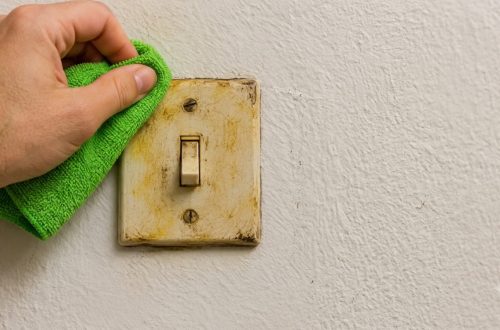
Light switches collect fingerprints, oily smudges, and dust every day, yet they rarely make it onto the cleaning list. Here is a simple, safe way to clean grimy switches and switch plates using ingredients you probably already have in the kitchen.
What You Will Need
- 1 cup warm water
- 1 teaspoon mild dish soap
- 1/2 teaspoon baking soda
- A clean microfiber cloth
- A cotton swab
- A dry, clean cloth for finishing
Stir the water, dish soap, and baking soda together in a small bowl. The baking soda will not dissolve completely, and that is fine. Dip the microfiber cloth in the mixture and wring it out well before you start.
Step 1: Turn Off the Power
If you plan to wipe around the toggle with anything damp, switch off the power at the breaker first. Water and electricity do not mix, so this step protects you and the wiring. Confirm the switch is dead before you begin.
Step 2: Dampen the Cloth, Never the Switch
The cloth should feel damp, not dripping. Never spray cleaner directly onto a switch plate, because liquid can run behind the plate and into the mechanism.
Step 3: Rub the Plate in Small Circles
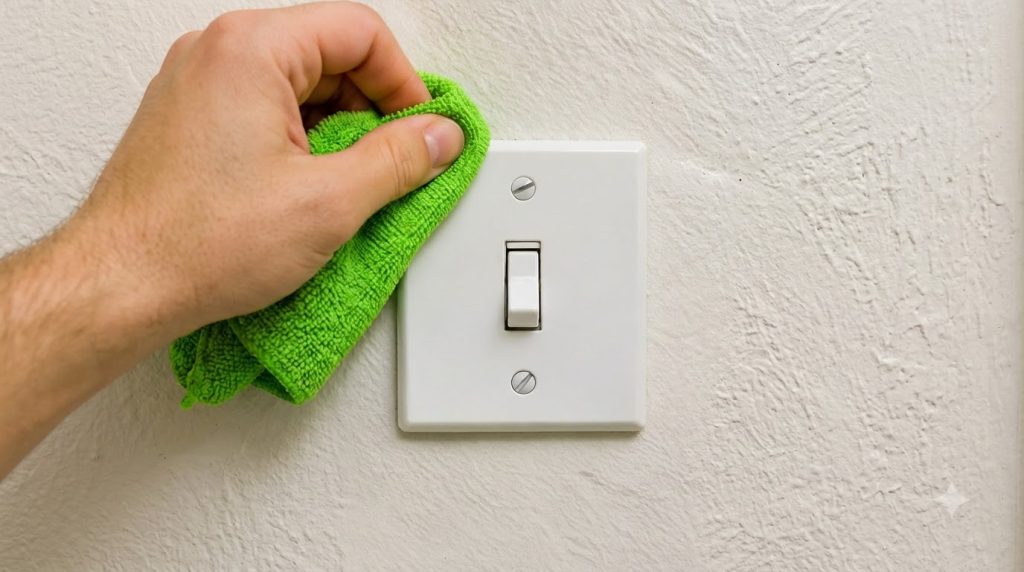
Start at one top corner and rub the plate in small, overlapping circles. Work across the whole surface, then go back over any sticky or darker areas. Turn the cloth to a clean side as it picks up grime.
Step 4: Work Around the Toggle and Screws
Dip a cotton swab in the solution, squeeze out the excess, and gently work around the toggle, the plate edges, and the screw heads. The gaps around the toggle are where grime tends to hide, so take your time there. Keep the swab barely damp.
Step 5: Wipe Once More and Dry
Wipe the plate with a cloth dampened only in plain water to lift any soap film. Then go over it with a clean, dry cloth. Let the plate air dry for a few minutes before you turn the power back on.
Safety Tips to Remember
- Switch off the breaker before wiping around the toggle with anything damp.
- Keep the cloth damp, not wet.
- Never spray liquid onto a switch or let it run into the openings.
- Skip abrasive scrubbers, which can scratch plastic and dull the finish.
- If a switch is cracked, loose, warm to the touch, or sparking, stop and call a licensed electrician.
Frequently Asked Questions
What if my switch plates have turned yellow?
Yellowing on plastic is often caused by grease, cigarette smoke, or simply age. This method lifts surface grime and may lighten light marks, but it will not reverse discoloration that has set into the plastic. If plates still look dingy after cleaning, replacing them is a reasonable and inexpensive option.
How often should I clean light switches?
Most households benefit from a quick wipe every few weeks. Switches in kitchens, hallways, and rooms with children usually need attention sooner, because they are touched far more often.
The Bottom Line
A damp cloth, a little dish soap, and a bit of patience go a long way. Cleaning switch plates is not glamorous, but it is one of the quickest ways to make a room feel fresher. Keep the cloth damp, keep liquid away from the switch, and your walls will look tidier for it.