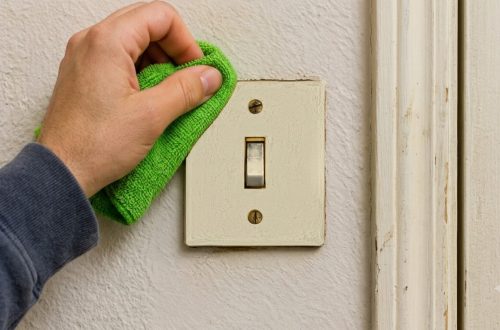
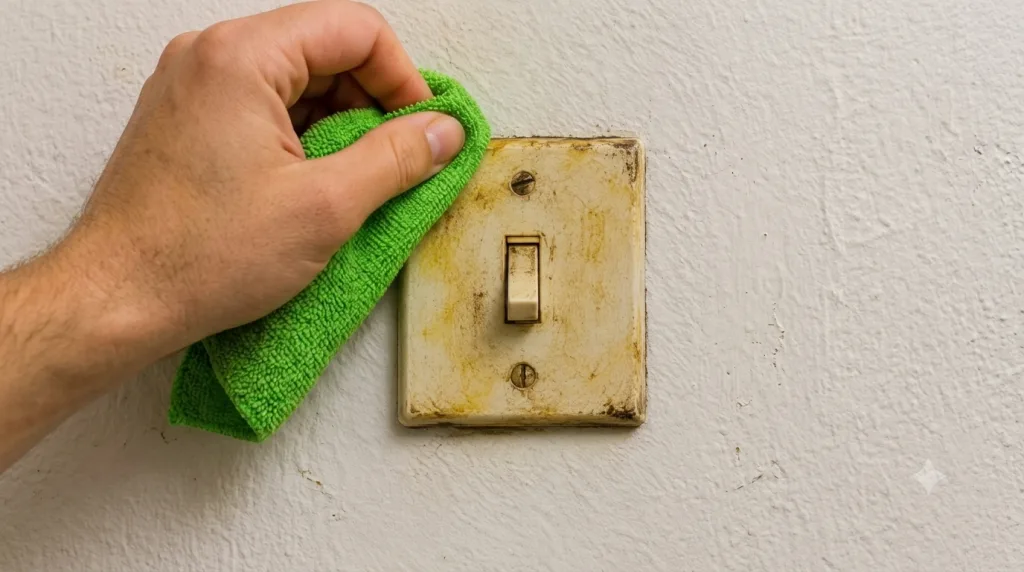
Light switches collect a surprising amount of grime. They are touched several times a day, often with dusty, oily, or sticky fingers, and over months the plate can turn a dull yellow-brown. The good news is that cleaning them is a quick job, and you can do it with ingredients already in your kitchen. This guide walks you through a safe, step-by-step method for cleaning light switches and switch plates.
What You Will Need
- 1 cup warm water
- 1 teaspoon mild dish soap
- 1/2 teaspoon baking soda
- A clean microfiber or soft cotton cloth
- A cotton swab
- A second clean, dry cloth
Safety First: Before You Start
Electricity and water do not mix, so take a few precautions before you wipe anything near a switch. Keep these rules in mind every time.
- Never let liquid run into the switch opening, toggle gaps, or wall box.
- Keep the cloth damp, not wet. If it drips, wring it out again.
- Do not spray cleaner directly onto the switch or plate.
- If the plate is cracked, scorched, warm to the touch, or buzzing, stop and contact a licensed electrician.
Step-by-Step: How to Clean a Light Switch Plate
- Turn off the power at the breaker. Any time you wipe around the toggle with something damp, cut the power to that circuit first. It takes only a moment and protects you from electric shock.
- Mix the cleaning solution. Stir the dish soap and baking soda into the warm water until the baking soda is mostly dissolved. A little may stay suspended, and that is fine.
- Dampen the cloth. Dip the cloth into the solution, then wring it out well. It should feel barely damp, not dripping. Never spray the switch itself, because liquid can seep into the gaps around the toggle.
- Wipe the plate in small circles. Start at the top and work your way across the plate. Small circles lift grime more effectively than long strokes, and they help keep dirt out of the screw holes.
- Work around the toggle and screws. Dampen a cotton swab very lightly with the solution, then clean the edges of the toggle, the corners of the plate, and the screw heads. Roll the swab gently rather than pressing hard.
- Dry the plate thoroughly. Go over the surface with a clean, dry cloth to remove moisture and any soap film. Leftover residue can attract new dirt, so do not skip this step.
- Restore the power. Once the plate and toggle are completely dry, switch the power back on at the breaker.
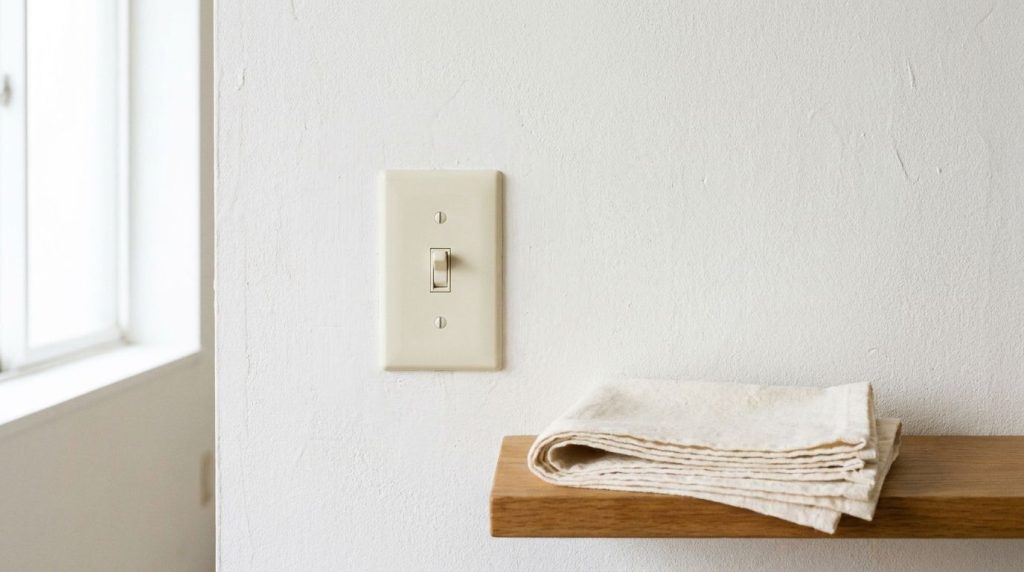
Realistic Expectations
This method works well for everyday buildup from fingers, dust, and kitchen air. Light yellowing that has soaked into older plastic may not disappear completely, no matter how carefully you clean. That is a normal limit of gentle cleaning, not a sign that you did something wrong. If the plate still looks discoloured after a proper clean, replacing it is an inexpensive and simple option.
Frequently Asked Questions
Why do my switch plates look yellowed?
Ivory and white plastic can yellow over time because of skin oils, cooking vapours, cigarette smoke, and sunlight. Gentle cleaning removes surface grime, but discolouration that has worked into the plastic often stays behind.
How often should I clean light switches?
Once a month is a practical routine for most homes. Kitchens, busy family homes, and rooms where someone is unwell may need cleaning more often, since switches are touched constantly.
Can I use vinegar or bleach instead?
It is better to stick with the mild solution described above. Strong acids and bleach can dull or damage painted and plastic surfaces, and they add extra risk when water is involved near electrical parts.
Keep It Simple
Cleaning light switches is one of the easiest ways to make a room look fresher without spending much time or money. Turn off the power, keep the cloth just damp, work gently around the toggle, and dry everything well. A quick monthly wipe will keep grime from building up into a stubborn job.