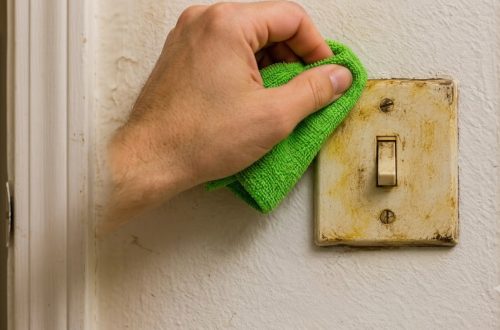
Light switch plates are one of those surfaces most of us touch every day and rarely clean. Over time, skin oils, dust and cooking vapour settle around the toggle and screws, leaving a yellowish film that becomes more noticeable in bright rooms. The good news is that this kind of grime usually responds well to a gentle homemade spray and a little patience. This guide walks you through a simple method that uses ingredients you probably already have in your kitchen.
What You Need
- 1 cup warm water
- 1 teaspoon dish soap
- 1/2 teaspoon baking soda
- A clean spray bottle
- Two or three soft microfiber cloths
- A cotton swab
- A dry, clean cloth for finishing
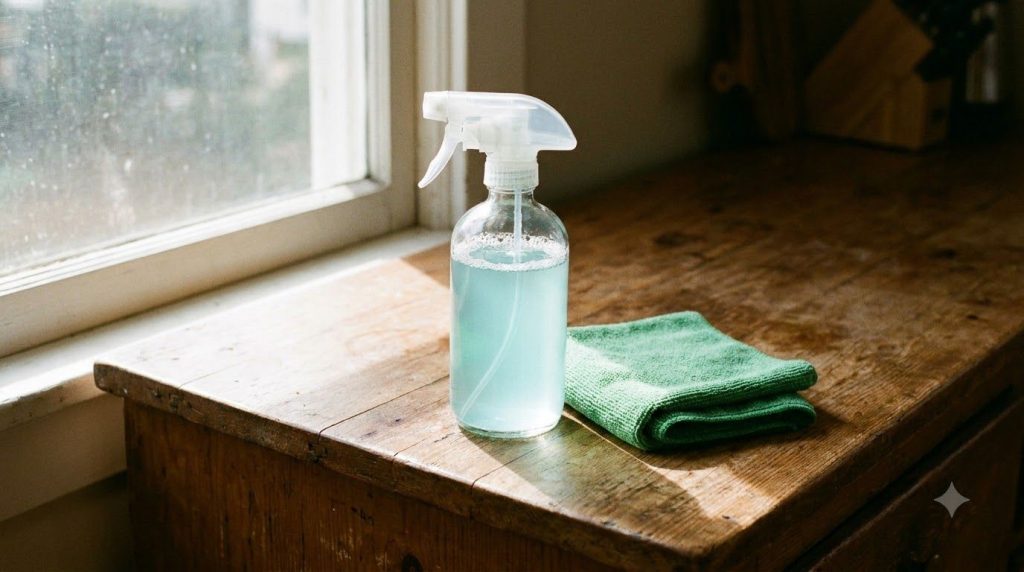
Pour the warm water into the spray bottle, then add the dish soap and baking soda. Put the lid on and shake gently until the baking soda has mostly dissolved. A little powder may stay suspended, which is normal, so shake the bottle again before each use.
Why This Mix Works on Switch Plates
Dish soap cuts through the greasy film that builds up from hands. Baking soda adds mild scouring power without the harshness of strong abrasive cleaners, which helps lift residue from plastic and painted finishes. Warm water helps the soap spread and loosen grime. Together they make a gentle cleaner for everyday buildup, although they will not repair deep discoloration or damaged plastic.
Safety First
Before you start, think about electricity. If you plan to wipe around the toggle or the screws with anything damp, turn off the power at the breaker that feeds the switch. Flipping the light switch off is not enough, because the wiring behind the plate can still be live. If you are unsure which breaker controls the switch, ask a licensed electrician to help you identify it.
Keep these rules in mind throughout the job:
- Never spray liquid directly into a switch, outlet or any opening in the plate.
- Keep your cloth damp, not wet. Dripping water can run into the mechanism.
- Do not mix bleach or vinegar into this cleaner, and avoid using either on painted walls or switch plates, because they can dull or strip the paint.
Step-by-Step Cleaning Method
Step 1: Turn Off the Power
Locate the breaker for the room and switch it off. Check that the light and nearby outlets on the same circuit no longer have power before you continue.
Step 2: Shake the Spray Bottle
Give the bottle a few firm shakes so the soap and baking soda are evenly mixed before you spray.
Step 3: Spray the Cloth, Not the Switch
Spray the microfiber cloth lightly until it feels damp to the touch. Wring out any drips. Keeping the spray off the plate itself protects the switch opening and the wiring behind it.
Step 4: Wipe the Plate in Strips
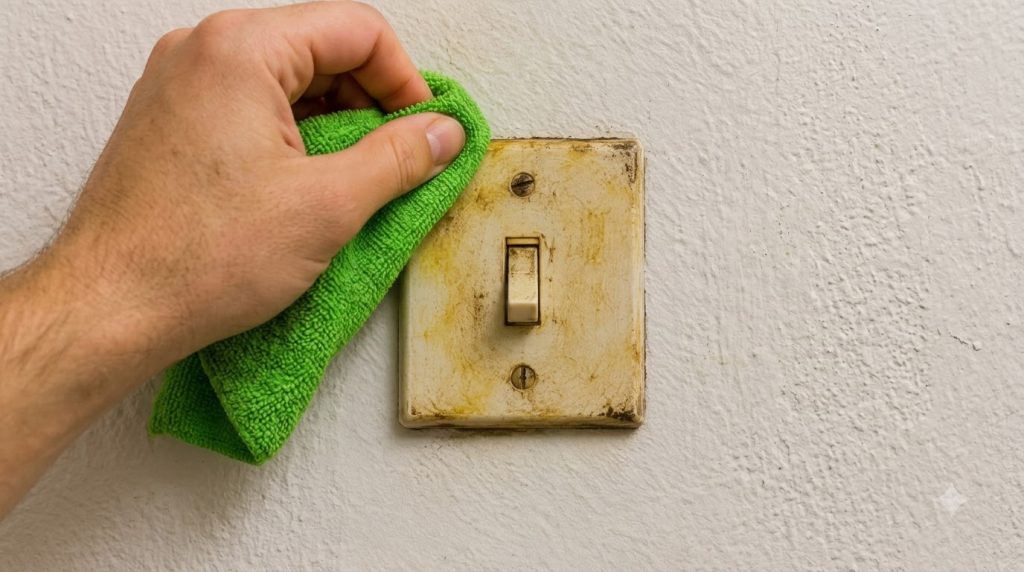
Start at the top corner of the plate and wipe in long, overlapping strips toward the bottom. Turn the cloth to a clean side as soon as it looks grimy. Working in strips keeps dirt from spreading back across the surface.
Step 5: Work Around the Toggle and Screws
Lightly dampen a cotton swab by pressing it into the damp cloth, not into the spray bottle. Gently clean around the toggle, the edges of the switch and the screw heads. Keep the swab away from the switch opening and avoid pushing moisture into any gap.
Step 6: Dry With a Clean Cloth
Buff the plate with a dry, clean cloth. Drying prevents water spots and leftover soap film, which can attract fresh dust. Wait a few minutes for the surface to dry completely before you restore power to the circuit.
Tips for Stubborn Grime
If the yellow tint remains after one pass, repeat the steps rather than scrubbing harder. Heavy pressure can wear paint or leave marks on plastic. If you are unsure how the finish will react, test a small hidden area first, such as the inside edge of the plate.
Frequently Asked Questions
Why are my switch plates yellowed?
Yellowing usually comes from skin oils, cooking vapour and dust that build up over years. Some plastics also yellow naturally with heat and light exposure. Regular cleaning removes surface grime, but it cannot reverse discoloration inside the plastic itself.
Can I use this method on textured plates?
Yes, but use a soft cotton swab or a small soft brush to reach the grooves. Avoid stiff brushes or abrasive pads, which can scratch the surface. Rinse your cloth more often, because dirt collects in texture.
How often should I clean light switches?
For most homes, every month or two is enough for switches in busy areas such as kitchens and hallways. Bathrooms and rooms with young children may need more frequent wiping. A quick dusting between deep cleans helps keep grime from building up.
Final Thoughts
Cleaning light switch plates is a small job that makes a visible difference. With a gentle homemade spray, a damp cloth and careful attention around the electrical parts, you can keep these surfaces looking cared for without buying specialty products. Take your time, stay safe and enjoy a fresher look throughout the room.