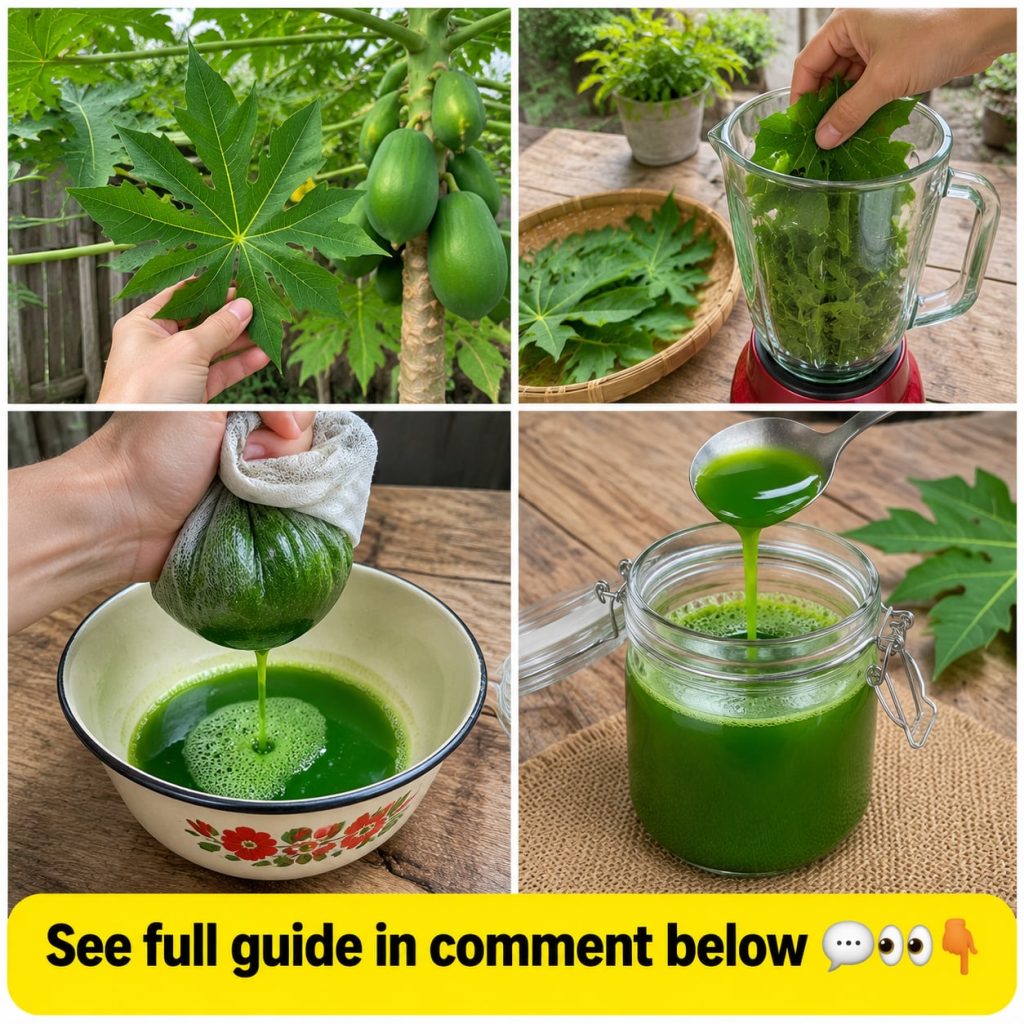
Most people throw away papaya leaves without a second thought, yet home preparers have long kept them for simple infusions. The leaves are the part many herbalists keep, while the fruit gets all the attention. This guide shows you how to prepare a basic papaya leaf tea at home, how much to use, and how to avoid the mistakes that spoil the batch.
What Is Papaya Leaf Tea?
Papaya leaf tea is a home infusion made by steeping fresh or carefully dried papaya leaves in hot water. It is a traditional home preparation, and most people make it as a light daily drink or as part of a simple wellness routine. It is not a treatment, and it works best when you treat it as a plant-based drink you prepare with care.
Ingredients
- 1 to 2 fresh young papaya leaves, or 1 teaspoon dried leaf pieces
- 2 cups filtered water
- 1 thin slice of fresh ginger (optional)
- 1 teaspoon raw honey (optional, added after cooling slightly)
- Juice of a quarter lime (optional)
Approximate Measurements
For one mug, use about 1 cup of water and roughly 5 to 8 grams of fresh leaf, which is about one medium young leaf torn into pieces. For a larger batch of two cups, double the leaf and water. Start small, because the taste is strong and bitter when the leaf quantity is too high.
Formula and Recipe
The basic formula is simple: 1 young leaf to 2 cups of water, steeped for 5 to 8 minutes. Add ginger during simmering if you like a warmer flavor. Add honey and lime only after the tea has cooled to a drinkable temperature.
Step-by-Step Method
- Choose a young, bright green leaf with no yellow patches or holes.
- Rinse the leaf under cool running water and pat it dry.
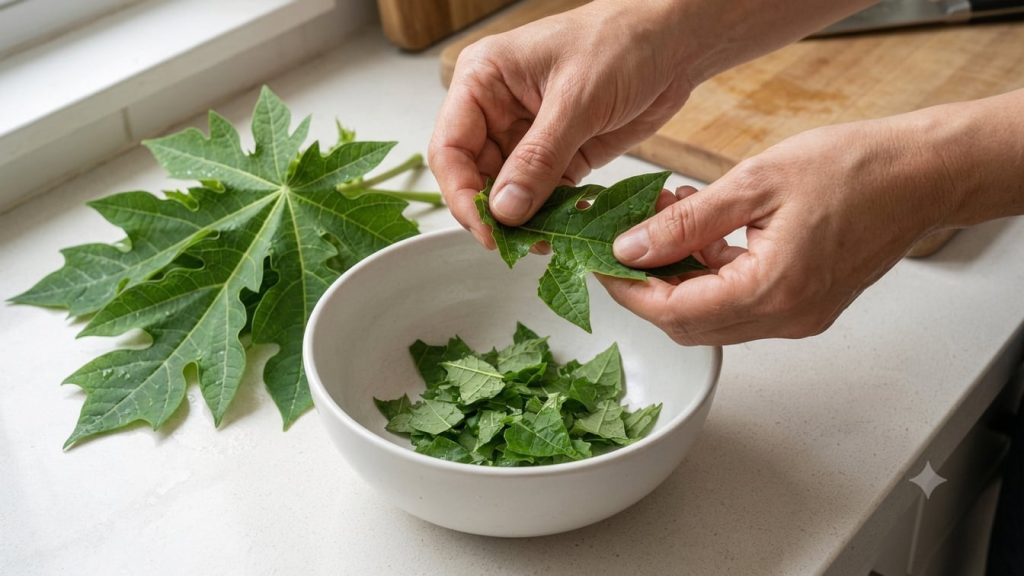
- Remove the thick central stem and tear the leaf into small pieces.
- Bring the water to a gentle simmer, not a hard boil.
- Add the leaf pieces and ginger, then reduce heat and simmer for 5 minutes.
- Turn off the heat, cover, and steep for another 3 minutes.
- Strain into a cup. Add honey or lime only once it is warm, not hot.
Quick Tip
Tearing the leaf releases more of its plant material into the water than dropping in a whole leaf, so the infusion is more consistent from cup to cup.
How to Use It
Drink one cup of the warm, strained tea with a meal or in the morning. Do not drink it on an empty stomach if it upsets your digestion. Freshly made tea is best on the day you prepare it.
How Often to Use It
Many home preparers keep the routine light, with one cup a day for a few days, then a break. Do not increase the amount because you expect faster results. Stop if you notice stomach discomfort, nausea, or any other unwanted reaction.
How to Choose Papaya Leaves
Choose leaves from a clean, unsprayed source. Home-grown plants are ideal if you know they have not been treated with pesticides. Young, pliable leaves are gentler and taste milder than old, tough, or yellowing ones. Avoid leaves with black spots, mold, or insect damage.
Storage
Use fresh leaves within 1 to 2 days. Wrap them loosely in a paper towel and keep them in the refrigerator crisper drawer. Brewed tea keeps in a sealed glass jar in the refrigerator for up to 24 hours. Do not store it in a jar that is still wet from washing, because moisture encourages mold.
Fresh vs Dried Quick Reference
| Version | Best Amount | Flavor | Shelf Life |
|---|---|---|---|
| Fresh young leaf | 1 leaf per 2 cups water | Mild, grassy | 1 to 2 days refrigerated |
| Dried leaf pieces | 1 teaspoon per 2 cups water | Stronger, earthy | Several weeks in a sealed jar, dry and dark |
| Brewed tea | 1 to 2 cups per day | Light, slightly bitter | Up to 24 hours refrigerated |
Practical Tips
- Use a lid while steeping to keep the aroma in the cup.
- Label your jar with the preparation date.
- Dry leaves on a clean mesh rack in shade, not in direct sun.
Common Mistakes
- Boiling too long: Hard boiling makes the tea harsh and bitter.
- Using damaged leaves: Holes, mold, and yellowing reduce quality.
- Using sprayed plants: Pesticide residue can end up in your cup.
- Storing in wet jars: Moisture shortens shelf life quickly.
- Overusing: More leaf does not mean a better result.
Cautions and Who Should Avoid It
Papaya leaf preparations are not suitable for everyone. Avoid this tea if you are pregnant or breastfeeding, if you have a known allergy to papaya, or if you take blood-thinning or blood-sugar medication. Children should not be given home preparations without guidance from a qualified health professional. If you have a medical condition, speak with your doctor before adding any herbal drink to your routine.
Quick Summary
- Best preparation: Fresh young leaf, gently simmered and steeped.
- Best use case: A light daily drink for people who want a simple home routine.
- Storage: Fresh leaves for 1 to 2 days; brewed tea up to 24 hours refrigerated.
- When to use: With a meal or in the morning, after a medical check if needed.
- What to avoid: Sprayed leaves, boiling too hard, wet storage, and use during pregnancy.
FAQ
Can I use fresh or dried leaves?
Yes. Fresh young leaves give a milder flavor, while dried leaf pieces are more convenient for long storage.
How long does the tea last?
Brewed tea is best within 24 hours when refrigerated in a clean, sealed jar.
Can I refrigerate the leaves?
Yes, wrap fresh leaves in a paper towel and keep them in the crisper drawer for 1 to 2 days.
Can I freeze the tea?
Freezing is possible in sealed containers, but the flavor may become flatter after thawing.
Which part of the plant is best?
Young, bright green leaves are the usual choice. Avoid the stem and any damaged or old leaves.
Can I reuse the leaves?
It is better to use fresh leaves for each batch, because a second steeping is weaker and less consistent.
When should I avoid it?
Avoid it during pregnancy, while breastfeeding, if you have a papaya allergy, or if you take medication that needs monitoring. Ask a healthcare professional when in doubt.
Conclusion
Papaya leaf tea is a simple home preparation that rewards careful sourcing, gentle heat, and fresh storage. Start with one young leaf, keep the routine light, and pay attention to how your body responds.
You may also like: Read more about simple herbal infusions.
Continue with: see the full guide to making DIY herbal teas at home.