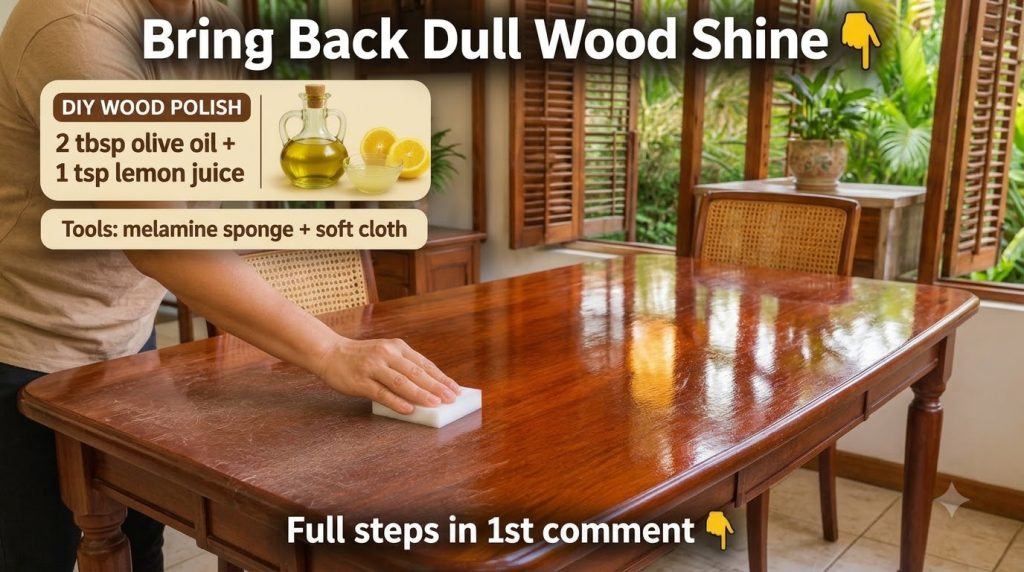
A dining table is one of the first pieces of furniture guests notice, and over time it can start to look tired. Fingerprints, light haze, and everyday wear can dull the finish until the rich, warm grain no longer stands out. The good news is that you often don’t need a full refinish to bring back some of that natural shine. A careful cleaning routine and a light finishing step can make a noticeable difference.
What You’ll Need
- A white melamine eraser sponge (sometimes sold as a magic eraser)
- A clean, soft microfiber cloth for cleaning and buffing
- A second dry microfiber cloth for finishing
- A small bowl of lukewarm water
- A wood-safe furniture polish or a light wood-finish oil made for sealed furniture
Why This Method Can Be Useful
Melamine sponges work like a very fine abrasive. They lift away surface grime, smudges, and light haze without much effort, which is why they show up in so many cleaning routines. That same abrasiveness is also the reason to be careful. On a wood table with a protective finish, too much pressure or too much scrubbing can dull the surface or wear through the topcoat. A gentle touch and a quick polish afterward help restore a smoother, more even sheen.
How to Make It Ready
- Clear the table of dishes, placemats, and décor so you can work across the full surface.
- Dust the table with a dry microfiber cloth to remove loose crumbs and grit. Grit can scratch the finish when you start rubbing.
- Lightly dampen the melamine sponge with water and squeeze out the excess. It should be damp, not dripping.
- Test a small, hidden spot, such as the underside of the table edge, to check how the finish responds before you work on the top.
How to Use It
- Work in small sections, moving with the wood grain. Use light, even strokes instead of hard circular scrubbing.
- Rinse the sponge often, and replace it when it starts to crumble or leave residue.
- Pay extra attention to the curved, rounded end of the table, where handprints and grime tend to collect. Keep your pressure light there so you don’t create dull patches on the edge.
- Wipe each section right away with a barely damp microfiber cloth to remove any residue from the sponge.
- Dry the surface completely with a clean, dry cloth before moving on.
- Once the table is fully dry, apply a small amount of wood-safe polish or finish oil to a clean cloth and buff it into the wood in the direction of the grain. Let it sit for the time listed on the product label, then buff off any excess with a dry cloth.
What to Expect
Your table should look cleaner, more even, and warmer in tone, with a soft sheen that brings out the grain. Light scuffs, faint haze, and surface grime often improve noticeably. Deep scratches, water rings, or worn-through finish won’t disappear with this method and may need a more targeted repair. Results also depend on the type of finish your table has, so think of this as a refresh rather than a full restoration.
Helpful Tips
- Clean the table regularly with a barely damp cloth so grime doesn’t build up and need heavy scrubbing later.
- Use coasters, placemats, and tablecloths to reduce heat marks, water rings, and scratches.
- Avoid harsh all-purpose sprays on wood. Many contain ingredients that can cloud or strip the finish over time.
- Keep the table out of direct, intense sunlight when possible, since long exposure can fade and dull wood over time.
Important Notes and Safety
- Always patch test first. Different finishes react differently, and a hidden spot will show you how your table responds.
- Melamine sponges are abrasive. Avoid them on waxed, oil-only, or delicate antique finishes unless you have confirmed they are safe for that surface.
- Don’t soak the wood. Excess water can swell the grain, cause edges to lift, and leave white marks.
- Keep polish and finish products away from children and pets, and store them in a cool, dry place with the lid tightly closed.
- Ventilate the room while using polish or oil, and wash your hands after handling these products.
With a gentle hand and a little patience, you can bring back much of your dining table’s natural warmth and shine. Taking care of it regularly is the simplest way to keep it looking its best for years to come.