Flaxseeds are one of the most popular plant-based foods for good reason. They are packed with omega-3 fats, fibre and lignans, and they fit easily into breakfasts, smoothies, baking and savoury dishes. Yet many people are surprised to learn that the way you prepare flaxseeds can make a real difference to how much nutrition your body actually gets. In this guide, we explain why grinding flaxseeds is worth the extra step, how it supports digestion, and how to store them so they stay fresh.
Why Whole Flaxseeds May Not Give You Everything
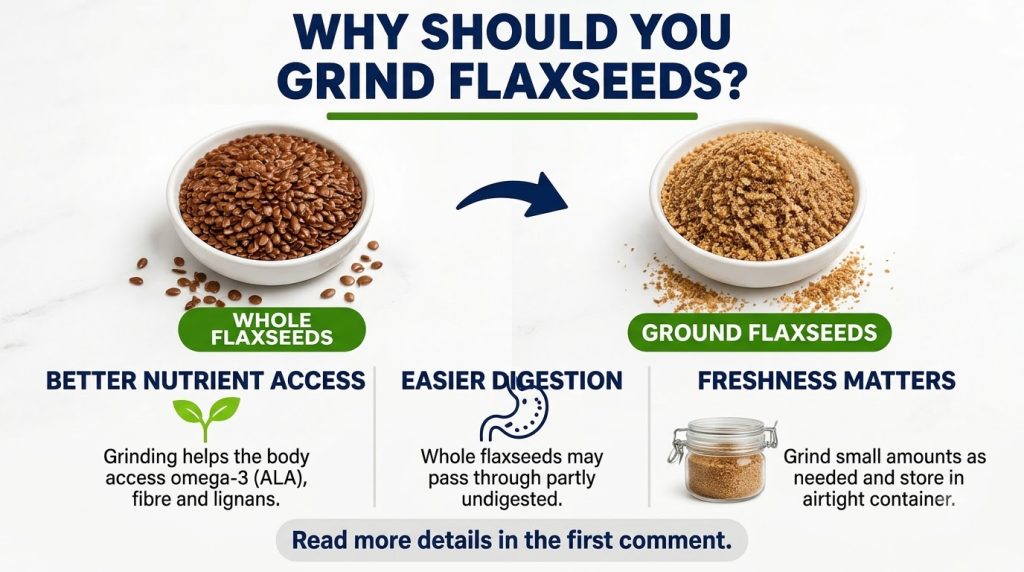
Whole flaxseeds have a tough outer shell. This shell protects the seed, but it is also hard for the human digestive system to break down. When flaxseeds are swallowed whole, many of them pass through the gut largely intact, which means some of the valuable nutrients stay locked inside.
This is why nutrition experts often recommend grinding flaxseeds before eating them. Breaking the shell releases the inner contents so your body has better access to the nutrients they contain.
Better Nutrient Access From Ground Flaxseeds
Ground flaxseed, sometimes called flaxseed meal, makes it easier for your body to take in several key compounds:
- Omega-3 fats (ALA): Alpha-linolenic acid is a plant-based omega-3 that supports heart health and overall wellness.
- Dietary fibre: Fibre supports regular digestion, helps you feel full, and contributes to a healthy gut environment.
- Lignans: These plant compounds contain antioxidant properties and are one of the reasons flaxseed is studied so widely in nutrition research.
In short, grinding turns a seed that may partly pass through you into a food that delivers more of what it has to offer.
Easier Digestion Starts With Grinding
Many people notice that ground flaxseed is gentler on the stomach than whole seeds. Because the particles are smaller, they are easier to break down and blend into foods without causing discomfort. If you are new to flaxseeds, start with one tablespoon of ground seeds per day and increase slowly while drinking plenty of water.
Why Freshness Matters
Ground flaxseed is more delicate than whole seeds. Once the shell is broken, the oils inside are exposed to air and light, which can cause them to go rancid over time. Rancid flaxseed can taste bitter and may lose some of its nutritional value.
The good news is that you do not need to grind a large batch at once. Grinding small amounts as needed is the simplest way to enjoy maximum freshness.
How to Store Flaxseeds Properly
- Keep whole seeds intact: Whole flaxseeds can be stored in a cool, dry cupboard for several months.
- Grind just before using: A small coffee grinder or spice mill works well for quick batches.
- Use an airtight container: A glass jar with a tight-fitting lid helps keep ground flax fresh.
- Refrigerate or freeze ground flax: Cold storage slows oxidation and helps preserve the healthy oils.
- Check for smell: Fresh flaxseed has a mild, nutty aroma. If it smells sharp or paint-like, it is best discarded.
Simple Ways to Add Ground Flaxseed to Your Day
- Stir a tablespoon into oatmeal or yogurt.
- Blend it into smoothies for a creamy texture.
- Mix it into muffin, pancake or bread batter.
- Sprinkle it over salads, soups or roasted vegetables.
Final Thoughts
Grinding flaxseeds is a small habit with a meaningful payoff. It helps your body access more omega-3 fats, fibre and lignans, supports easier digestion, and keeps your seeds fresh when you store them correctly. Start with a small daily amount, grind as you go, and enjoy the benefits of this nutritious seed as part of a balanced, healthy lifestyle.