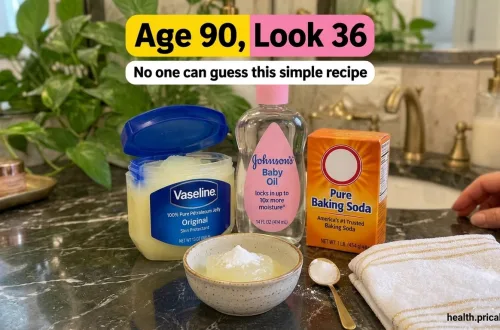
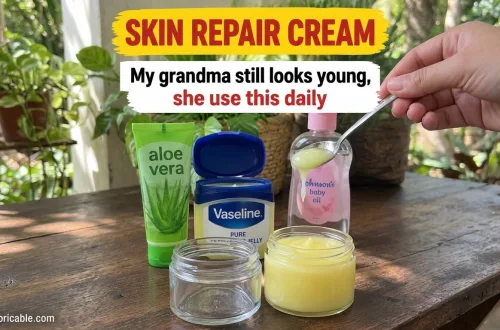
This DIY baking soda body scrub blends petroleum jelly, baking soda, and baby oil into a creamy paste that helps buff away dry flakes on rough areas like elbows, knees, and heels. It takes about five minutes and uses three simple household staples.
Quick Recipe
Prep time: about 5 minutes
Best for: dry, rough, or flaky skin on elbows, knees, feet, and other tough areas of the body
Use type: body scrub paste
Main ingredients:
- Petroleum jelly
- Baking soda
- Baby oil
Ingredients
- 2 tablespoons petroleum jelly
- 1 tablespoon baking soda, fine powder
- 1 to 2 teaspoons baby oil (pure mineral oil)
How to Make It
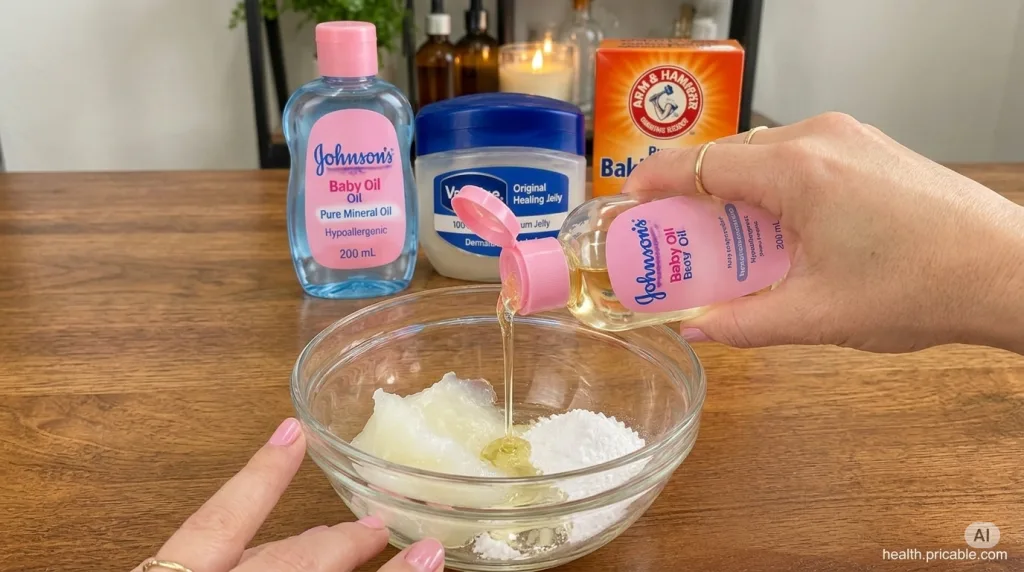
- Scoop 2 tablespoons of petroleum jelly into a clean, dry glass bowl.
- Add 1 tablespoon of baking soda on top of the jelly.
- Slowly pour in 1 teaspoon of baby oil and stir with a spoon until the mixture becomes smooth and spreadable. Add up to 1 more teaspoon only if it feels too thick.
- Transfer the paste into a small clean jar with a lid. Use a clean spoon each time to keep it fresh.
How to Use It
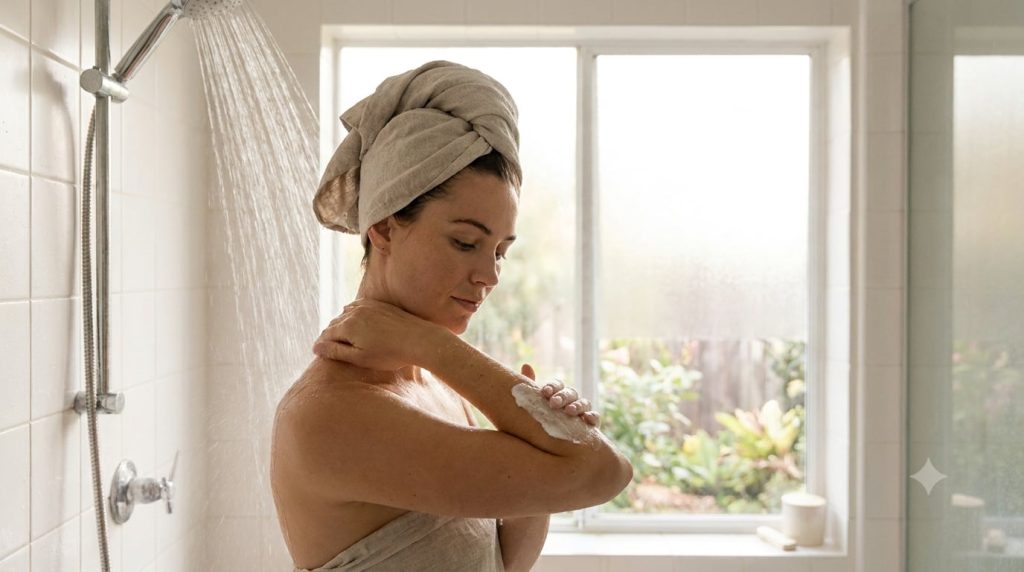
- Step into a warm shower or bath so the skin is softened and damp, but not scalding hot.
- Scoop a small amount of paste and massage it gently in small circles over dry areas such as elbows, knees, or heels for about 30 to 60 seconds.
- Rinse well with lukewarm water and pat the skin dry. Follow with a moisturizer while the skin is still slightly damp to lock in hydration.
How Often to Use It
Use this scrub no more than two to three times per week. Skin that is sensitive or easily irritated should start with once a week. Give the skin a rest day between uses so it can recover.
Why These Ingredients Are Used
Petroleum Jelly
Petroleum jelly forms a protective layer that helps the skin hold moisture. It gives the scrub a creamy base that glides smoothly over rough areas.
Baking Soda
Baking soda has a fine, mildly gritty texture. In a gentle body scrub, it can help loosen dry flakes so the skin feels smoother afterward.
Baby Oil
Pure mineral oil adds slip and softness. It helps the paste spread evenly and can leave the skin feeling more supple after rinsing.
What Results to Expect
This scrub may help rough patches feel softer and look more even for a few hours after use. Consistent gentle use can support a smoother-looking texture over time, but it is not a treatment for eczema, psoriasis, or other skin conditions.
Safety Notes
- Patch test first for topical remedies. Apply a small amount to the inner forearm and wait 24 hours before using it more widely.
- Use gently. Baking soda can be abrasive, so avoid hard scrubbing.
- Avoid the face, lips, eyelids, intimate areas, and any broken, cut, or irritated skin.
- Petroleum jelly and mineral oil can clog pores, so skip this scrub if you are prone to breakouts on the body.
- Stop using it if stinging, redness, itching, or discomfort occurs, and rinse the area with water.
- Do not use the scrub in the eyes or near mucous membranes.
FAQ
Can I use this scrub on my face?
It is not recommended. Baking soda is too abrasive for facial skin, and the thick base can clog pores. Use it only on tougher areas of the body.
How long does the paste last?
Keep it in a clean, sealed jar and use it within about one week. Discard it if it smells off, changes color, or shows any signs of contamination.
Should I rinse it off or leave it on?
Rinse it off after gentle massage. Leaving baking soda on the skin for long periods may cause dryness or irritation.
Final Thoughts
This simple DIY scrub is an easy way to give dry elbows, knees, and heels a little extra softness using everyday staples. Start slowly, patch test first, and let your skin tell you how often it likes this routine. If you enjoyed this recipe, save it for your next self-care evening and share your favorite body care tips in the comments below.