Looking for simple ways to get glowing skin and soften the look of fine lines without spending a fortune? Petroleum jelly has been a bathroom staple for generations, and many beauty fans now use it in simple home routines. In this guide, we walk through how it works, which pairings are popular, and how to use it safely.
Why Petroleum Jelly Is Popular in Home Skincare
Petroleum jelly is an occlusive, meaning it forms a light barrier on the skin that helps hold in moisture. Because it is inexpensive and widely available, it has become a favorite for people who want a basic, affordable routine. It does not add nutrients on its own, but it helps keep the skin hydrated, which can make dry patches look smoother and skin look more even.
The Role of Vitamin E
Vitamin E is an antioxidant that many people add to their routines for skin support. When paired with petroleum jelly, it is often used to help the skin feel softer and more comfortable overnight. While home mixtures are popular, results vary from person to person, and no home remedy should be treated as a replacement for proven anti-aging treatments.
Simple Ways to Use Petroleum Jelly at Home
- Apply a thin layer to clean, slightly damp skin at night to lock in moisture.
- Use it on dry areas such as elbows, heels, and lips for everyday softness.
- Try a small amount mixed with a few drops of vitamin E oil for a rich night treatment.
- Patch test any new combination on a small area of skin first.
Pairings Worth Knowing About
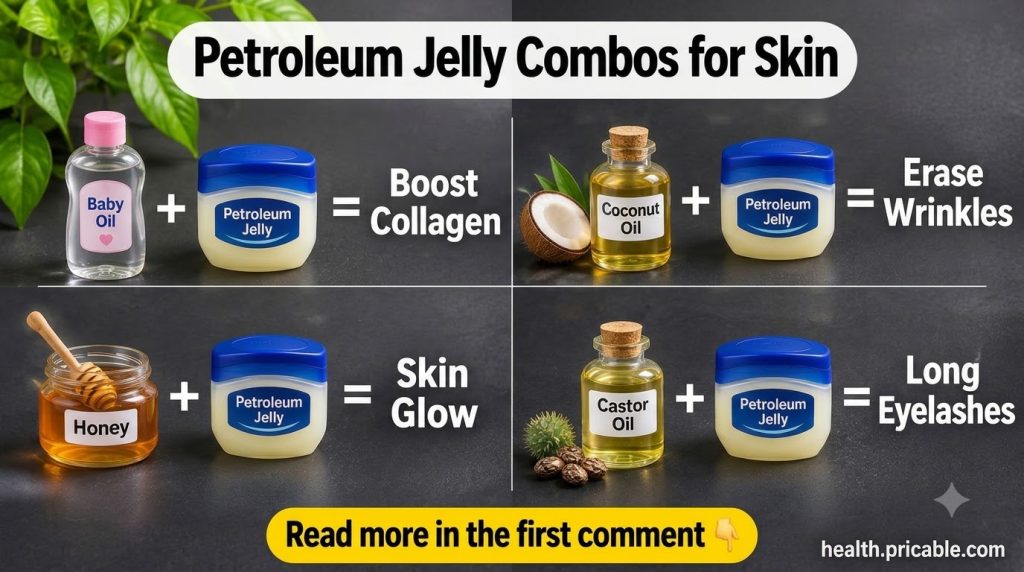
Many readers experiment with simple add-ins. Honey is valued for its hydrating feel, coconut oil for its rich texture, and castor oil for its thick consistency. Baby oil is also a common choice for softening skin. Keep blends simple, avoid heavy layering if your skin tends to break out, and stop using any mixture that causes irritation.
Safety Tips and Who Should Be Careful
If you have sensitive skin, eczema, rosacea, or open wounds, talk with a dermatologist before trying new home mixtures. Avoid applying oils near the eyes unless a product is labeled for that area, and never use a homemade blend on broken skin. Store mixtures in clean containers and make small batches so they stay fresh.
Building a Gentle Glow Routine
Petroleum jelly works best as part of a consistent routine. Cleanse gently, apply a moisturizer, sunscreen during the day, and use a light layer of petroleum jelly at night if your skin feels dry. Give your skin several weeks to respond, and track changes in hydration and texture rather than expecting overnight transformation.
With a simple approach and realistic expectations, petroleum jelly can be a practical, budget-friendly addition to your self-care routine.