Most people ignore this part of the fruit. The thick peel usually goes straight into the trash within minutes of eating the seeds, yet dried pomegranate peel is one of the simplest home preparations you can make from kitchen scraps. Here is how to dry it, store it, and brew it safely.
What It Is
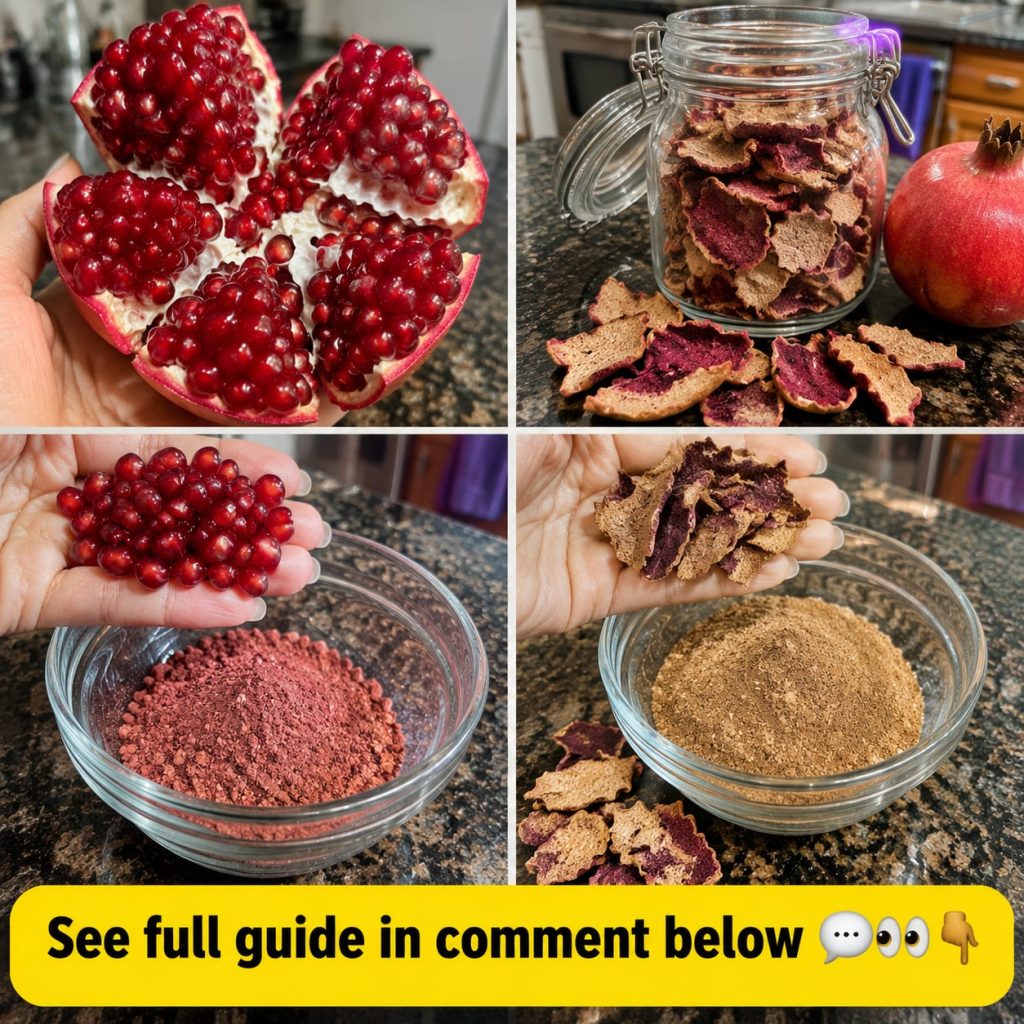
Pomegranate peel is the tough outer rind of the fruit. It is rich in plant compounds that give the rind its bitter taste and deep color. Traditional home preparations use the peel dried and brewed as a mild herbal tea, or ground into a powder for simple DIY rinses and masks. The peel is not a substitute for medical care, but it is a useful, low-cost ingredient for home preparations.
Ingredients
- 2 to 3 pomegranate peels from ripe, unsprayed fruit (or well-washed conventional fruit)
- 2 cups filtered water for tea
- Optional: 1 cinnamon stick or 2 thin slices of fresh ginger
- Optional: 1 teaspoon raw honey, added after the tea cools slightly
Approximate Measurements
One pomegranate typically yields enough peel for about 2 to 3 small tea servings once dried. Use roughly 1 tablespoon of dried peel pieces per cup of water. For a powder, plan on about 2 tablespoons of ground dried peel per small batch of rinse or paste.
Formula and Recipe: Dried Peel Tea
Use this basic formula: 1 tablespoon dried peel to 1 cup water, simmered gently for 8 to 10 minutes. It makes a deep amber, slightly astringent brew. Add cinnamon or ginger if you prefer a warmer flavor.
Step-by-Step Method
- Wash the whole fruit under running water and scrub the rind with a soft brush to remove dust and residue.
- Cut the peel into thin strips, about 1 centimeter wide. Remove the white pith if it is very thick, since it adds bitterness.
- Dry the strips on a clean rack or baking sheet in a warm, airy spot out of direct sun, or use a dehydrator at a low setting. Drying usually takes 3 to 7 days at room temperature, or a few hours in a dehydrator.
- Check that the pieces snap or feel brittle with no soft, moist centers before storing.
- For tea, add 1 tablespoon dried peel to 1 cup water, bring to a gentle simmer, and cover for 8 to 10 minutes.
- Strain and let it cool slightly before adding honey if you like.
Quick Tip: Grind a small batch in a clean coffee grinder only after the peel is completely dry. Damp peel clumps and can grow mold.

How to Use It
Drink the tea warm or at room temperature. For topical home preparations, mix 1 teaspoon of ground dried peel with enough plain yogurt or aloe vera gel to make a thin paste, then apply to clean skin for 10 minutes and rinse. Do a small patch test on your inner arm first and stop if redness or itching appears.
How Often to Use It
For tea, one cup per day is a reasonable starting point for most adults. For topical pastes, once or twice a week is enough. Give any new routine two to three weeks before judging whether it suits you.
How to Buy and Choose Ingredients
Choose firm, heavy pomegranates with smooth, unbroken rinds and no soft spots. Organic fruit is the safest choice for peel use because rinds can hold pesticide residue. Avoid fruit with mold, cracks, or a sour, fermented smell.
| Version | Best Use | Storage Life |
|---|---|---|
| Fresh peel | Short-term drying | 1 to 2 days refrigerated |
| Dried strips | Tea | Up to 3 months in a sealed jar |
| Ground powder | Pastes and rinses | Up to 2 months in a sealed jar |
Storage
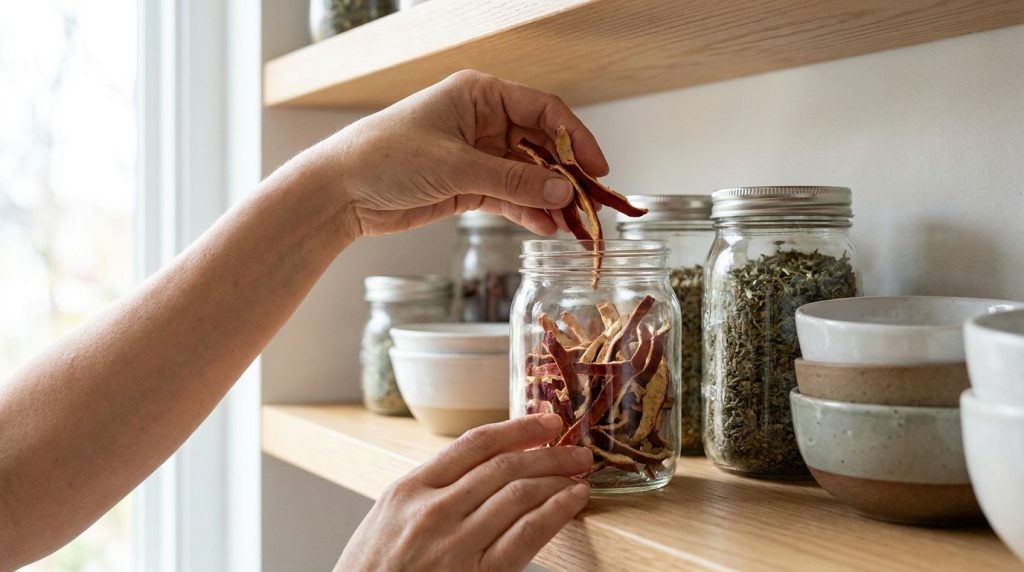
Store dried peel in a clean, dry, airtight glass jar away from heat and sunlight. Label the jar with the date. Never store peel in a wet or damp container, and do not refrigerate dried pieces, since condensation can cause mold.
Practical Tips
- Dry peel in small batches so you can check the texture consistently.
- Steep the tea with the lid on to keep aromatic compounds in the cup.
- Freeze fresh peel if you want to dry it later, but thaw and pat it dry first.
Did You Know? The white pith under the red rind is more bitter than the colored outer layer, so trimming it often makes the tea smoother.
Common Mistakes
- Using peel from sprayed or unwashed fruit.
- Boiling the tea hard for long periods, which makes it harsh and overly bitter.
- Drying peel in a humid kitchen, which encourages mold.
- Storing ground peel in a jar that is not fully dry.
- Skipping the patch test before applying a paste to your skin.
Cautions and Who Should Avoid It
Pomegranate peel is an herbal ingredient, so use it with care. Avoid it if you are pregnant or breastfeeding unless a qualified health professional has approved it. People who take prescription medications, have kidney or liver conditions, or have known allergies to pomegranate should speak with a doctor first. Stop use if you notice stomach discomfort, rash, or any unusual reaction. This article is for general information and does not replace medical advice.
Quick Summary
| Topic | Quick Guidance |
|---|---|
| Best preparation | Dried strips for tea, ground powder for topical pastes |
| Best use case | Simple home tea and gentle DIY skin preparations |
| Ratio | 1 tablespoon dried peel per cup of water |
| Storage | Airtight glass jar, dry and dark |
| Avoid | Sprayed fruit, damp peel, and skipping patch tests |
FAQ
Can I use fresh or dried peel?
Dried peel is easier to store and brew consistently. Fresh peel works for drying but should not be stored at room temperature for long.
How long does dried peel last?
When fully dry and sealed in an airtight jar, strips last about three months and ground powder about two months.
Can I refrigerate it?
Refrigerate only fresh peel. Dried peel should stay in a dry pantry, since refrigerator moisture can cause mold.
Can I freeze peel?
Yes, you can freeze fresh peel for later drying. Thaw it and pat it dry before placing it on the rack.
Can I reuse the peel?
You can steep the same dried strips a second time for a lighter tea, though flavor and color will be weaker.
Which part is best?
The outer colored rind is most commonly used, with the thick white pith trimmed away for a smoother taste.
When should I avoid it?
Avoid it if you are pregnant, breastfeeding, or taking medications unless a health professional has approved it.
Conclusion
Pomegranate peel is an easy, low-cost ingredient to dry and brew at home. Start with a simple tea, store it properly, and keep your routine modest. For related home preparations, you may also like our guide to making herbal tea blends at home. Read more about drying and storing kitchen scraps in our full guide to zero-waste herbal prep.