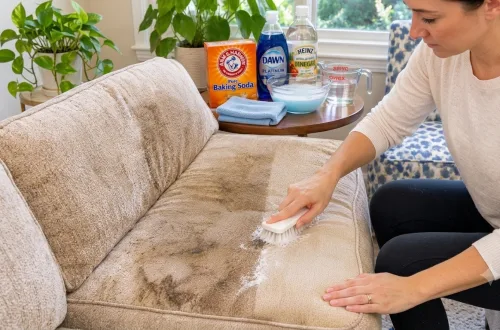
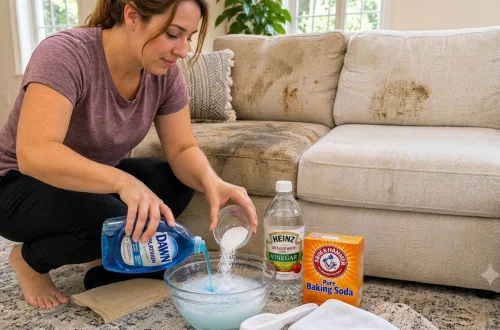
A stain on a fabric couch can make you think about booking an expensive upholstery cleaner, but many everyday spots lift out with a few basics you probably already have at home. This DIY combines baking soda, clear dish soap, distilled white vinegar, and water into a gentle spot cleaner for fabric upholstery.
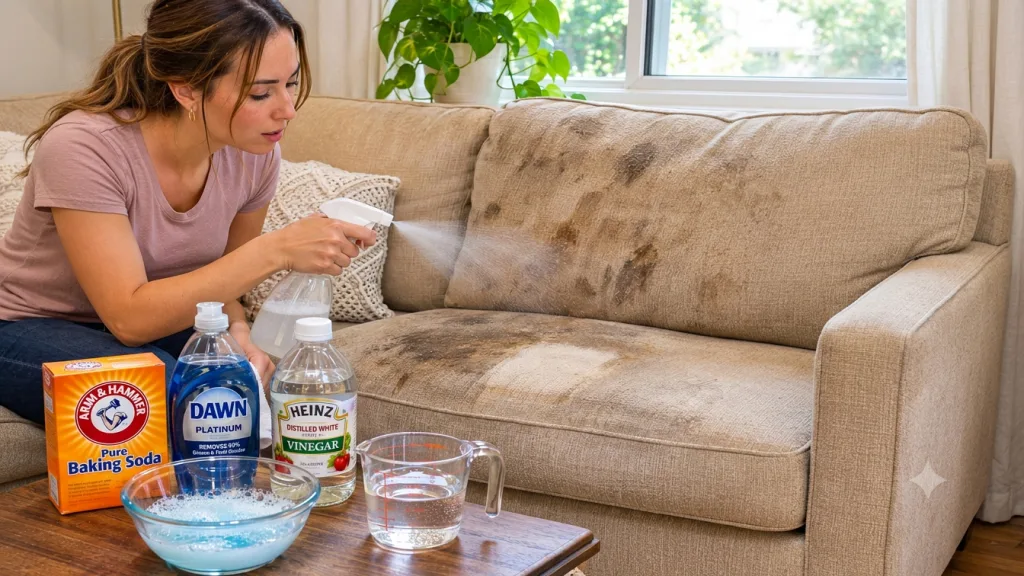
What You’ll Need
Cleaning Solution
- 1 tablespoon clear dish soap, such as Dawn Platinum or a similar gentle formula
- 1 tablespoon distilled white vinegar
- 1 cup warm water
- Baking soda, for pre-treating dry stains and absorbing moisture
Tools
- Clean spray bottle
- Measuring cup and spoon
- Glass or plastic mixing bowl
- White microfiber or cotton towels
- Soft-bristled brush or clean sponge
- Vacuum with upholstery attachment
Why This DIY Can Be Useful
Dish soap helps lift oily and everyday residues from fibers. Vinegar adds a mild acidic cleaning action that can help loosen some water-based stains. Baking soda works as a dry absorbent, pulling moisture and odor out of the fabric before you add any liquid. Together, they make a practical first-round option for light, surface-level spots.
How to Make It
- Fill a clean measuring cup with 1 cup of warm water.
- Add 1 tablespoon of dish soap and 1 tablespoon of distilled white vinegar.
- Stir gently until combined. Try to avoid building a lot of foam, since too many suds can leave residue in the fabric.
- Pour the mixture into a clean spray bottle and label it clearly. Use it within a few days.
How to Use It
- Vacuum the couch cushion and the surrounding area first to remove loose dirt.
- Test the solution on a hidden spot, such as under a cushion or along the back, and wait until it dries to check for color change or damage.
- If the stain is dry or greasy, sprinkle a light layer of baking soda over it and let it sit for 10 to 15 minutes. Then vacuum it up.
- Lightly mist the stain with the solution. Use just enough to dampen the fabric, not soak it.
- Blot gently with a clean white towel, pressing from the outside edge toward the center. Switch to a dry section of the towel as the stain transfers.
- Repeat with a light mist and gentle blotting until the stain fades. Work in small sections to help prevent water rings.
- Dampen a clean towel with plain water and blot the area to remove any soap residue.
- Let the fabric air dry completely, ideally with a fan or window open for airflow.
What to Expect
Fresh or light stains often respond after one or two rounds. Older or deeper stains may only fade partway, and some may need a professional cleaner. Upholstery can also show faint water marks while drying, so air circulation matters. Realistic results are a cleaner, more even-looking spot rather than a perfectly invisible repair.
Helpful Tips
- Blot instead of scrubbing. Rubbing can spread the stain and fray the fibers.
- Keep the fabric only lightly damp at all times to reduce the chance of water rings.
- Use a soft brush to fluff the fabric once it is dry, which can help it blend with surrounding areas.
- Check the manufacturer’s cleaning code on the tag. A code of W usually means water-based cleaners are fine, while S means solvent-only, so use this method with caution on S-coded fabrics or skip it.
Important Notes / Safety
- Never mix vinegar with bleach or hydrogen peroxide. Use each cleaner separately and rinse surfaces well between products.
- Keep the room ventilated while you work and while the couch dries.
- Do not oversaturate the cushion, since moisture can soak into the foam and frame and take a long time to dry.
- Store the solution out of reach of children and pets, and label the spray bottle so no one mistakes it for a drink or another cleaner.