Few things feel more rewarding than watching a rose you love grow again from a piece you started yourself. Many gardeners assume roses must be bought as expensive grafted plants, but with a little patience and the right conditions, you can often root new plants from healthy stems. A popular home trick uses banana peel as a simple, low-cost addition to the rooting process. It is a fun experiment, and it can work, but the real success comes from choosing the right cutting and keeping it moist, warm, and out of harsh sun.
In this guide, you will learn how the banana method fits into rose propagation, how to take cuttings that root well, how to set them up, and which mistakes cause most failures. Whether you grow roses in a backyard bed, a patio container, or a small farm plot, these practical steps will help you start new plants with more confidence.
Understanding the Core Principle
Roses are commonly propagated by stem cuttings, which are pieces of stem that form roots when kept in the right environment. A cutting needs three things to succeed: a healthy piece of stem with at least one node, enough moisture to prevent drying, and enough warmth and indirect light to encourage root formation. A node is the slightly swollen point on a stem where leaves and buds grow, and it is the area most likely to produce roots.
The banana peel is best viewed as a folk addition rather than a guaranteed rooting hormone. Some gardeners use it because it is an organic, easy-to-find material, but it has not been shown to replace proven rooting methods. Treat it as an experiment that supports good basics rather than a shortcut.
Choosing the Right Rose Cuttings
Look for stems that are healthy, flexible, and not too woody or too soft. Semi-hardwood cuttings, taken from the current season’s growth once it has begun to mature, are often a good choice for roses. Cuttings should usually be about 6 to 8 inches long, with three to five nodes, and the top leaves can be reduced to one or two small leaflets to limit moisture loss.
Use clean, sharp pruners and cut just below a node at a slight angle. Avoid stems with disease spots, pest damage, or flower buds that are already open. Roses root more easily in spring and early summer, when stems are actively growing, than in hot midsummer or dormant winter periods.
Setting Up the Banana Peel Rooting Method
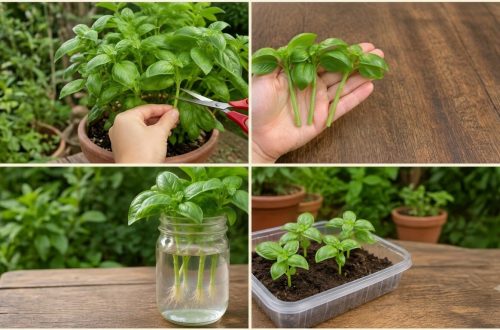
Start by cutting a piece of banana peel and placing it in a small jar or cup of water, or simply press a thin strip of peel around the base of a moist rooting medium. Then prepare your cuttings:
- Remove the lowest leaves so that at least one node is buried in the medium.
- Dip the cut end in rooting hormone if you have it, since this is the most reliable way to support root development.
- Insert the cutting about 2 inches deep in a pot filled with moist, well-draining mix such as equal parts perlite and peat or coir.
- Firm the medium gently around the stem so the cutting stands upright.
Place the pot where it gets bright, indirect light, such as an east-facing window or a spot under shade cloth outdoors. Direct afternoon sun can dry out cuttings quickly.
Creating a Humid Environment
Cover the cutting with a clear plastic bag or a clear container to hold in humidity. Prop the cover up so it does not touch the leaves, and open it for a few minutes every day to let in fresh air. This helps reduce rot and fungal problems. The medium should feel like a wrung-out sponge, not soggy. Check it by pressing a finger about an inch into the mix; water only when the surface begins to feel dry.
How Long Does Rooting Take?
Rooting time varies widely depending on the rose type, season, temperature, and cutting quality. Many cuttings may take several weeks to form roots, and some may take longer. To check progress without disturbing the plant, give a gentle tug. If you feel resistance, roots may be forming. Do not expect guaranteed results on a fixed schedule, and do not pull the cutting out too often.
Common Mistakes and How to Avoid Them
- Keeping the medium soggy: Excess water can cause the stem base to rot. Use a well-draining mix and make sure the container has drainage holes.
- Using stems that are too soft or too woody: Very soft growth may wilt, while very old wood may root slowly. Choose firm, current-season stems.
- Leaving too many leaves: Large leaves lose water faster than the cutting can replace it. Keep only one or two small leaflets at the top.
- Expecting the banana peel to do all the work: Clean tools, proper node placement, humidity, and indirect light matter far more.
Adjusting for Your Region
Rose propagation works differently across the United States. Many roses are hardy in USDA zones 5 through 9, though exact hardiness depends on the variety. Hardiness zones describe winter cold tolerance, not summer heat, humidity, or rainfall. In cooler northern areas, start cuttings in late spring when the weather is warm but not extremely hot. In hot southern regions, take cuttings in early spring or fall and provide more afternoon shade. Your local university extension office can offer specific advice on timing and common rose diseases in your area.
Caring for Your New Rose Plant
Once roots are established, gradually reduce humidity by opening the cover for longer periods. Keep the young plant in bright, indirect light and water when the top of the mix begins to dry. After it grows several new leaves, it can be moved to a larger container or planted outdoors with care. Avoid planting it in full, intense sun immediately, because young roots can suffer transplant shock. Harden the plant off over a week or two by giving it more light and wind each day.
Final Thoughts
Propagating roses at home is a rewarding way to expand your garden and learn how plants respond to care. The banana peel method can be a fun addition, but your success will depend most on healthy cuttings, proper nodes, humidity control, and patient watering. Start with a few cuttings this season, keep notes on what works, and you will soon have a clearer sense of which methods suit your garden. Take your first cutting this week and watch for the first signs of new growth.