When it comes to choosing fish for everyday meals, salmon and sardines are two options that often come up. Both are rich in protein and provide a meaningful amount of fat, but they differ in how they are typically prepared and bought. This breakdown compares Atlantic salmon and canned Atlantic sardines based on a 100 gram serving so you can decide which fits your dietary goals.
Salmon vs. Sardines at a Glance
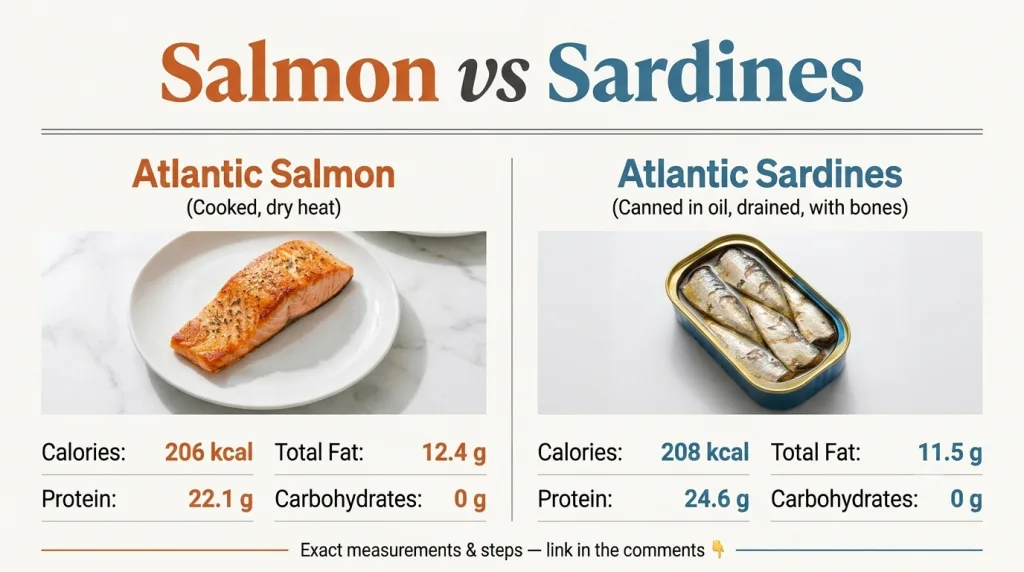
The values below are based on a 100 gram portion. Cooked Atlantic salmon is compared with Atlantic sardines canned in oil, drained, with bones.
- Calories: Salmon 206 kcal, sardines 208 kcal
- Protein: Salmon 22.1 g, sardines 24.6 g
- Total fat: Salmon 12.4 g, sardines 11.5 g
- Carbohydrates: Salmon 0 g, sardines 0 g
At a glance, the two fish are very close in calories. Sardines show slightly higher protein, while salmon contains a little more total fat. Neither fish contains carbohydrates in these amounts, which makes both naturally suited to lower-carb eating patterns.
What the Numbers Mean for Your Plate
Calories
Calories are nearly identical, at 206 kcal for salmon and 208 kcal for sardines per 100 grams. If you are planning a balanced meal, either fish can fill a similar place in your daily energy intake.
Protein
Sardines provide 24.6 grams of protein per 100 grams, compared with 22.1 grams in salmon. Protein is an important part of many meals because it helps contribute to fullness and supports muscle maintenance, so both fish can be valuable additions to a protein-focused plan.
Fat
Salmon contains 12.4 grams of total fat, while sardines contain 11.5 grams. Fish fats are commonly associated with a heart-conscious eating pattern when they are included as part of a balanced diet. Both options bring fat to the table, so portion size and the rest of your meal still matter.
Carbohydrates
Both fish contain 0 grams of carbohydrates per 100 grams, so the sides you pair with them will largely determine the carbohydrate content of your meal.
How to Choose Between Salmon and Sardines
The best choice depends on your goals, budget, and how you like to eat fish. Here are a few practical considerations:
- Choose sardines if you want a little more protein per serving and a convenient, shelf-stable option.
- Choose salmon if you prefer a milder, meatier fillet for dinners and a slightly higher fat content.
- Consider canned sardines in oil as an affordable pantry staple for quick lunches, salads, and toast.
- Use cooked salmon as a centerpiece for roasted vegetable plates or grain bowls.
Practical Tips for Your Healthy Grocery Trip
When shopping, look for clearly labeled cans or fresh fillets and check the nutrition facts on the package, since values can vary by brand and preparation method. Keeping both options on hand can make it easier to build balanced meals throughout the week.
- Compare the protein and fat values on labels before buying.
- Pair either fish with vegetables and a fiber-rich carbohydrate source for a complete plate.
- Plan portions in advance so your meals stay consistent with your goals.
Final Thoughts on Salmon vs. Sardines
Salmon and sardines are remarkably similar in calories and carbohydrates, and both offer solid amounts of protein and fat per 100 grams. Sardines edge ahead on protein, while salmon offers slightly more fat. The right pick comes down to taste, budget, and how you plan to use it in your meals. Save this guide for your next healthy grocery shopping trip, and consider sharing it with someone who is planning their weekly menu.
Medical disclaimer: This article is for general educational purposes only and does not replace advice from a qualified healthcare professional or registered dietitian. If you have specific dietary needs or health conditions, please consult your healthcare provider before making changes to your diet.