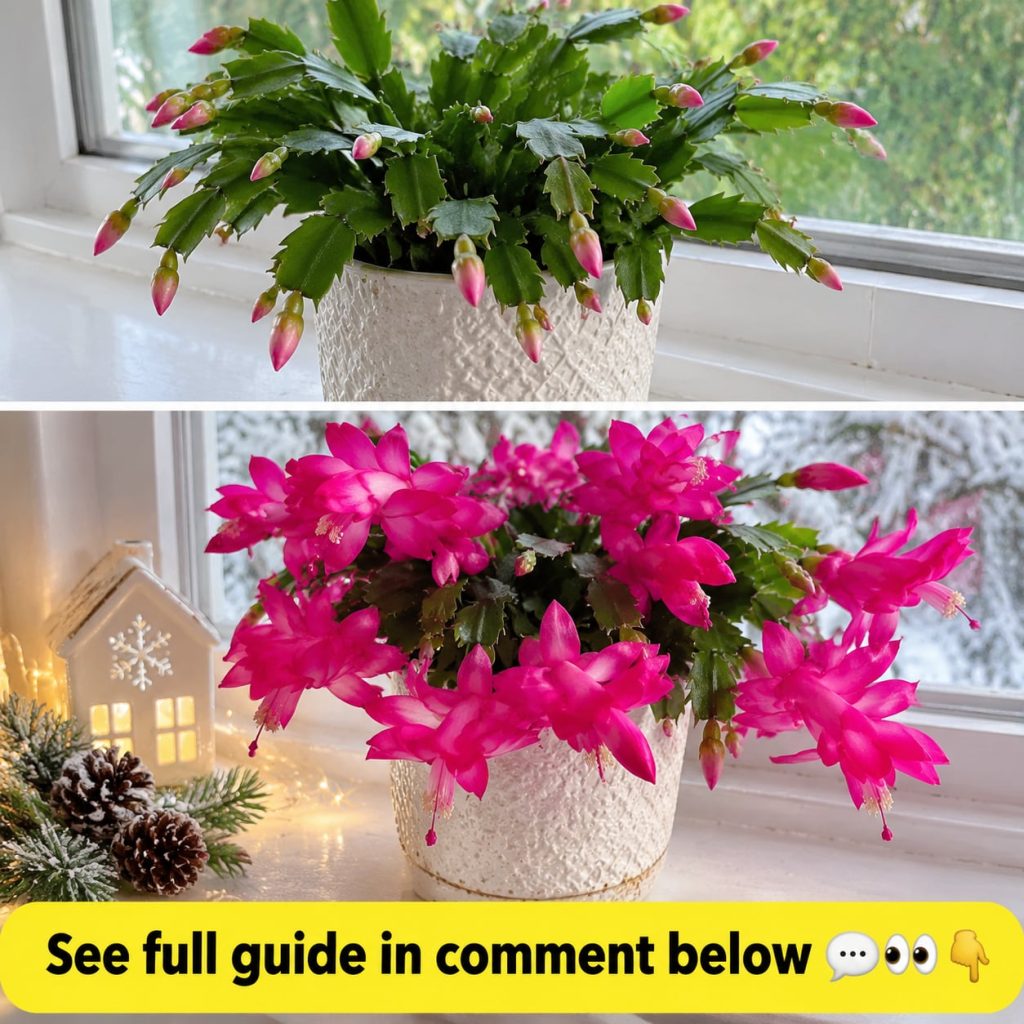
Most people move their Christmas cactus at the wrong time and then wonder why it never flowers. The plant does not bloom because of fertilizer or fancy pots. It blooms because of day length, cool nights, and a few weeks of the right routine in early autumn.
What Is a Christmas Cactus?
A Christmas cactus (Schlumbergera bridgesii) is a tropical forest cactus, not a desert cactus. It grows on tree branches in humid, shaded areas, which is why it has flat, jointed stems instead of spines and why it prefers bright indirect light and regular moisture. It is a short-day plant, meaning it sets flower buds when nights become long, usually in autumn.
This is the key to holiday blooms. If you time the light and temperature changes correctly, the flowers often open in late November or December.
What You Need
- A healthy Christmas cactus with plump, green segments
- A bright windowsill with indirect light, ideally east or north facing
- A cool room, about 55 to 65 F (13 to 18 C) at night
- A pot with drainage holes and a light, well-draining potting mix
- A dark cupboard or covered box for short evenings, if your room stays bright at night
- Room-temperature water and a balanced houseplant fertilizer, diluted to half strength
Approximate Measurements and Timing
Use these numbers as a practical guide rather than exact science:
- Daylight: 6 to 8 hours of bright indirect light per day
- Night length: 12 to 14 hours of uninterrupted darkness per night
- Night temperature: 55 to 65 F (13 to 18 C)
- Start the bud-setting routine: about 6 to 8 weeks before your target bloom date
- Watering: when the top inch of soil feels dry, roughly once a week in most homes
Step-by-Step: Force the Bloom Routine
- Check the plant first. Look for firm, green segments. Yellow or mushy stems mean the root system needs attention before any timing trick will work.
- Move it to bright indirect light in early autumn. A window that gets morning or filtered afternoon sun is ideal. Avoid harsh direct midday sun on the segments.
- Start the long-night period. In late September or October, give the plant 12 to 14 hours of darkness each night. Cover it with a box or move it to a closet, then return it to the windowsill each morning.
- Keep nights cool. Place the plant away from heaters, radiators, and drafty doors. Cool nights help set buds.
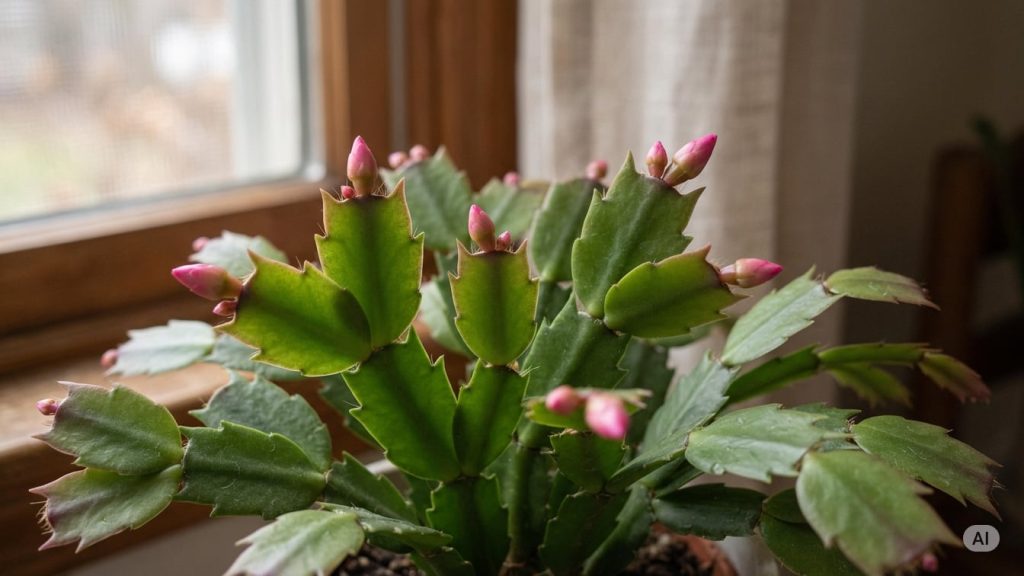
- Watch for buds. Small bud tips appear at the ends of segments within several weeks when the routine is working.
- Stop the dark routine once buds are visible. Return the plant to its normal bright spot, and keep the soil evenly moist.
Quick Tip: Do not move the plant in and out of the cold every day. Choose one cool, dark routine and keep it consistent for at least 4 weeks.
How to Use the Windowsill Method
The windowsill is not just a place to display the plant. It is the control point for light and temperature. An east-facing window usually gives gentle morning light, which suits most Christmas cactus varieties. A north-facing window works in darker homes, but flowering may be slower. A south-facing window can work if you move the plant back from the glass or use a sheer curtain during peak midday hours.
How Often to Care for It
During the bud-setting period, check the plant every few days. Water only when the top inch of soil is dry. Feed once every 4 to 6 weeks during active growth, but stop feeding when buds form. Once flowers open, keep the plant in its bright spot and avoid moving it, since buds can drop if the plant is disturbed.
Did You Know? Christmas cactus flowers often last several weeks when the plant stays in stable temperatures and bright indirect light.
How to Choose a Healthy Plant
If you are buying a plant for the holidays, choose one that already has firm segments and visible buds. Avoid plants with shriveled stems, soft spots near the base, or leaves that smell sour. A plant with tight buds is easier to work with than one in full bloom, because it will stay fresher in the store and in your home.
Storage Between Bloom Cycles
Christmas cactus does not need special storage. Keep it in a bright room away from cold drafts, and do not leave it in a closet longer than the dark-period routine. After flowering, let the top inch of soil dry before watering again. Repot every 2 to 3 years in spring, when the roots fill the pot.
Fresh vs Dried Care Options
This plant is grown fresh, not dried, but the way you handle it changes the result. The table below compares common approaches.
| Approach | Best For | Result Timing | Main Risk |
|---|---|---|---|
| Dark-night routine | Forcing holiday blooms | Buds in about 6 to 8 weeks | Inconsistent dark periods |
| Natural window only | Low-effort care | Blooms may be later or smaller | Less reliable timing |
| Warm room placement | Keeping a plant indoors year-round | Often weak or no buds | Heat stress and bud drop |
Practical Tips
- Rotate the pot a quarter turn each week so the plant grows evenly.
- Use a pot slightly larger than the root ball, since crowded roots can reduce blooming.
- Keep the plant away from fruit, which releases ethylene gas and can cause bud drop.
- Clean dust off the segments gently with a damp cloth to support healthy growth.
Common Mistakes
- Starting too late. If you begin in mid-November, holiday blooms may not appear in time.
- Letting light leak in at night. A nearby lamp or hallway light can delay bud formation.
- Overwatering. Soggy soil can rot roots, especially in cool rooms.
- Moving the plant after buds form. Sudden changes can cause buds to fall off.
- Placing it near heat sources. Radiators and heating vents dry out the plant and reduce flowering.
Cautions and Who Should Be Careful
Christmas cactus is generally considered non-toxic to cats and dogs, but pets may still chew plants and cause mild stomach upset. If you have pets or young children, place the plant out of reach and check with a veterinarian if you notice unusual symptoms. Be cautious with fertilizer near pets, and keep pots away from curious paws.
Quick Summary
| Question | Answer |
|---|---|
| Best preparation | Healthy plant with firm segments |
| Best use case | Forcing blooms for the holidays |
| When to start | Early autumn, about 6 to 8 weeks before bloom |
| Storage | Bright, cool room away from drafts |
| What to avoid | Overwatering, heat sources, and moving after buds form |
Frequently Asked Questions
Can I use a fresh or dried plant for holiday décor?
Use a living plant if you want it to bloom again. Dried cut stems are not a substitute for a potted plant that can keep flowering.
How long does a Christmas cactus bloom last?
Flowers often last several weeks when the plant stays in stable light and temperature.
Can I put it in the refrigerator?
No. Christmas cactus should not be refrigerated. Cold storage can damage the segments.
How often should I water it during flowering?
Water when the top inch of soil is dry, usually about once a week, and avoid soggy soil.
Can I reuse the segments to grow new plants?
Yes. Break off two or three segments, let the ends dry for a day, then plant them in lightly moist mix.
When should I avoid the timing trick?
Skip it if the plant is weak, diseased, or recently repotted. Focus on recovery first.
Can the plant be moved outdoors?
It can summer outdoors in shade, but bring it in before nights turn cold, ideally above 50 F (10 C).
You may also like: Read more about winter houseplant care.
Related remedy: See the full guide to indoor plant lighting.
Continue with: learn how to make a simple potting mix for cacti.
Conclusion
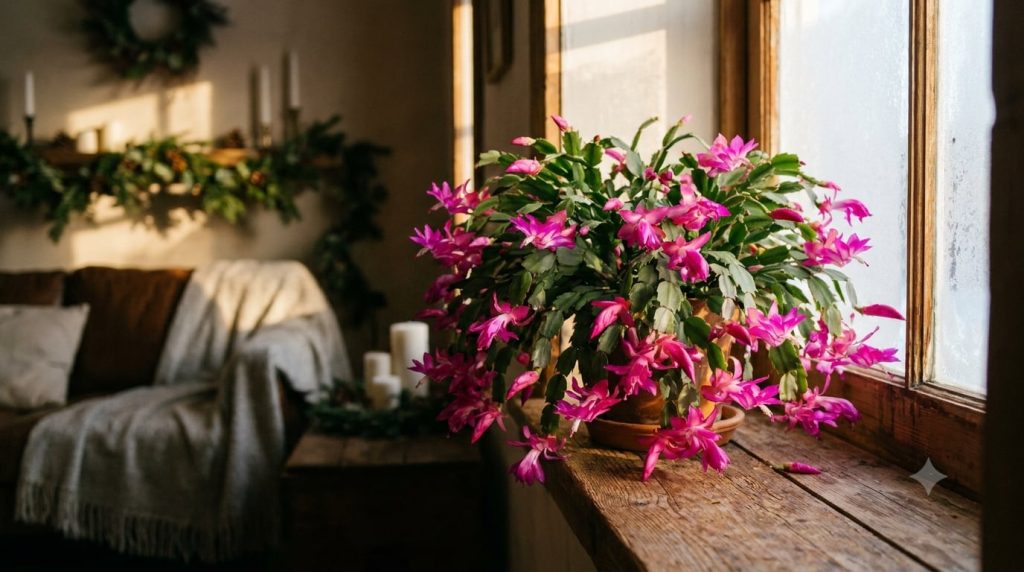
Forcing Christmas cactus blooms is less about a single trick and more about a steady routine. Move the plant to bright indirect light, give it cool, long nights in early autumn, and keep watering consistent. With a little patience, your windowsill can be covered in pink flowers right when the holidays arrive.