Stubborn grease on your stove can build up quickly, especially around the burner grates where cooking splatters bake onto the metal. The good news is that you can mix a effective, all-natural cleaning paste in seconds using items already in your kitchen. This simple three-ingredient stove cleaner is a budget-friendly way to handle a tough deep clean without harsh chemicals.
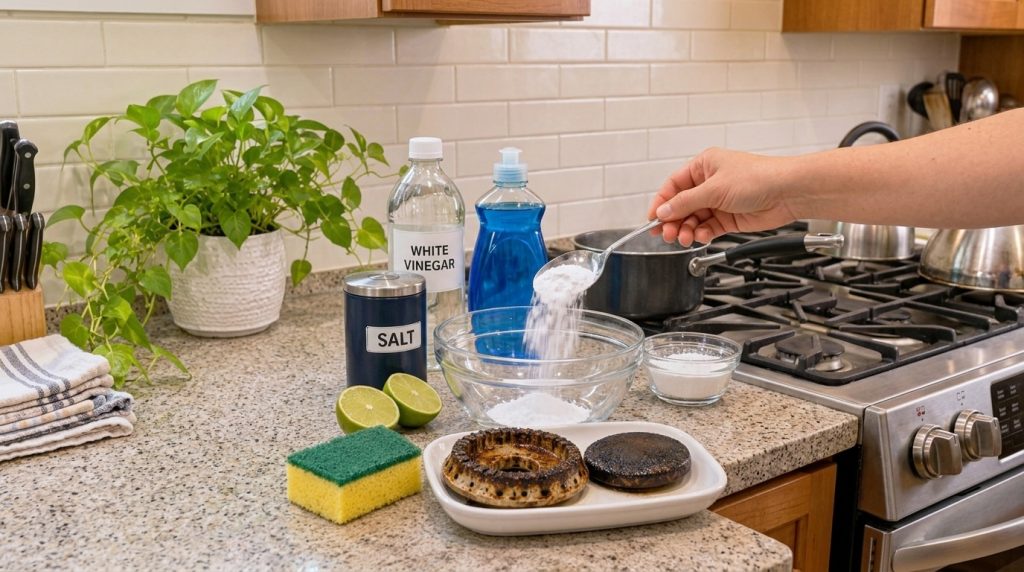
Why This Stove Cleaner Works
Grease is oily, so it needs a gentle cleaning agent that can break it down without damaging your stovetop. Each ingredient in this paste has a clear job:
- Baking soda is a mild abrasive that lifts baked-on residue from metal and enamel without heavy scratching.
- Blue dish soap is a degreaser that cuts through oil and lifts food particles from the surface.
- Water binds the ingredients into a spreadable paste that stays where you put it long enough to work.
Together, these ingredients form a mild scrubbing paste that is safe for most stove grates and cooktops. For more on everyday uses, see our guide to baking soda uses around the house.
What You Need
- 2 tablespoons of baking soda
- 1 tablespoon of blue dish soap
- 1 to 2 teaspoons of warm water, added slowly
- A small glass bowl and a spoon
- A non-scratch sponge or soft cloth
- A soft-bristle brush for crevices
Step-by-Step Instructions
- Make sure the stove is turned off and completely cool before you begin.
- Remove the burner grates and caps, then place them in a sink or large tub.
- Add the baking soda and dish soap to your glass bowl and stir with a spoon.
- Add warm water a few drops at a time until the mixture forms a thick, spreadable paste, similar to frosting.
- Spread the paste over greasy areas of the grates, the stovetop, and the knob area. Let it sit for 10 to 15 minutes so it can loosen the grease.
- Scrub gently with a sponge or soft brush, working in small circles and paying extra attention to corners.
- Wipe away the residue with a damp cloth, then rinse the grates with warm water.
- Dry everything thoroughly with a clean towel to prevent rust on cast iron grates.
Safety Tips
- Never use this paste on a hot stove or hot grates, since heat can cause the cleaner to dry unevenly and make rinsing harder.
- Test in a hidden spot first if your stovetop has a special finish, such as a glossy or matte coating.
- Do not mix this paste with other cleaning products. Hydrogen peroxide, bleach, and vinegar should never be combined in the same bowl.
- Rinse well after cleaning so no baking soda residue is left on food-contact surfaces.
Alternatives and Tips
If the grease is especially heavy, let the paste sit for a longer period or cover the area with a damp cloth to keep it moist. For a quick maintenance wipe between deep cleans, a mild solution of warm water and a few drops of dish soap works well on a cool stovetop. Clean your stove regularly to avoid heavy buildup and make each deep clean faster.