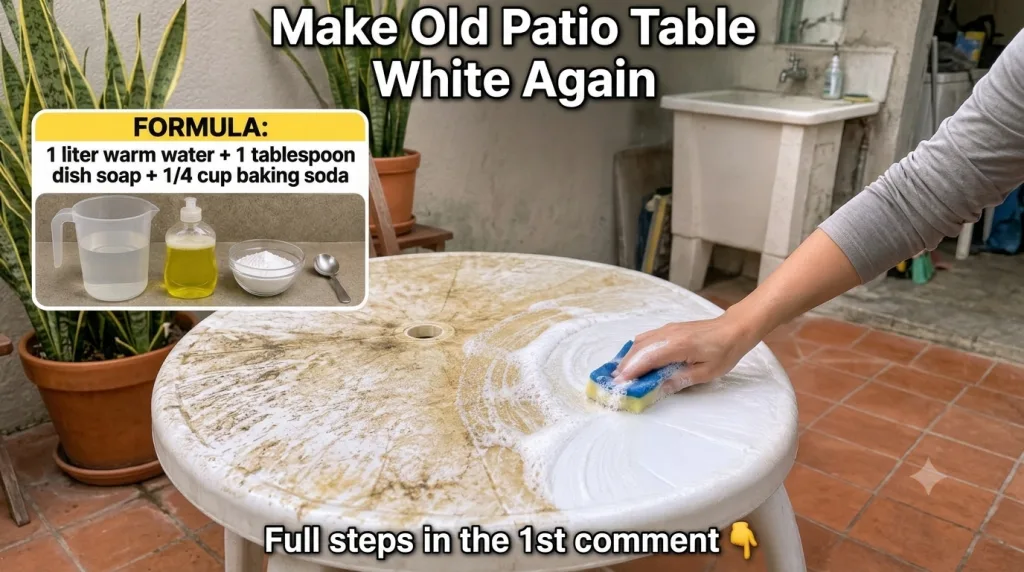
Outdoor plastic tables are easy to live with until they start looking dull, streaked, and yellowish. Pollen, dust, food spills, and months of weather can leave a film that makes even a sturdy white table look old. The good news is that you usually don’t need harsh products to fix it. A bit of soap, warm water, and some steady scrubbing can lift most of the buildup and bring back a clean, bright surface.
What You’ll Need
- Mild liquid dish soap, about 1 to 2 tablespoons
- A bucket or basin of warm water, about 2 gallons
- A non-scratch sponge or soft scrub sponge
- A soft-bristle brush for edges, corners, and textured areas
- Two or three clean microfiber cloths
- A garden hose or large cup for rinsing
Why This Method Works
Plastic outdoor furniture collects grime in a layer that sits on the surface. Warm water loosens that film, and dish soap helps break up oils and dirt so they can be wiped or rinsed away. Most of the work comes from scrubbing, not from strong cleaners. Gentle soap is also less likely to dull the finish than heavy-duty products, which is why it’s a good first step for everyday cleaning.
How to Clean the Table
- Move the table into a shaded spot if possible, or clean it on a cool part of the day. Direct sun can dry soap onto the surface before you can rinse it.
- Fill your bucket with warm water and add the dish soap. Stir until you see a light, sudsy mix.
- Dip your sponge into the soapy water and wring it out so it’s damp, not dripping.
- Start at the top of the table and work in small sections. Scrub in short, overlapping circles or straight strokes, following the direction of the plastic if it has a texture.
- Pay extra attention to darker streaks and the areas along the edges. Use the soft brush in corners, around screw holes, and under any lip where grime tends to collect.
- Rinse the sponge often in clean water so you aren’t spreading dirt back across the surface.
- Once the whole table has been scrubbed, rinse it thoroughly with clean water until no suds remain.
- Dry the table with a clean microfiber cloth to prevent water spots and to check for any spots you missed.
What to Expect
Light grime and surface film usually come off with one good scrub. Deeper yellowing or long-set stains may need a second round or a little more patience. Plastic can look noticeably brighter after cleaning, but very old or heavily weathered tables may not return to a completely new look. The goal is a clean, fresh surface that looks well cared for.
Helpful Tips
- Work in sections so the soap doesn’t dry on the table before you rinse it.
- Change your bucket of water when it turns gray, usually after cleaning one or two sections.
- Clean the table regularly, such as once a month during the warm season, to prevent heavy buildup.
- Cover the table or move it under a patio umbrella during rainy or dusty weeks to slow grime from settling in.
Important Notes and Safety
- Test any cleaner on a small hidden area first, especially if the plastic is glossy, colored, or older.
- Avoid abrasive pads, steel wool, or harsh scouring powders, which can scratch the surface and make it dull faster.
- Do not mix dish soap with other cleaning products. Combining cleaners can create unsafe fumes or unexpected reactions.
- Rinse the table completely so no soap residue is left behind, since residue can attract dirt.
- Store leftover soapy water and cleaning supplies out of reach of children and pets.
With a little elbow grease and simple supplies, most dingy plastic patio tables can look much fresher again. Start with the cleanest method first, and you may be surprised how much better your outdoor space looks after one afternoon of steady scrubbing.