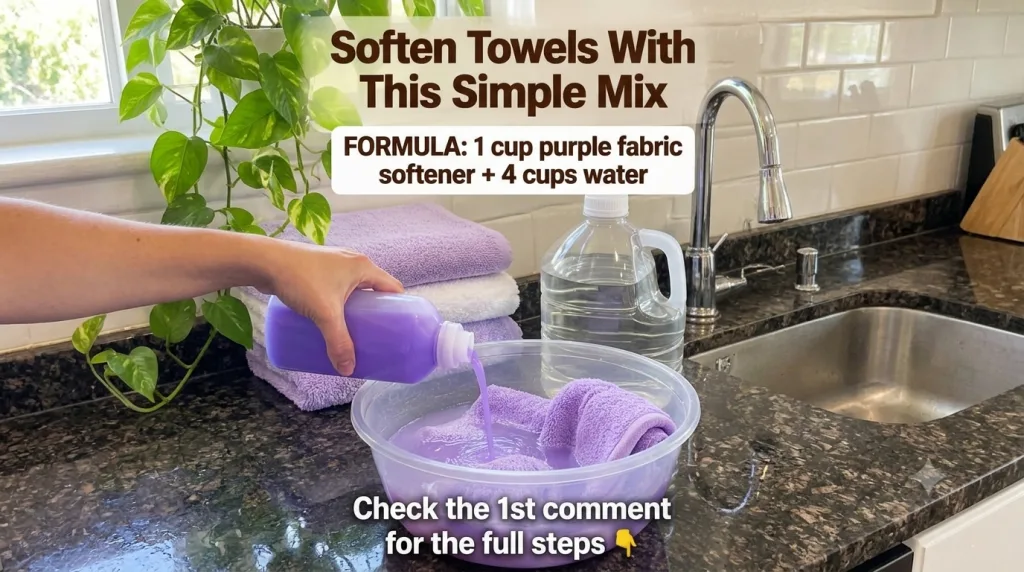
If you have a bottle of liquid fabric softener sitting under the sink, you may already own one of the simplest ingredients for a light household cleaning mix. This DIY shows how to dilute a purple liquid with plain water in a basin so you can use it for gentle, everyday jobs around the house. It is a practical way to stretch what you already have without buying a separate specialty cleaner.
What You’ll Need
Ingredients
- Liquid fabric softener (the purple bottle in the photo is a typical example)
- Clean tap water, warm or room temperature
Tools
- A clear plastic basin or bucket, cleaned and dried
- A large jug or measuring cup for water
- A measuring spoon or cup for accurate dilution
- A clean cloth or sponge
- A labeled spray bottle or container for storage
Why This DIY Can Be Useful
Liquid fabric softener is made to be diluted with water before use in many households, so mixing it in a basin is a simple way to control how strong the solution is. Water spreads the product more evenly and helps you avoid using too much at once. Because the mixture is light, it works best for gentle, low-risk tasks rather than heavy grease or stubborn stains.
How to Make It
- Wipe the clear basin with a clean cloth and rinse it well so there is no leftover residue from other products.
- Fill the basin with about four parts water. For example, a cup of water pairs well with a quarter cup of softener if you are starting out.
- Add the purple liquid slowly while the water is still. Avoid pouring it in quickly, which can create heavy foam.
- Stir gently with a clean spoon or your hand until the mixture looks evenly blended.
- Pour the finished solution into a labeled container if you plan to store it, and write the date on the label.
How to Use It
Use the diluted solution on a small, hidden area first to make sure it does not stain or leave a film. Dampen a clean cloth in the mixture, wring it out well so it is not dripping, and wipe the surface in one direction. For fabrics or laundry-related tasks, follow the softener label instructions and add the diluted mix only where it fits the product’s intended use. Allow the surface to air dry, then wipe with a clean, plain-water cloth if you notice any residue.
What to Expect
This mixture is best for light refreshing jobs rather than deep cleaning. You may notice a faint scent and a slightly softer feel on fabrics or some surfaces, but it will not remove heavy grime, hard water deposits, or set-in stains. Results vary depending on the product you use and the surface you are working on, so treat it as a simple helper rather than a complete cleaning solution.
Helpful Tips
- Start with a weaker mixture and add more softener only if you need it.
- Use fresh, cool or room temperature water to keep the scent more consistent.
- Mix only what you will use within a few days to keep the solution fresh.
- Keep the basin and cloths dedicated to this mix so residue does not build up.
Important Notes and Safety
- Never mix fabric softener with bleach, vinegar, ammonia, or any other cleaning product. Combining chemicals can release harmful fumes or cause a reaction.
- Test on a small hidden spot first, especially on painted surfaces, wood, stone, or delicate fabrics, because softener can leave a film or change the finish.
- Keep the mixture away from children and pets, and store it in a clearly labeled container.
- Work in a ventilated room, and rinse the surface with plain water if the mixture leaves residue.
- Check your product label for dilution guidance, since some softeners have specific directions for use outside the laundry.