If your glass shower door looks cloudy no matter how often you rinse it, you are probably dealing with hard water scale and soap scum. These mineral deposits build up slowly, leaving a filmy haze that makes the glass look dull and older than it is. The good news is that this problem usually responds well to a simple homemade paste and a little patience.
What You’ll Need
Cleaning Ingredients
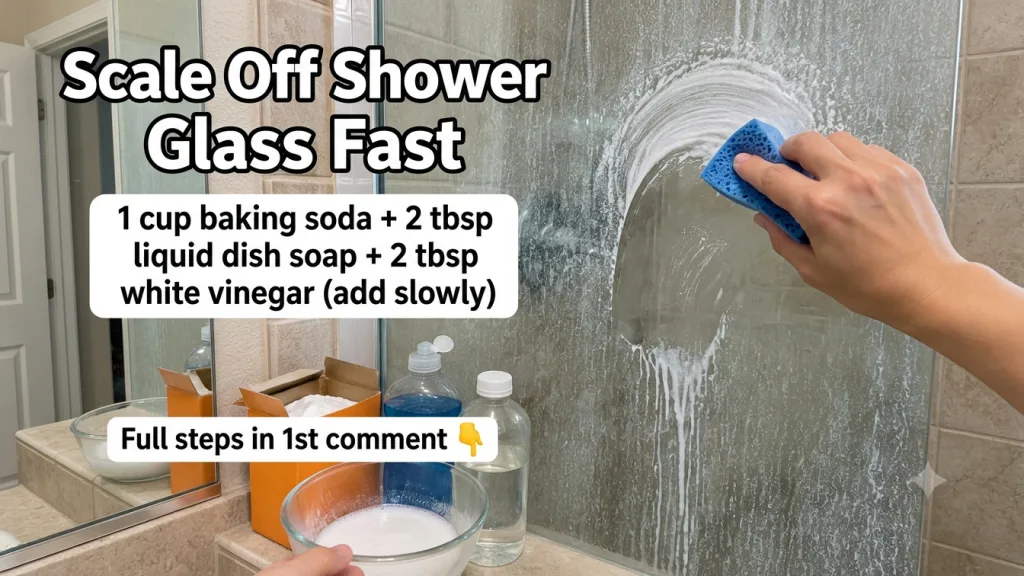
- About 1/4 cup baking soda
- 1 to 2 teaspoons water, added slowly until the mixture forms a spreadable paste
- White vinegar, for a spray-on rinse (use equal parts vinegar and water in a spray bottle)
- A few drops of dish soap, optional, for extra grease and soap residue
Tools
- A non-scratch sponge (a blue scrubbing sponge works well)
- A small glass or plastic bowl for mixing
- A spray bottle
- A soft microfiber cloth
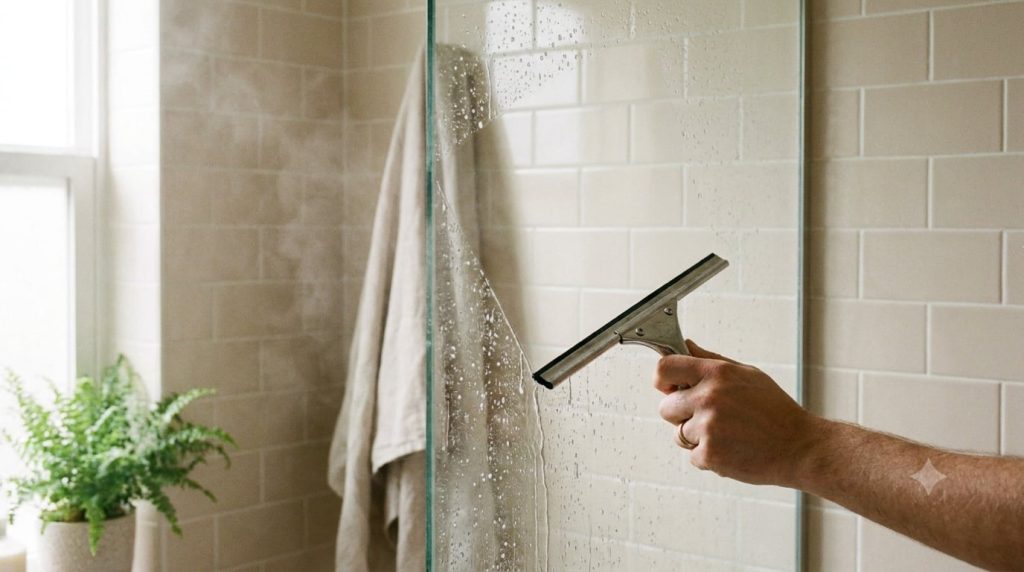
- A squeegee
- Rubber gloves
Why This DIY Can Be Useful
Baking soda is a mild abrasive, so it helps lift soap film and light mineral buildup when you scrub it gently across the glass. Its paste-like texture also helps it stay in place on vertical surfaces instead of running off right away. White vinegar is slightly acidic, which makes it useful for loosening hard water deposits that have bonded to the surface. Used together in separate steps, they give you a practical, low-cost option that is easy to find in most kitchens.
How to Make It
- Put the baking soda in a small bowl.
- Add water one teaspoon at a time, stirring after each addition, until the mixture looks like a thick, spreadable paste. It should hold its shape on the sponge without dripping too much.
- Fill your spray bottle with equal parts white vinegar and water. Shake it lightly before each use.
- Keep the paste and the vinegar spray separate. Do not mix them together in one container, because they will fizz and lose much of their cleaning effect.
How to Use It
- Rinse the glass with warm water first. This removes loose dust and helps the paste spread more evenly.
- Dip the sponge into the paste and apply it to one section of the door at a time, about the size of your hand.
- Scrub in gentle circles or straight back-and-forth strokes. Focus on the cloudy areas and the lower edges, where soap scum tends to collect.
- Let the paste sit on the glass for 5 to 10 minutes. Do not let it dry completely, so mist it lightly with water if needed.
- Rinse the section thoroughly with warm water.
- For stubborn spots, spray them lightly with the vinegar solution, wait about a minute, and then wipe gently with the sponge.
- Rinse the entire door again to remove all residue.
- Run a squeegee from top to bottom to remove water, then buff any remaining streaks with a dry microfiber cloth.
What to Expect
Light soap scum and surface haze usually improve after one cleaning session, and the glass often looks noticeably clearer and more even. Heavier mineral buildup, especially the kind that has been present for months or years, may need several rounds of cleaning. Some deposits may never fully disappear with home methods, so it is fine to set realistic expectations and repeat the process as needed.
Helpful Tips
- Clean the glass once a week to prevent buildup from becoming hard to remove.
- Squeegee the door after each shower. This is one of the simplest ways to reduce water spots.
- Work in small sections so the paste does not dry on the glass before you rinse it.
- Use a microfiber cloth for the final buff, since it leaves fewer streaks than paper towels.
Important Notes / Safety
- Test the cleaner on a small, hidden area first if your glass is tinted, coated, or decorative, since some finishes can be sensitive to abrasives or acids.
- Avoid steel wool, harsh scouring pads, and abrasive powders, which can scratch glass and damage coatings.
- Never mix vinegar with bleach or any product containing ammonia. Doing so can release harmful fumes.
- Wear rubber gloves and keep the bathroom ventilated, especially when using the vinegar spray.
- Rinse the door thoroughly so no baking soda residue is left behind to dry as a cloudy film.
- Store the vinegar spray in a clearly labeled bottle, and keep all cleaning products out of reach of children and pets.