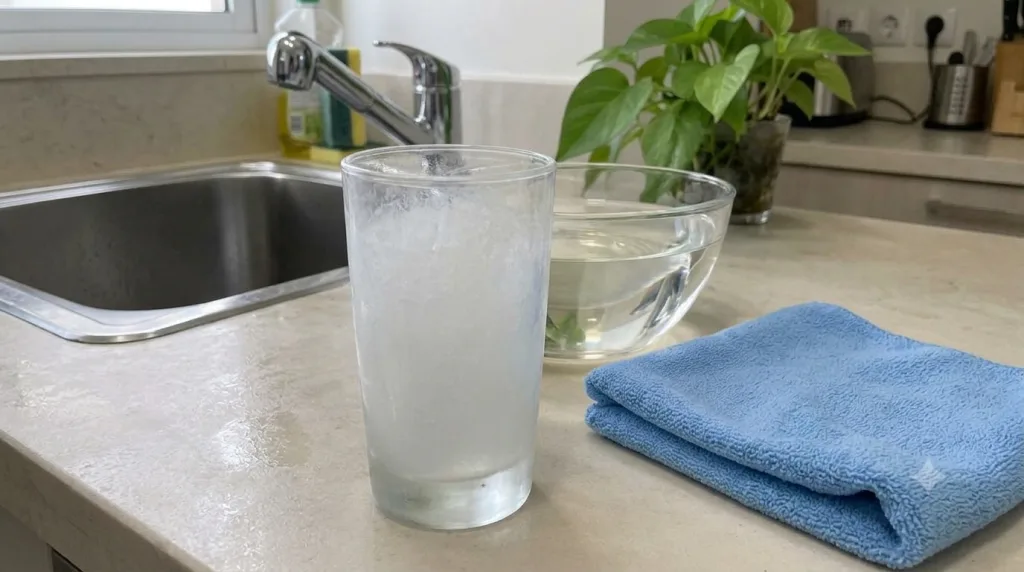
If your glasses come out of the dishwasher looking foggy, chalky, or faintly white, you are not imagining it. That film is usually hard water residue, a thin layer of minerals left behind when water dries on glass. The good news is that you can often lift it off with a simple soak in warm white vinegar and a soft cloth, using a pantry staple you probably already own.
Why Glasses Turn Cloudy in the Dishwasher
Most tap water contains dissolved minerals, mainly calcium and magnesium. When a dishwasher cycle ends, tiny droplets of water dry on the glass and leave those minerals behind. Over many washes, the residue builds into a milky, filmy layer that ordinary rinsing does not remove. Soft, cloudy patches are the most common sign of this buildup, and they often look worse on glasses you use every day.
Hard water is common in many homes across the United States, Canada, the United Kingdom, and Australia, so this problem shows up in kitchens of all kinds. The fix is usually the same: dissolve the mineral deposits with a mild acid, then wipe the loosened film away.
What You Need
- Warm white vinegar, enough to cover the cloudy part of the glass
- A plain bowl or container that is large enough to hold the glass on its side
- A soft cloth, such as a microfiber cloth
- Warm water for a final rinse
Step-by-Step Method
-
Fill a bowl with warm white vinegar. Warm vinegar works a little better than cold, but avoid anything hot enough to be uncomfortable to touch.
-
Lay the cloudy glass on its side in the vinegar so the milky areas are fully covered. If the glass does not fit lying down, fill the bowl to a level that covers the cloudy section.
-
Leave the glass to soak for about fifteen minutes. This gives the vinegar time to loosen the mineral residue.
-
Lift the glass out and wipe it with a soft cloth. The film should slide off with light pressure, leaving the surface clear.
-
Rinse the glass with clean water and dry it with a clean towel so no new spots form as it air dries.
Tips for Better Results
Work with one or two glasses at a time so each one gets full contact with the vinegar. If a glass has a stubborn patch, return it to the bowl for a few more minutes and try again. Avoid scrubbing with abrasive pads, since they can scratch the glass and make future cloudiness more noticeable.
Regular habits also help keep the film from coming back. Running a rinse aid in your dishwasher, checking that the water softener setting matches your water hardness, and avoiding overcrowding can all reduce mineral buildup on glassware.
When Vinegar May Not Be Enough
Not every cloudy glass has a simple mineral film. If the surface feels rough, or if the cloudiness looks like a permanent frosted pattern, the glass may be etched. Etching happens when the glass surface itself has worn away, and vinegar cannot restore it. In that case, the glass may need to be replaced, though you can still use it for less delicate tasks.
Final Thoughts
A cloudy glass does not have to go in the bin. With warm white vinegar, a bowl, and a soft cloth, most hard water film can be lifted away in a short soak and a gentle wipe. It is a practical, budget-friendly way to bring everyday glassware back to a clear, bright shine.