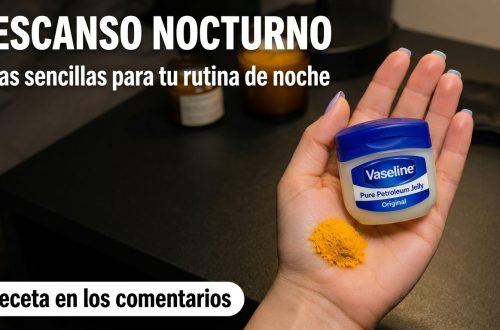
Most people toss the green husk the moment they crack open a walnut, yet it is one of the most practical parts of the tree for home projects. The hull is the soft outer covering around the shell, and when it is handled correctly it can become a natural wood stain, a fabric dye, and a simple DIY skin-tint test ingredient. Here is the part most people skip.
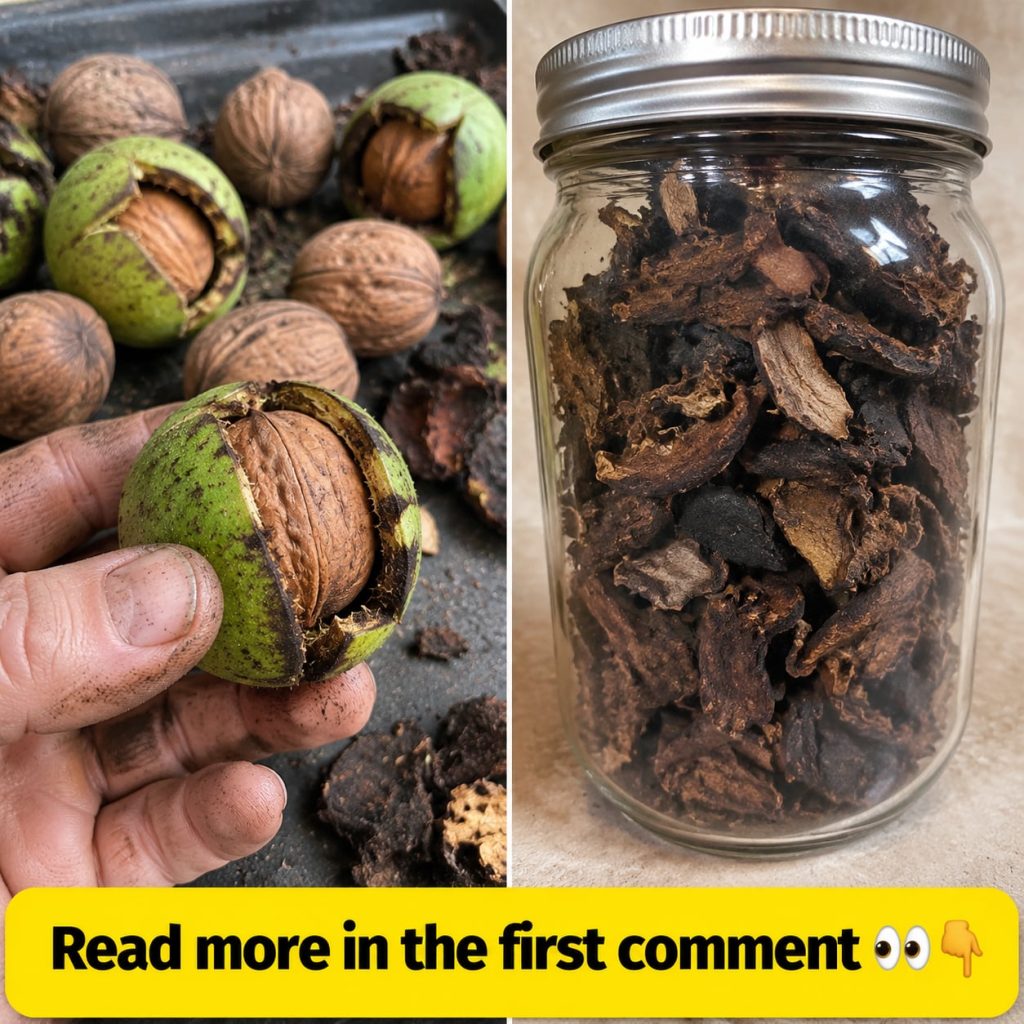
What Walnut Hulls Are
The hull is the fleshy green layer that surrounds the walnut shell. It contains natural pigments, including tannins and naphthoquinones, which is why it stains so strongly. Walnut plants also contain juglone, so gloves and a patch test are non-negotiable before any home project.
Ingredients and Approximate Measurements
- Fresh green walnut hulls, unbruised and still soft (about 1 cup chopped)
- Distilled water (about 2 cups)
- Dried walnut hull pieces, if fresh hulls are unavailable (about 2 tablespoons per cup of water)
- Stainless steel or enamel pot
- Cheesecloth or fine strainer
- Rubber gloves and an old towel
- Clean glass jar with a tight lid
Formula Quick Reference
| Version | Base and Ratio | Best Use | Shelf Life |
|---|---|---|---|
| Fresh hull decoction | 1 cup chopped hulls to 2 cups water | Wood stain tests, fabric dye | 3 days refrigerated |
| Dried hull infusion | 2 tbsp dried hulls to 1 cup water | Light tint test, craft dye | 1 week refrigerated |
| Hull powder paste | 1 tsp powder to 1 tbsp water | Spot staining on wood | Use within 24 hours |
Step-by-Step Method
- Put on rubber gloves and chop the fresh hulls into small pieces.
- Place the pieces in the pot and cover with the water.
- Bring to a gentle simmer, then reduce heat and cook for 20 to 30 minutes. Do not boil hard, as this can make the color muddy.
- Turn off the heat and let the liquid cool completely.
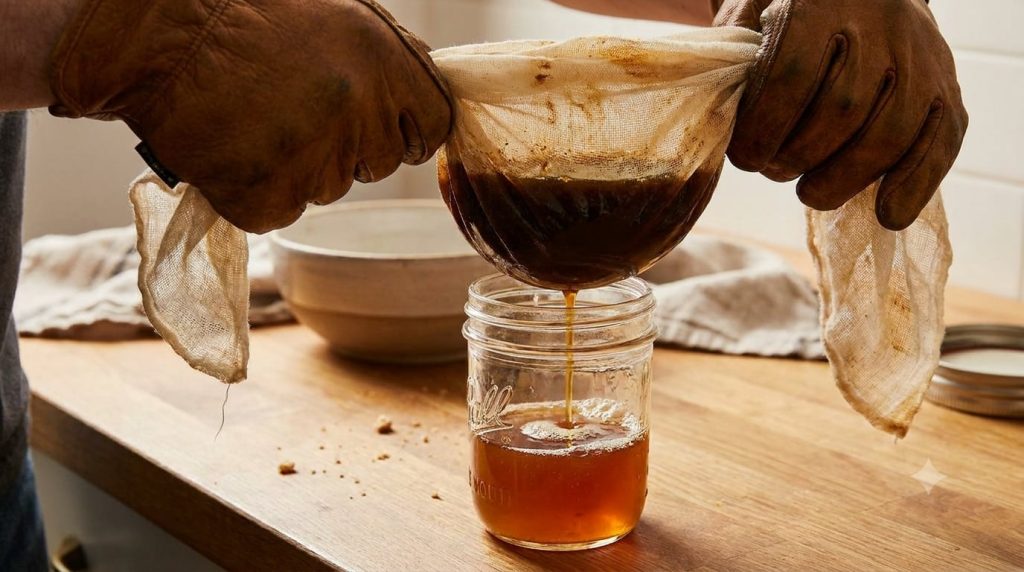
- Strain through cheesecloth into the glass jar and discard the solids.
- Test on a hidden scrap of material before using on a full project.
How to Use It
For wood, dip a cotton cloth in the cooled liquid and wipe in the direction of the grain. Build color in thin layers and let each coat dry. For fabric, soak a small swatch for 30 minutes and check the shade before dyeing the full piece. For a skin-tint patch test, apply a drop to a small area of inner forearm, wait 24 hours, and avoid the test on broken skin.
How Often to Use It
Use the liquid only when a project needs it, not as a routine product. Make a fresh batch for each session. For craft and wood work, one or two layers per session is usually enough.
How to Choose Good Hulls
Pick green, soft, unbruised hulls harvested in early autumn. Avoid hulls with black spots, mold, or a sour smell. If you buy dried hulls, choose a reputable supplier and check that the pieces are free of mildew.
Storage
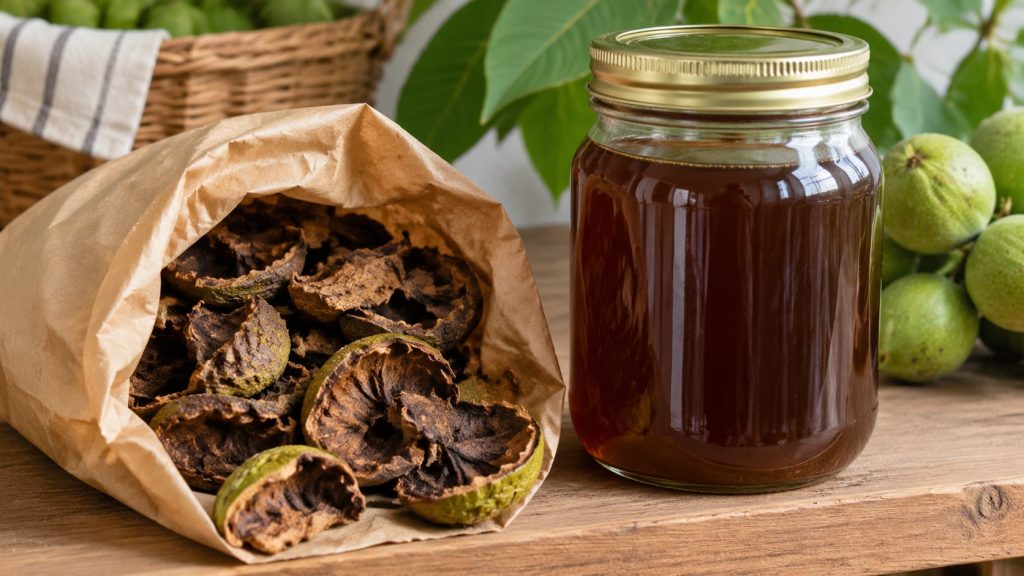
Keep the strained liquid in a sealed glass jar in the refrigerator for up to one week. For longer storage, pour the liquid into an ice cube tray and freeze it. Dried hulls should be kept in a paper bag in a cool, dark, dry place.
Practical Tips
- Quick Tip: Start with a weaker batch. You can always add another layer, but you cannot remove a dark stain easily.
- Did You Know? Fresh hulls produce a stronger color than dried hulls at the same weight.
- Before You Apply: Test the color on the exact material you plan to use.
Common Mistakes
- Using damaged or moldy hulls, which can cause off-odors and uneven results.
- Boiling too hard, which can make the liquid dull and muddy.
- Storing liquid in a wet or unsealed jar, which shortens shelf life.
- Skipping gloves, which leaves brown stains on hands for several days.
- Using the liquid on large projects without a test patch.
Cautions and Who Should Avoid It
Walnut hulls are not a food and should not be eaten or taken internally. Avoid use if you have a tree nut allergy or a known sensitivity to walnuts. Do not apply to broken, irritated, or inflamed skin. Keep the liquid away from children and pets. Pregnant or breastfeeding people should avoid skin contact until they have checked with a qualified health professional. Stop use if redness, itching, or swelling appears.
Quick Summary
| Question | Quick Answer |
|---|---|
| Best preparation | Fresh hull decoction for strong color |
| Best use case | Wood stain tests, craft and fabric dyeing |
| Storage | Refrigerate up to 1 week or freeze |
| When to use | Project-based, not daily |
| What to avoid | Moldy hulls, boiling, broken skin, internal use |
Frequently Asked Questions
Can I use fresh or dried hulls?
Yes. Fresh hulls give a stronger color, while dried hulls are convenient and store longer.
How long does the liquid last?
Refrigerated liquid lasts about one week. Frozen liquid can last several months.
Can I refrigerate it?
Yes, in a sealed glass jar. Discard it if it smells sour or grows mold.
Can I freeze it?
Yes. Freeze in small portions, such as an ice cube tray, and thaw only what you need.
Can I reuse the hulls?
Once a decoction is strained, the solids are usually spent. Use them for compost or discard them rather than making a second batch.
Which part of the walnut is best?
The green outer hull is the part used for these preparations. The shell and nut are different parts with different uses.
When should I avoid it?
Avoid it with tree nut allergies, on broken skin, during pregnancy or breastfeeding without professional advice, and around children.
You May Also Like
Read more: how to make a simple wood stain from kitchen scraps. See the full guide: natural fabric dyeing basics for beginners. Related guide: how to store homemade botanical liquids safely.
Final Thoughts
Walnut hulls are often discarded, but with careful preparation they can support practical craft and wood projects. Start small, test every batch, and handle the material with respect for its strong pigment and possible sensitivities.