Whole eggs or egg whites: which one belongs in your daily routine? Egg whites are often chosen for their pure protein, but the yolk carries nutrients that are easy to overlook. Understanding what each part of the egg offers can help you choose the option that fits your nutrition and fitness goals.
In this guide, we compare whole eggs and egg whites so you can make a practical, balanced decision.
What Whole Eggs Bring to the Table
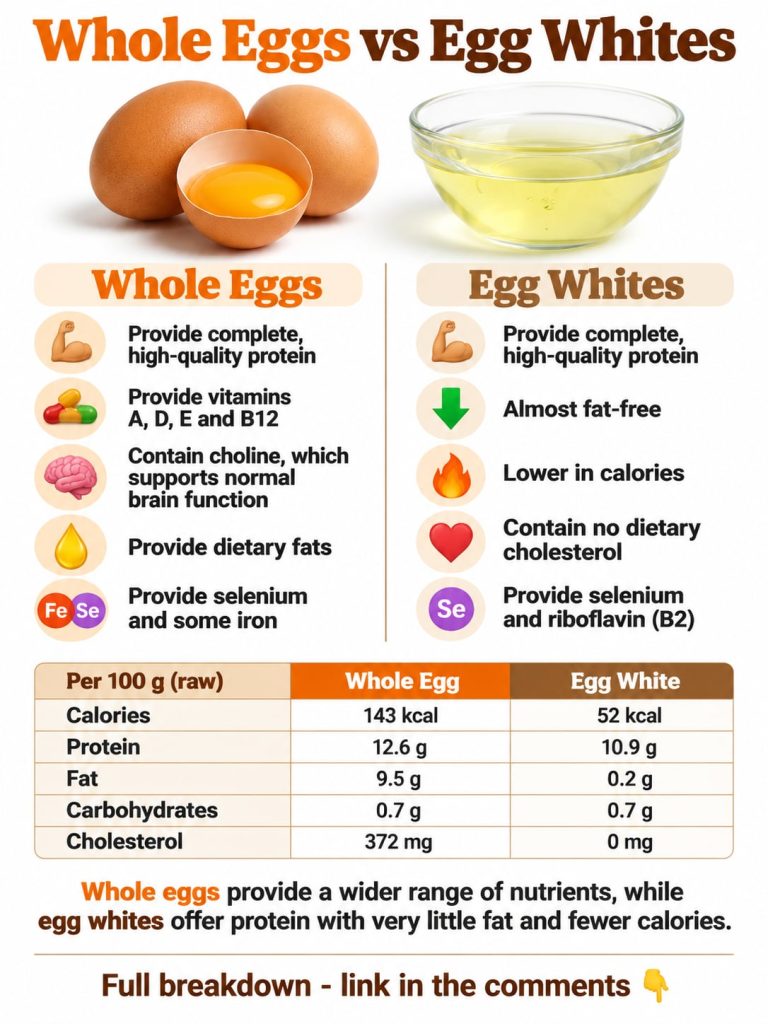
Whole eggs contain both the white and the yolk, which means they offer a broader nutritional profile. The yolk is where many of the vitamins, healthy fats, and choline are found. Choline is a nutrient that supports normal body functions, and whole eggs are one of its everyday food sources.
If you enjoy whole eggs at breakfast, they can contribute to a satisfying meal alongside vegetables or whole-grain toast as part of a balanced diet.
Why Egg Whites Stand Out for Pure Protein
Egg whites are valued for being low in calories and fat-free, with protein as their main contribution. For people focused on increasing protein intake while keeping fat and calories in check, egg whites are a popular choice. They can be easy to add to omelets, scrambles, or simple protein-focused meals.
Should You Throw Away the Yolk?
Removing the yolk may reduce the vitamins, healthy fats, and choline that come with the whole egg. Many people skip the yolk to save calories, but discarding it can also mean missing nutrients that the egg naturally provides. A useful middle ground is to keep one whole egg and add extra egg whites when you want more protein without giving up the yolk entirely.
How to Choose Based on Your Daily Goals
- If you want a broader nutrient profile: whole eggs may be the better everyday choice.
- If you are focused on lean protein: egg whites can be a practical option.
- If you want both: combine one whole egg with extra egg whites in the same dish.
Your overall eating pattern matters more than any single food. Pairing eggs with vegetables, fruit, or whole grains can help round out your meals.
Final Thoughts
Whole eggs and egg whites each have a place in a healthy diet. Whole eggs offer vitamins, healthy fats, and choline from the yolk, while egg whites provide low-calorie, fat-free protein. The best choice depends on your personal nutrition and fitness targets. Tell us in the comments which one is your daily go-to and why.
Medical Disclaimer: This article is for general educational purposes and is not a substitute for professional medical advice. If you have specific dietary needs, cholesterol concerns, or health conditions, please consult a qualified healthcare professional.