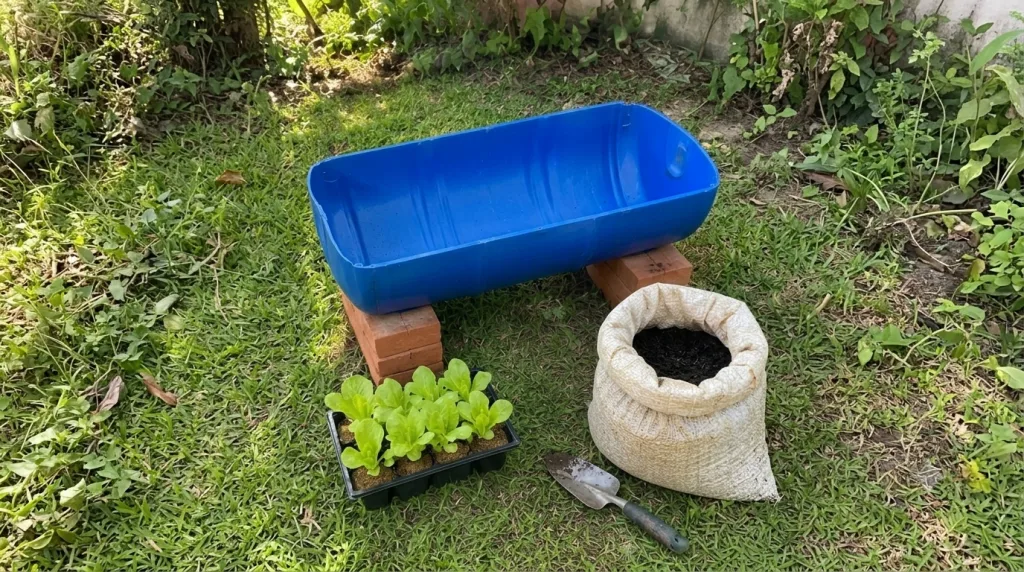
An old plastic drum and a few bricks may be all you need to create a raised garden bed that is both practical and attractive. If you have been looking for a way to grow your own fresh greens without spending much money, this simple upcycling project is a great place to start. It requires only a few basic materials, a little time, and a sunny spot in your yard.
Why Choose a Plastic Drum for Your Garden Bed?
Raised beds are popular for good reason. They lift the soil off the ground, make planting and weeding easier on your back, and warm up quickly in spring. A cut-down drum offers the same benefits at a fraction of the cost of a store-bought planter. Instead of throwing away a container that still has plenty of life in it, you give it a useful second job.
- Low cost, especially if you can source a drum for free or at a low price
- Lightweight and easy to position once it is cut
- Enough depth for lettuce, herbs and other shallow-rooted plants
- Good for small yards, patios and corners that get plenty of sun
What You Will Need
- A large plastic drum, cleaned thoroughly
- A saw or jigsaw suitable for cutting plastic
- A drill with a small bit for drainage holes
- Two stacks of bricks to lift the drum off the ground
- Good quality potting soil or a mix suited to vegetables
- Lettuce seedlings or other leafy greens
- A small trowel and gardening gloves
Step-by-Step: Turning the Drum into a Raised Bed
Step 1: Check the Drum’s Previous Contents
Before you start cutting, find out what the drum held before. Chemical residues can linger in plastic, so it is wise to avoid drums that contained oils, paints, pesticides or other hazardous materials. If you are unsure, choose a new drum or one with a clearly known food-safe history. Wash it well with warm soapy water and let it dry completely.
Step 2: Cut the Drum Lengthwise
Cut the drum in half the long way. A lengthwise cut creates a wide, shallow trough that suits lettuce and other salad greens. Smooth any sharp edges with sandpaper or a file so they are safe to handle while you work.
Step 3: Add Drainage Holes
Drill a few small holes in the bottom of the trough. Good drainage prevents waterlogged roots, which is one of the most common reasons vegetables struggle in containers. Several small holes spaced evenly are better than one large one.
Step 4: Set the Trough on Brick Stacks
Place two neat stacks of bricks on level ground, then rest the drum trough on top. Raising the bed improves airflow, keeps the base out of wet grass, and brings the plants up to a comfortable height. Check that the trough sits level so water does not pool on one side.
Step 5: Fill with Potting Soil
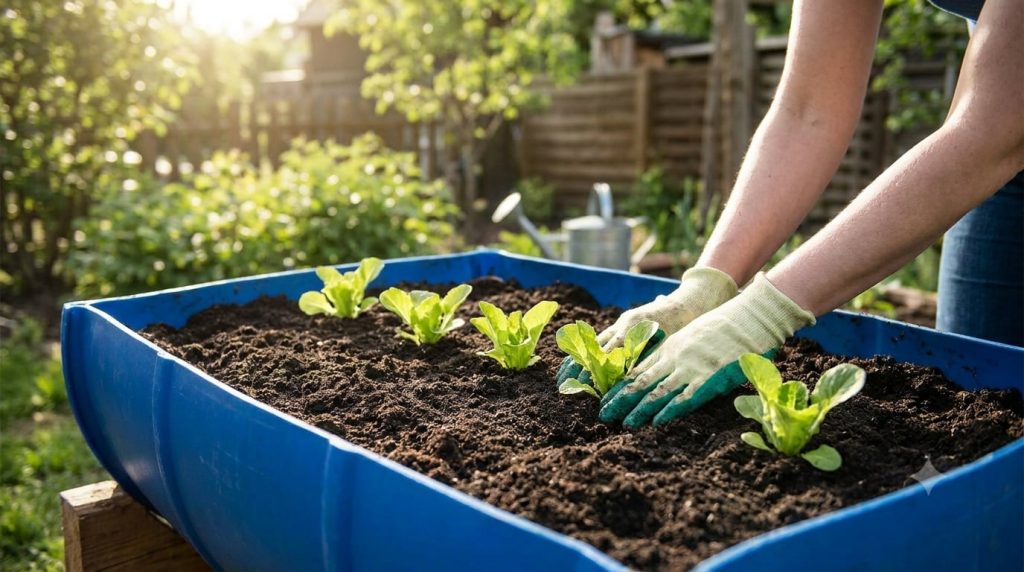
Fill the trough with potting soil, working it in gently with your hands or a trowel. Fill it right up to just below the rim so the soil holds moisture well and gives the seedlings room to establish. Packing the soil lightly, then watering it, helps it settle.
Step 6: Plant the Seedlings in a Row
Space your lettuce seedlings in one neat row along the length of the trough. Press each seedling gently into the soil at the same depth it was growing in its tray, then water them in. Leave enough room between plants so their leaves do not crowd one another as they grow.
Tips for Caring for Your Drum Garden Bed
- Water regularly, because containers dry out faster than ground soil.
- Harvest outer leaves first so the plants keep producing over several weeks.
- Feed the soil with compost or a balanced organic fertilizer when growth slows.
- Keep the bed in good light, ideally with at least half a day of sun.
- Replace or refresh the top layer of soil at the start of each season.
Ideas for Your Budget Garden
Once you have one drum bed, you may want to make more. Herbs such as parsley and chives, spinach, radish, and loose-leaf greens all grow well in this type of setup. You can also use the same method for kids’ gardening projects, giving young gardeners their own small row of plants to watch grow.
Final Thoughts
A plastic drum on bricks is a simple, affordable way to grow fresh greens at home. With a clean drum, a few basic tools, and a sunny spot, you can build a raised bed that looks good and produces good food. Have you tried a project like this? Share what you would plant in your own budget garden bed in the comments.