Chia seeds have earned their place as a superfood. They are packed with fiber, plant-based omega-3 fats, protein, and minerals such as calcium, magnesium, and phosphorus. Yet many people eat them every day and still don’t feel the benefits they expected. The reason is often a small preparation mistake. Here are six common errors and how to fix them so your chia seeds can work for you.
Why Preparation Matters
Chia seeds have a tough outer shell. When they are soaked, they absorb liquid and swell into a soft gel that is gentler on the digestive system and easier for your body to use. Understanding this simple process is the first step toward getting more from every spoonful.
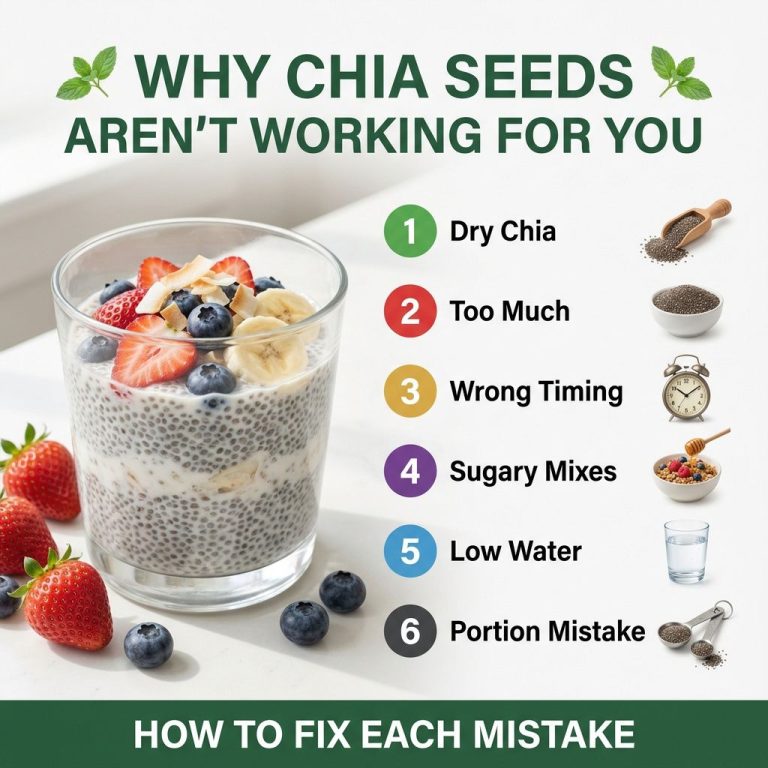
The 6 Prep Mistakes to Fix
- Eating them dry without enough water. Dry chia seeds can swell in your throat or stomach after you swallow them. Always mix them with plenty of liquid and drink a full glass of water alongside them.
- Skipping the soak. Unsoaked seeds may pass through the gut with less of their nutrition absorbed. Letting them rest for at least 15 to 30 minutes gives them time to gel and hydrate.
- Using too much at once. Chia is high in fiber. Starting with a large amount can cause bloating or gas. A common starting point is one tablespoon per day, gradually building to about two tablespoons as your body adjusts.
- Ignoring timing. Many people enjoy chia at breakfast, which fits well with a steady energy routine. Adding it to a meal with protein and vegetables can also help you feel full for longer.
- Storing them incorrectly. Omega-3 fats can go rancid when exposed to heat, light, and air. Keep your seeds sealed in a cool, dark cupboard or in the refrigerator.
- Expecting instant results. Chia works best as part of a balanced diet over weeks and months. Pair it with vegetables, whole grains, and healthy fats for the most consistent benefits.
Simple Ways to Enjoy Chia Every Day
- Stir into overnight oats or plain yogurt.
- Blend into smoothies with fruit and leafy greens.
- Make a basic chia pudding with milk or a plant-based alternative.
- Sprinkle over salads or soups after soaking.
Who Should Be Careful
If you take blood-thinning medication, have a swallowing difficulty, or are managing a digestive condition, speak with your healthcare provider before adding chia seeds to your daily routine. Your doctor can help you find the right amount for your needs.
The Bottom Line
Your chia seeds can be a valuable part of a healthy lifestyle when you soak them, hydrate well, start slowly, and store them properly. Small changes to your routine can make a noticeable difference. Which chia habit will you try first?