A drink stain on a fabric dining chair seat is one of those small messes that seems to set a little more each day. Harsh sprays can leave the weave stiff or patchy, and scrubbing hard can fray the threads. A simple household trick uses plain shaving foam, a damp cloth, and a bit of patience to lift the stain without a shopping trip.
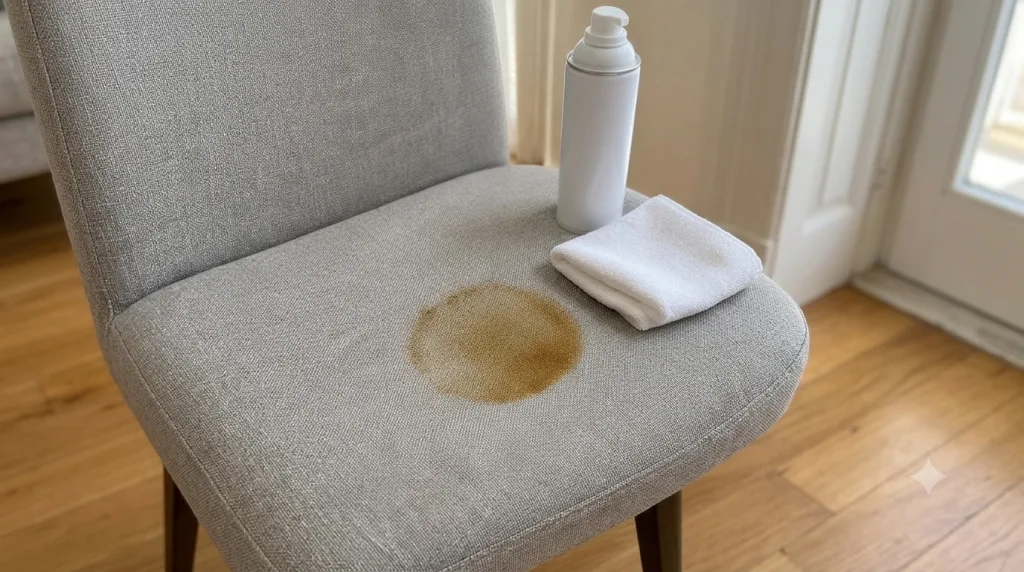
What You Will Need
- A can of plain shaving foam, unscented if possible
- A clean white or light-coloured cloth, dampened with water
- A dry towel for blotting
Step-by-Step Method
- Test first. Press a small amount of foam on a hidden part of the chair, such as the underside of the seat or a back corner, and wait a few minutes. Blot it dry and check for colour change or fading.
- Blot up any loose liquid with a dry towel before you start. Press gently so the stain does not spread.
- Press the nozzle and cover the whole stain with a thick layer of foam. Make sure the foam reaches the edges of the mark.
- Let the foam sit for a short while so it can soften the stain.
- Take a damp cloth and press it into the foam. Keep the pressure light and even.
- Wipe the cloth across the foam in two slow strokes. Lift the cloth away and fold it to a clean area.
- Blot the seat with a dry towel and let the fabric air dry completely.
Why This Method Works
Shaving foam is a soft, airy mixture that clings to the surface and stays in place long enough to hold onto the stain. When you press a damp cloth into it, the cloth picks up the loosened colour and carries it away from the fibres. This gentle lifting action is often kinder to upholstery than heavy scrubbing.
Tips for Better Results
- Work on fresh stains when you can, because older marks may need more than one round.
- Rinse your cloth often so you are not pushing the stain back into the seat.
- Use a light touch on delicate or loosely woven fabrics.
- Expect a faint damp patch while the seat dries, and let it dry fully before you judge the result.
When to Call a Professional
If the stain is very large, has been sitting for weeks, or the fabric has a special finish or care label that forbids water, it is wise to stop and ask a professional upholsterer or cleaner. Results with any home method can vary depending on the fabric and the stain, so testing first is always the safest choice.